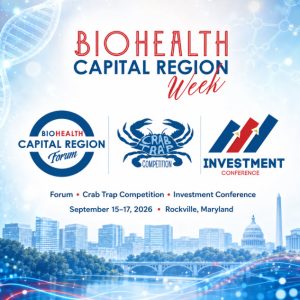
 BioHealth Capital Region Week returns September 15–17, 2026, at US Pharmacopeia in Rockville, Maryland, bringing together leaders from across industry, academia, government, investment, research institutions, economic development, and entrepreneurship.
This year’s theme, “Growing the BioHealth Capital Region of Tomorrow,” reflects a practical question facing the region: How do we turn our scientific assets, federal presence, talent, infrastructure, and industry base into more companies, stronger partnerships, greater investment, and sustained economic growth?
BHCR Week creates three distinct opportunities to take part in that work: the BioHealth Capital Region Forum, the Crab Trap Competition, and the BioHealth Capital Region Investment Conference. Each serves a different audience and purpose, but together they span the full path from ideas and research to company formation, commercialization, financing, and growth.
1. The region’s full biohealth ecosystem will be in one place
BHCR Week is one of the few events where executives, founders, researchers, investors, government leaders, economic development organizations, universities, health institutions, and professional service partners come together around the same regional agenda.
Each year, the event draws hundreds of attendees representing biotech, biopharma, medtech, digital health, academic and research institutions, investment organizations, government agencies, economic development groups, and companies that provide legal, financial, technical, real estate, consulting, and commercialization support.
That mix matters. Most companies do not grow through one relationship or one source of support. They need capital, talent, facilities, regulatory guidance, research partnerships, service providers, customers, and a network that can help them move from one milestone to the next.
BHCR Week gives attendees access to many of those relationships in one place. A founder can meet an investor, an economic development leader, a university partner, and a potential service provider during the same week. An established company can connect with emerging technologies, regional decision-makers, and potential collaborators. Investors can see both the companies seeking capital and the institutions helping create the next generation of opportunities.
2. The program is focused on the issues shaping the region’s next decade
The 2026 program looks beyond a single trend or industry challenge. It will examine the combination of technologies, resources, policies, and partnerships needed for the BioHealth Capital Region to continue growing.
The Forum will include conversations around AI and quantum applications in biohealth, commercialization, financing, economic development, infrastructure, manufacturing, standards, supply chains, workforce, dual-use technologies, company formation, and regional collaboration.
These subjects are connected. Companies need access to capital, but they also need the physical and digital infrastructure to operate. Research institutions need commercialization pathways and experienced leadership. Emerging technologies need practical use cases, trusted standards, and partners capable of moving them into the market. The region must also understand why companies choose to start, remain, expand, or relocate here.
The Forum is designed to bring those conversations together rather than treating them as separate issues. Attendees will hear from leaders who are working on these challenges from different perspectives and have opportunities to connect those ideas to their own organizations.
3. Three different events create three different ways to participate
BioHealth Capital Region Week is not a single-format conference. Its three events are designed for different stages of the innovation and company-growth process.
BioHealth Capital Region Forum
September 15–16, 2026
The Forum is the thought-leadership and regional-convening portion of BHCR Week. Across two days, attendees will hear keynotes, panel discussions, regional updates, and conversations focused on the future of the biohealth ecosystem.
The Forum is a strong fit for company leaders, researchers, entrepreneurs, academic institutions, government agencies, economic development organizations, investors, professional service firms, and anyone working to strengthen the regional life sciences economy.
Attendees should register if they want to understand what is changing across the region, meet decision-makers from multiple sectors, discover potential partners, and take part in conversations about how the BioHealth Capital Region grows from here.
Registration is free thanks to sponsors, but advance registration is required:
https://eventmobi.com/website/BHCR2026
Crab Trap Competition
September 16, 2026
The Crab Trap Competition gives emerging biohealth companies an opportunity to pitch live before investors, judges, industry leaders, and regional partners.
Selected finalists gain more than stage time. They receive visibility across the regional ecosystem, direct feedback, and opportunities to build relationships with people who may be able to support their next stage of development.
The current prize package includes $15,000 in cash and more than $20,000 in professional services, with additional prizes still being added. Those services can be especially valuable for early-stage companies that need specialized support but may not yet have the budget or internal capacity to secure it.
Companies working across biotech, medtech, diagnostics, digital health, AI-enabled health, and other areas of life sciences should apply if they are ready to raise their visibility, sharpen their story, connect with investors and partners, and compete for resources that can help them move forward.
Apply for the 2026 Crab Trap Competition here:
https://bit.ly/CrabTrap2026
BioHealth Capital Region Investment Conference
September 17, 2026
The Investment Conference is a full day focused on connecting companies with capital, strategic partners, economic development leaders, and regional resources.
Emerging and growth-stage companies can meet investors and organizations that understand the life sciences development cycle. Investors can gain exposure to promising companies and technologies across biotech, biopharma, medtech, digital health, AI-enabled biohealth, and related fields.
The conference is also valuable for technology transfer leaders, accelerators, research institutions, service providers, and economic development organizations that help companies become more investable and connect with the resources needed to scale.
Companies should register if they are seeking funding, partnerships, strategic guidance, or greater visibility with the investment community. Investors should attend to identify new opportunities, meet company leaders, and gain a clearer view of the innovation pipeline emerging from the BioHealth Capital Region and beyond.
Investment Conference registration is separate from Forum registration:
https://eventmobi.com/website/BHCR2026/investment-conference
Attendees interested in both events must complete both registrations.
4. BHCR Week is built to create connections that can lead to action
The value of BHCR Week is not limited to what happens on stage. Much of the event’s value comes from the conversations between sessions, introductions made through regional partners, and follow-up discussions that continue after the week ends.
For an early-stage company, one introduction could lead to a future investor conversation, pilot opportunity, service relationship, or research partnership. For an established company, the week can provide access to new technologies, talent, policy perspectives, and regional resources. For an investor, it offers a chance to meet both companies and the institutions supporting their development.
The three-event structure helps create those connections across different settings. The Forum establishes shared context around regional priorities. Crab Trap puts emerging companies and technologies in front of the community. The Investment Conference creates a more direct environment for conversations around capital, company readiness, and growth.
That combination makes BHCR Week more than an annual gathering. It is a platform for turning regional relationships into tangible opportunities.
5. BHCR Week is free to attend thanks to sponsors
Many major industry events come with registration fees that can limit who is able to participate. BHCR Week takes a different approach.
Sponsor support allows the Forum and Investment Conference to remain free to attend. That removes a financial barrier for entrepreneurs, researchers, students, emerging companies, investors, public-sector partners, and others who should be part of the conversation.
Free registration also strengthens the event itself. It creates room for a wider range of organizations, career levels, and perspectives. It allows smaller companies and institutions to participate alongside major corporations, government agencies, universities, and established investors.
Sponsors make that access possible while gaining visibility across the Forum, Crab Trap Competition, Investment Conference, and VIP Leadership Dinner. Their support helps create a stronger audience, more productive connections, and a more accessible platform for the region.
Be Part of BHCR Week 2026
The BioHealth Capital Region has the research, companies, institutions, talent, federal assets, and infrastructure to remain one of the country’s leading life sciences ecosystems. Continuing that momentum requires the right people to come together, understand what is changing, and build the partnerships needed for the next stage of growth.
Register for the BioHealth Capital Region Forum:
https://eventmobi.com/website/BHCR2026
Register separately for the BioHealth Capital Region Investment Conference:
https://eventmobi.com/website/BHCR2026/investment-conference
Apply for the Crab Trap Competition:
https://bit.ly/CrabTrap2026
Organizations can also support the week as sponsors. Sponsorship helps keep the Forum and Investment Conference free to attend while giving companies, institutions, and regional partners visibility across the full week. Sponsors are also invited to the VIP Leadership Dinner, which provides a more focused setting to connect with senior executives, investors, speakers, and regional leaders.
 To learn more about sponsorship opportunities, contact:
Rich Bendis at rbendis@biohealthinnovation.org and Andy Eckert at aeckert@biohealthinnovation.org.
BioHealth Capital Region Week takes place September 15–17, 2026, at US Pharmacopeia in Rockville, Maryland.

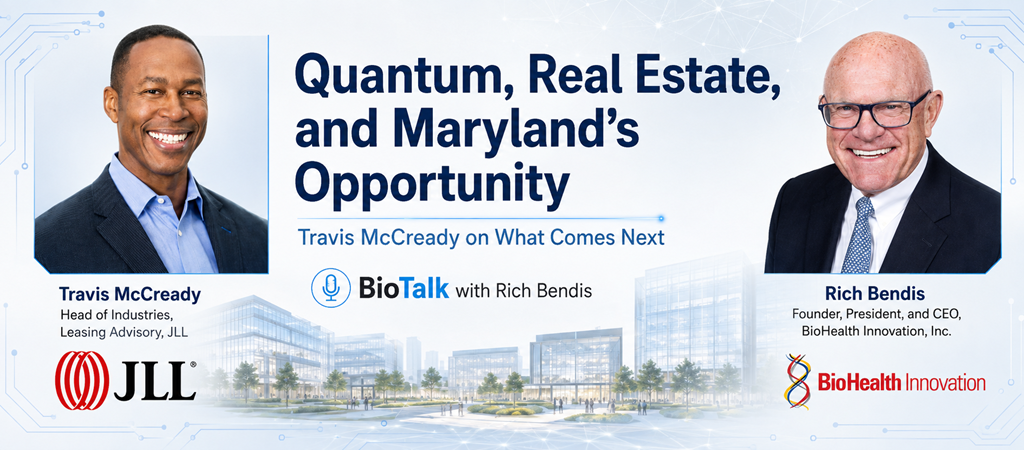
 In this episode of BioTalk with Rich Bendis, Travis McCready, Head of Industries, Leasing Advisory at JLL, joins the conversation to discuss quantum computing, why real estate professionals are paying attention, and what this emerging technology could mean for regions like the BioHealth Capital Region.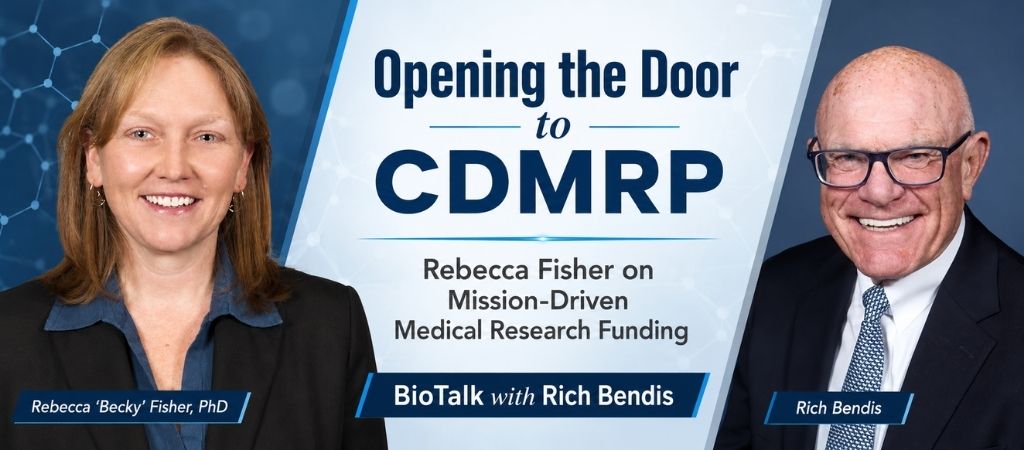
 Opening the Door to CDMRP: Dr. Rebecca Fisher on Mission-Driven Medical Research Funding
 RICHMOND, VA. August 4, 2026 ‐ BRAINBox Solutions today announced a strategic financing to accelerate the development of point-of-care (PoC) and lab-based devices for its BRAINBox TBI diagnostic/prognostic tests for concussion (also known as mTBI or Acute Traumatic Encephalopathy). The financing included equity funding as well as credit facilities from

 Registration is open for the 12th Annual BioHealth Capital Region Week, taking place September 15–17, 2026, at US Pharmacopeia (USP) in Rockville, Maryland.
 Opportunity to Comment on Product-Specific Emerging Standards for Biologics
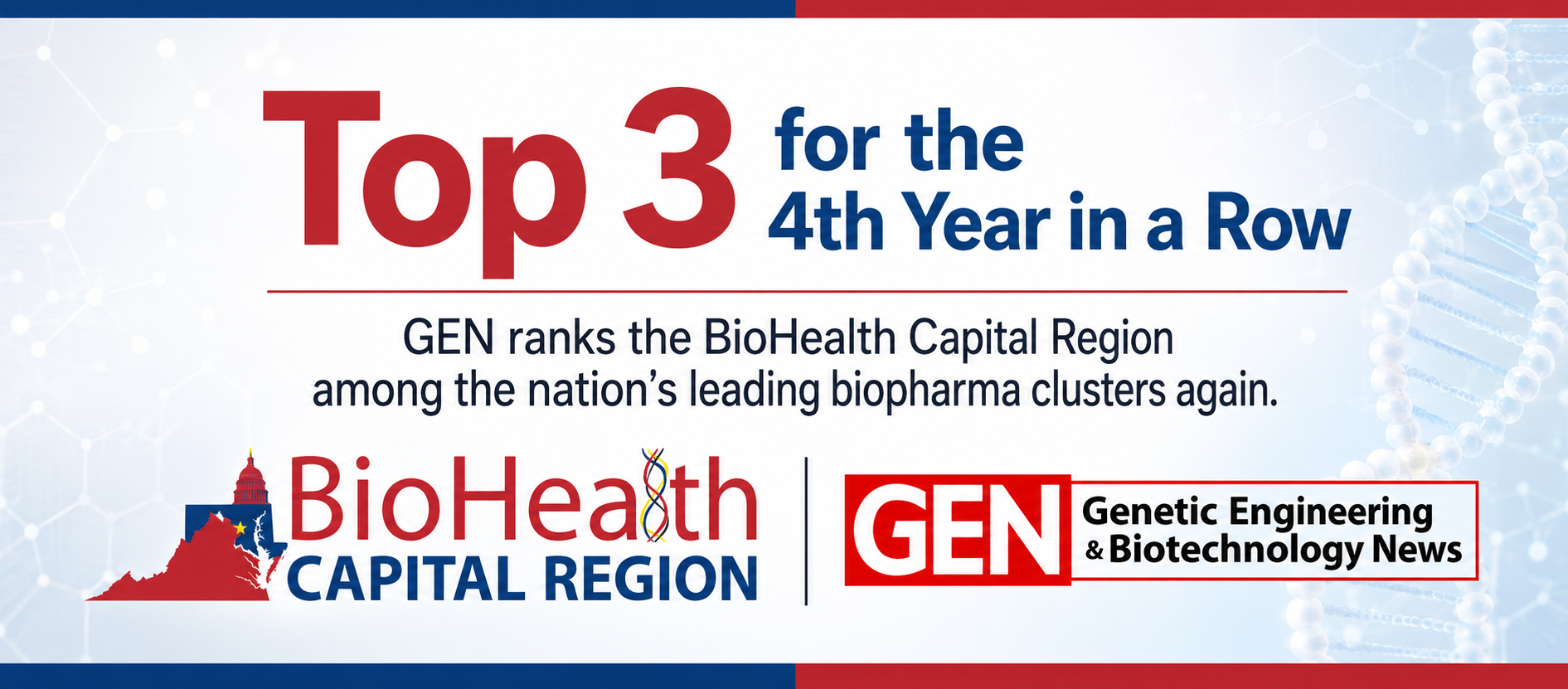
 The BioHealth Capital Region, spanning Maryland, Virginia, and Washington, D.C., has once again been named one of the nation’s Top 3 biopharma clusters by Genetic Engineering & Biotechnology News (GEN), marking the region’s fourth consecutive year in the Top 3.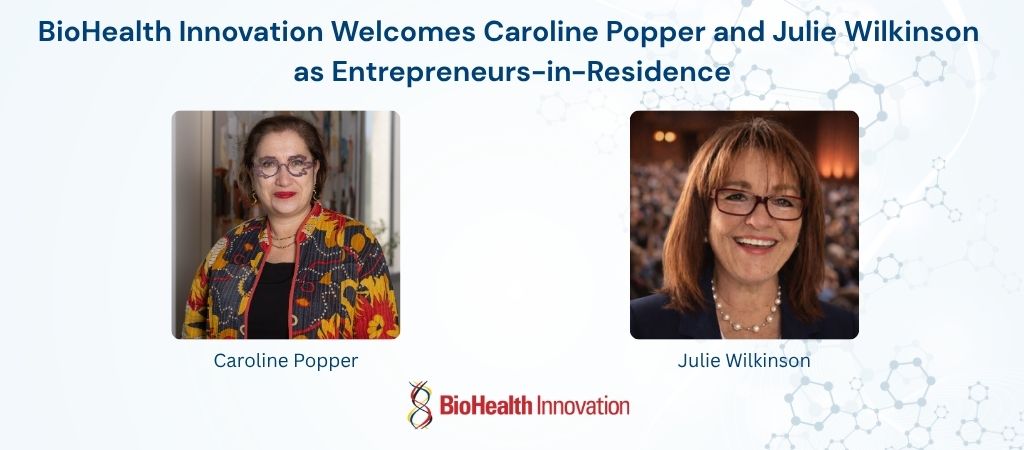
 BioHealth Innovation, Inc. (BHI) is pleased to announce the addition of Caroline Popper and Julie Wilkinson as Entrepreneurs-in-Residence (EIRs). Together, they bring decades of experience across medical technology, diagnostics, digital health, commercialization strategy, FDA pathways, manufacturing, corporate development, and venture-building.