
 Prolight Diagnostics, a leader in point-of-care (POC) technology, today announces positive results from a collaboration with BRAINBox Solutions, a leader in multi-modality diagnostic and prognostic tests for traumatic brain injury (TBI). The analytic evaluation shows strong performance across a unique combination of three traumatic brain injury biomarkers, demonstrating the ease with which multiple novel markers can be transferred onto the Psyros unique
single-molecule-counting platform and reinforcing its potential to improve patient care for broad clinical use.
The findings align with earlier pre‑clinical data demonstrating Psyros’ ability to deliver laboratory‑grade performance, detecting biomarkers at extremely low concentrations within minutes using only a small sample. The study was fully funded by BRAINBox, headquartered in Richmond, Virginia.
Building on these results, Prolight and BRAINBox will now advance to the next phase of the BRAINBox‑funded programme, evaluating all three assays using a 260-patient sample bank. The samples are a subset of the more than 2000 available from BRAINBox’s ongoing, HeadSMART II pivotal clinical study of its diagnostic and prognostic test for mild TBI, BRAINBox TBI, to support submission to the US Food and Drug Administration for marketing clearance. The assay format uses Psyros’ multiplex‑enabled, dried‑reagent cartridge, supporting scalable, low‑cost manufacturing – an important advantage in TBI and other conditions requiring high-precision, multi‑analyte testing.
“We are very encouraged by the outcomes of this first assay evaluation with BRAINBox. The data reinforce the versatility of the Psyros platform and its ability to support multiple assay formats. With BRAINBox now fully funding the next 260‑patient assay study, we see strong validation of Psyros’ unique market potential,” said Ulf Bladin, CEO of Prolight Diagnostics. “In parallel, Prolight remains fully focussed on delivering our high-sensitivity troponin test, as we gear up for the clinical performance study.”
”We have been actively seeking a point-of-care platform capable of delivering the ultra-sensitive performance required for our multimodality TBI test suite of products which can support our broad strategy for diagnosis, prognosis and monitoring in all care environments across our patent protected full neurology test pipeline. These early results from this recently established collaboration suggest that the Psyros system meets – and may even exceed – our performance expectations and potentially accelerate the development and commercialization of our tests. The ability to measure multiple TBI biomarkers within minutes at the point-of-care has the potential to meaningfully enhance real-world assessment and clinical decision-making in
brain-injury care. We look forward to progressing to the next phase of our collaboration,” said Donna Edmonds, CEO of BRAINBox.
Prolight continues to attract growing interest from global diagnostics companies, supported by Psyros’ competitive advantages: unprecedented detection limits, whole‑blood capability, rapid turnaround time, multiplex functionality and low-cost manufacturing.
About Traumatic Brain Injury (TBI)
TBI is increasingly recognized as a major global health challenge and a rapidly emerging market for diagnostic innovation, particularly for rapid point-of-care (POC) testing. The clinical challenge with TBI is that even mild brain injury can have serious long term clinical consequences, mild TBI diagnostics require high sensitivity to reliably detect injury and safely identify patients who may require further imaging or intervention.
With an estimated 69 million people worldwide experiencing a TBI each year, driven by road traffic accidents, falls, sports injuries, and military trauma, there is growing demand for highly sensitive tests that can deliver rapid results in emergency departments, ambulances, urgent care centers, sports settings, and other frontline care environments, which include a growing number of concussion clinics.
The global TBI diagnostics market is currently valued at approximately USD 3–3.4 billion, with forecasts projecting growth to around USD 6 billion or more by 2032–2033 as awareness, clinical guidelines, and biomarker technologies advance. As awareness has increased, so has the demand for rapid and portable testing solutions, with increasing adoption of blood-based biomarker tests an opportunity is emerging for POC diagnostics to enable faster triage, helping to reduce reliance on costly CT scans.
As healthcare systems seek faster and more cost-effective ways to triage patients with suspected head injury, POC TBI testing represents a significant emerging segment within this multibillion-dollar market, with strong potential for adoption across emergency medicine, sports medicine, military medicine, and pre-hospital care worldwide.
About BRAINBox Solutions
BRAINBox Solutions is developing the first AI‐enabled, multi‐modality approach for the diagnosis and prognosis of Mild Traumatic Brain Injury, commonly referred to as a concussion. The company seeks to establish a clinical best‐practice standard for the diagnosis and prognosis of concussion.
The product incorporates a panel of proprietary, patented blood biomarkers that can be read in a few moments on a point‐of‐care instrument or using standard laboratory systems, as well as neurocognitive testing, to provide a single‐system score that measures the severity of the injury and post-concussive symptoms. BrainBox is currently completing a pivotal clinical study, the HeadSMART II clinical trial, which is evaluating the diagnostic and prognostic potential of BrainBox TBI in more than 2000 patients. The company is led by key physician and scientific thought leaders in the field and an experienced, clinically focused management team. For more information please see: https://brainboxinc.com/

 This thought-provoking piece in
 Dr. Sheetal Ajmani joins BioTalk to discuss a topic rarely addressed in the life sciences startup world. The personal and leadership toll that accompanies building and scaling a company. A physician turned executive coach and founder of Radiant Living Institute, Dr. Ajmani works closely with founders and senior leaders navigating intense professional pressure while trying to maintain clarity in decision making.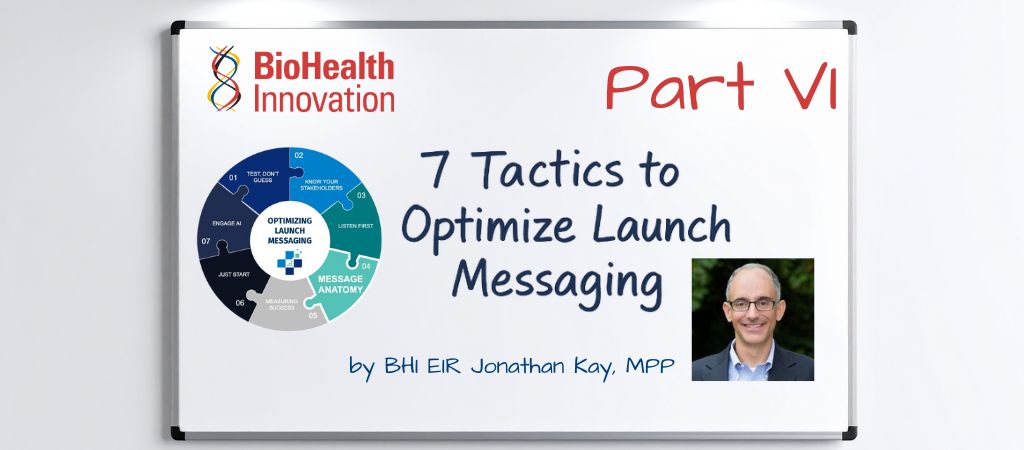
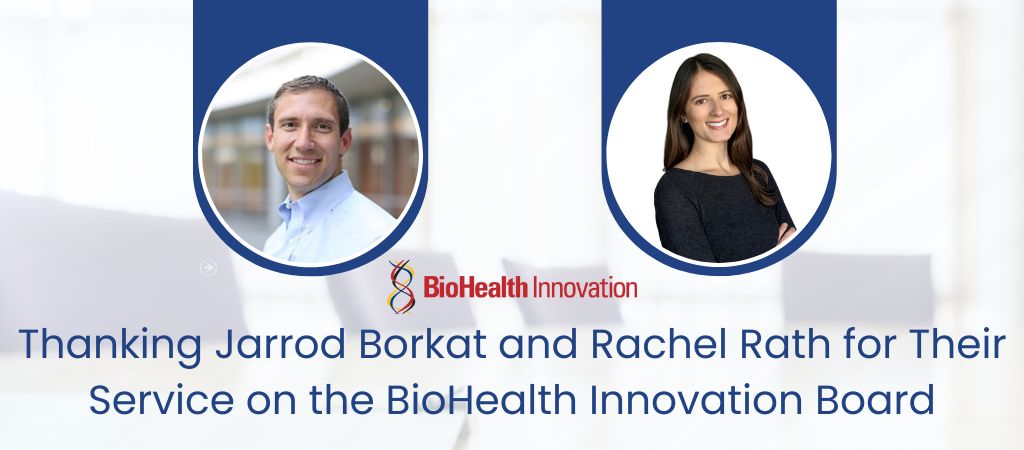
 BioHealth Innovation extends its sincere thanks to Jarrod Borkat, Chief Commercial and Strategy Officer at On Demand Pharmaceuticals, and Rachel Rath, Head of JLABS @ Washington DC, for their dedicated service on the Board of Directors.
 Last year, I wrote a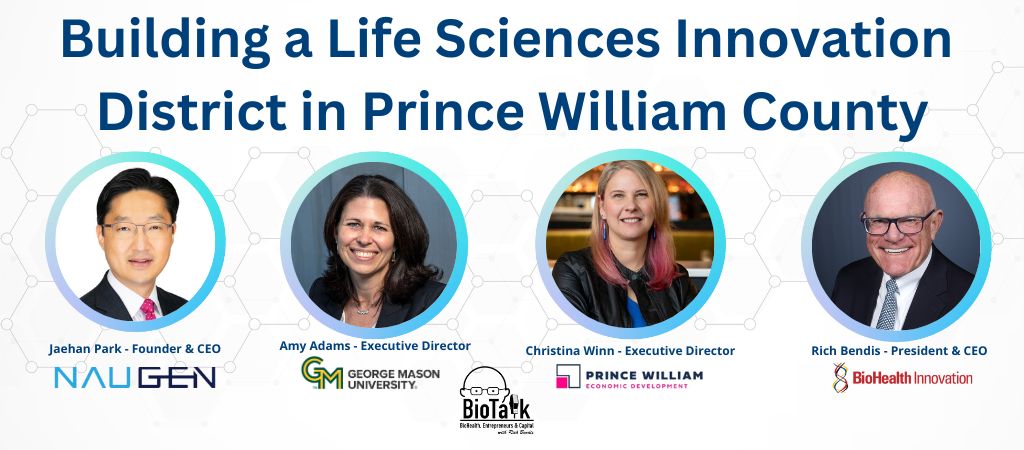
 This episode of the BioTalk with Rich Bendis Podcast brings together leaders from industry, academia, and economic development to unpack the vision behind a new life sciences Innovation District anchored in Prince William County. With introductions to NAUGEN, George Mason University’s Institute for Biohealth Innovation, and the Prince William County Department of Economic Development, setting the stage for how each organization contributes to the district’s foundation. The guests discuss the life science assets, research strengths, and translational capabilities that define the district and explain why it is well-positioned to support biotechnology and advanced R&D companies.
 BioHealth Innovation is expanding its Entrepreneurs in Residence (EIR) network and is seeking experienced leaders at the intersection of biohealth and advanced technologies, including artificial intelligence and quantum computing.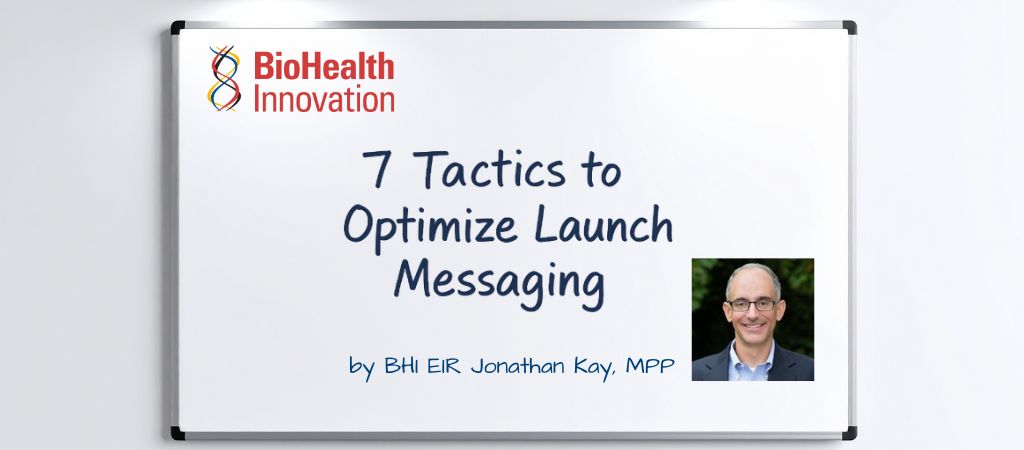

 Secretary Juan Pablo Segura joins BioTalk for a conversation about Virginia’s growing position in the biohealth economy and the statewide strategy behind it. He outlines the significance of the new partnership with AstraZeneca, Lilly, and Merck, including up to $120 million in private investment to create a workforce development center and expand the Commonwealth’s life sciences capacity. Segura talks through how Virginia approaches company recruitment, what investors are responding to, and why the state is seeing increased interest from biomanufacturing and advanced R&D companies. He also discusses Virginia’s use of public-private partnerships to accelerate industry growth, strengthen the talent pipeline, and support emerging hubs across the Commonwealth. The conversation closes with a look at Virginia’s role in the BioHealth Capital Region and how the regional identity helps amplify the state’s message as it continues building a competitive biohealth ecosystem.