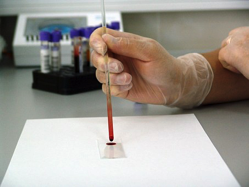

Historically prizes have been surprisingly effective at kickstarting innovation, will Deloitte’s XPRIZE do the same?
Curing cancer is the holy grail of the medical and scientific communities, but a simple prize could make a whole lot of difference.

Historically prizes have been surprisingly effective at kickstarting innovation, will Deloitte’s XPRIZE do the same?
Curing cancer is the holy grail of the medical and scientific communities, but a simple prize could make a whole lot of difference.

A partnership between the University System of Maryland and Prince George’s County schools led to increased student interest in STEM fields, higher scores on the science portion of Maryland State Assessments and more students entering STEM fields in college, according to the project’s final report.
The USM’s Math Science Partnership Minority Student Pipeline aimed “to expand the minority student pipeline in science, technology, engineering, and mathematics (STEM) fields in higher education, by employing strategies engaging STEM faculty, teachers, undergraduates and high school students,” the report read. The USM’s Education Policy and Student Life Committee reviewed the report on Sept. 20.

Supported by a $9 million grant from the National Cancer Institute, a multidisciplinary team led by Johns Hopkins researchers has begun looking for new ways to attack one of the scariest traits of this disease: its frequent refusal to stay in one place.
The new funding, to be allocated over a five-year period, will enable scholars in physical sciences, engineering, applied mathematics, cancer biology, and other disciplines to pool their expertise to solve stubborn cancer-related mysteries.

I have just downloaded the app Uberstand to my phone — the “revolutionary” app that seamlessly converts academics into a standing reserve of mobile, on-demand, adjunct knowledge providers. The app is designed to meet the real-time needs of institutes of higher learning and their customers, who often find themselves operating with a knowledge deficit, or what the industry terms a “need-to-know.”

We’re pleased to announce the release of the Johns Hopkins Technology Ventures fiscal year 2016 annual report – for the first time in digital format!
Last year, we took tremendous strides in realizing our mission to benefit people around the world through innovation and to invigorate the local Baltimore economy. We saw a record number of disclosures, significant growth in our corporate partnerships, the creation of more startups than ever before, and substantial progress on the buildout of new state-of-the-art facilities.
While we’re proud of our accomplishments, there’s more to do. We are using the facts and figures in this report to identify the paths that led to success and to develop strategies that build upon our progress.

The National Science Foundation has awarded $3.45 million over the next five years to renew its Innovation Corps program D.C.-area node to support entrepreneurship. George Washington University works alongside three additional collaborating institutions to train entrepreneurial student and faculty researchers and help them bring their discoveries to market.
The innovation hubs, known as I-Corps nodes, provide research infrastructure and training that help researchers transition fundamental science and engineering discoveries to the marketplace, according to NSF. The nodes also support I-Corps sites nationwide and offer seven-week I-Corps curriculum to their teams.
Operations Department
NATURE OF WORK
The Senior Grants and Contracts Manager will be tasked with the preparation, drafting, review and negotiation of contractual agreements with a special emphasis on agreements that support biomedical research initiatives and partnerships. S/he should have a strong customer service orientation and be able to identify process improvements so that transactions are completed with the right balance of efficiency and risk mitigation. S/he will report to the Director of Operations but will serve the contracting needs of colleagues across the Foundation. Strong writing, analytical and organizational skills must be matched with a sense of flexibility, entrepreneurial spirit and good cheer.

Suburban Maryland’s tech cluster is among the top 10 biotech regions in the U.S, ranking at No. 6 based on talent, funding availability and its real estate, according to a new report from real estate brokerage JLL.
“The region is the healthiest it has been in about a decade because of tenant growth, number of life sciences companies, mergers and acquisitions, a lowering vacancy rate and rising rental rates,” said Pete Briskman, a managing director in JLL’s Bethesda office. “However, that could also mean fewer opportunities in the future.”
![]()
The National Science Foundation awarded a $3.45 million grant to the University of Maryland to expand research as part of the NSF’s innovation program, said university Associate Vice President for Innovation and Entrepreneurship, Dean Chang.
The grant, part of the NSF’s I-Corps Nodes program, is intended to promote the growth of research and entrepreneurship so that it may be applied on a larger scale, said Chang, the grant’s recipient. The grant is slated to go into effect in the beginning of 2017, Chang said.

Chief technologist at the United States Small Business Administration doesn’t immediately sound like the most exciting title, which is part of why after three years, G. Nagesh Rao prefers to be known as the Geek In Residence. He’s responsible for coordinating and leading programs to boost entrepreneurship via the SBA and in partnership across nearly a dozen federal agencies as with the Small Business Innovation Research program. But Rao ranges far beyond just his job. He’s an advisor for half a dozen entrepreneurship related groups including local organizations like Village Capital and LAUNCH, a group jointly run by Nike and a handful of federal agencies.