

Redwood City, California-based medical device company Relievant Medsystems Inc has raised $36 million in funding. New Enterprise Associates led the round with participation from Canaan Partners, Emergent Medical Partners and Morgenthaler Ventures.
Redwood City, California-based medical device company Relievant Medsystems Inc has raised $36 million in funding. New Enterprise Associates led the round with participation from Canaan Partners, Emergent Medical Partners and Morgenthaler Ventures.

Higher education has a business model problem. The business model for U.S. colleges and universities — how they create, deliver, and capture value — hasn’t changed since Harvard, our country’s first college, was founded in 1636. Our higher education system is a national treasure that creates enormous societal value, but its 380-year-old business model fails to deliver affordable access and post-secondary credentials to an increasing percentage of our population. The American social contract was clear throughout the Industrial Era. While many jobs moved out of reach for those without a college degree, there were still ample opportunities for everyone to earn a good living in order to support a family. The U.S. became an economic powerhouse with a robust and thriving middle class.
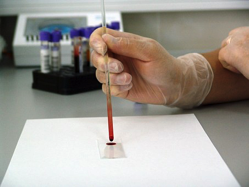
Historically prizes have been surprisingly effective at kickstarting innovation, will Deloitte’s XPRIZE do the same?
Curing cancer is the holy grail of the medical and scientific communities, but a simple prize could make a whole lot of difference.

A partnership between the University System of Maryland and Prince George’s County schools led to increased student interest in STEM fields, higher scores on the science portion of Maryland State Assessments and more students entering STEM fields in college, according to the project’s final report.
The USM’s Math Science Partnership Minority Student Pipeline aimed “to expand the minority student pipeline in science, technology, engineering, and mathematics (STEM) fields in higher education, by employing strategies engaging STEM faculty, teachers, undergraduates and high school students,” the report read. The USM’s Education Policy and Student Life Committee reviewed the report on Sept. 20.

Supported by a $9 million grant from the National Cancer Institute, a multidisciplinary team led by Johns Hopkins researchers has begun looking for new ways to attack one of the scariest traits of this disease: its frequent refusal to stay in one place.
The new funding, to be allocated over a five-year period, will enable scholars in physical sciences, engineering, applied mathematics, cancer biology, and other disciplines to pool their expertise to solve stubborn cancer-related mysteries.

I have just downloaded the app Uberstand to my phone — the “revolutionary” app that seamlessly converts academics into a standing reserve of mobile, on-demand, adjunct knowledge providers. The app is designed to meet the real-time needs of institutes of higher learning and their customers, who often find themselves operating with a knowledge deficit, or what the industry terms a “need-to-know.”

We’re pleased to announce the release of the Johns Hopkins Technology Ventures fiscal year 2016 annual report – for the first time in digital format!
Last year, we took tremendous strides in realizing our mission to benefit people around the world through innovation and to invigorate the local Baltimore economy. We saw a record number of disclosures, significant growth in our corporate partnerships, the creation of more startups than ever before, and substantial progress on the buildout of new state-of-the-art facilities.
While we’re proud of our accomplishments, there’s more to do. We are using the facts and figures in this report to identify the paths that led to success and to develop strategies that build upon our progress.
The National Science Foundation has awarded $3.45 million over the next five years to renew its Innovation Corps program D.C.-area node to support entrepreneurship. George Washington University works alongside three additional collaborating institutions to train entrepreneurial student and faculty researchers and help them bring their discoveries to market.
The innovation hubs, known as I-Corps nodes, provide research infrastructure and training that help researchers transition fundamental science and engineering discoveries to the marketplace, according to NSF. The nodes also support I-Corps sites nationwide and offer seven-week I-Corps curriculum to their teams.
Operations Department
NATURE OF WORK
The Senior Grants and Contracts Manager will be tasked with the preparation, drafting, review and negotiation of contractual agreements with a special emphasis on agreements that support biomedical research initiatives and partnerships. S/he should have a strong customer service orientation and be able to identify process improvements so that transactions are completed with the right balance of efficiency and risk mitigation. S/he will report to the Director of Operations but will serve the contracting needs of colleagues across the Foundation. Strong writing, analytical and organizational skills must be matched with a sense of flexibility, entrepreneurial spirit and good cheer.

Suburban Maryland’s tech cluster is among the top 10 biotech regions in the U.S, ranking at No. 6 based on talent, funding availability and its real estate, according to a new report from real estate brokerage JLL.
“The region is the healthiest it has been in about a decade because of tenant growth, number of life sciences companies, mergers and acquisitions, a lowering vacancy rate and rising rental rates,” said Pete Briskman, a managing director in JLL’s Bethesda office. “However, that could also mean fewer opportunities in the future.”