This episode of the BioTalk with Rich Bendis Podcast brings together leaders from industry, academia, and economic development to unpack the vision behind a new life sciences Innovation District anchored in Prince William County. With introductions to NAUGEN, George Mason University’s Institute for Biohealth Innovation, and the Prince William County Department of Economic Development, setting the stage for how each organization contributes to the district’s foundation. The guests discuss the life science assets, research strengths, and translational capabilities that define the district and explain why it is well-positioned to support biotechnology and advanced R&D companies.
The podcast explores how the partnership between Prince William County, George Mason University, and the City of Manassas came together, outlining the distinct roles each plays in advancing a shared strategy. The episode also introduces the NISA program, detailing how it supports companies seeking a soft-landing pathway into the district, the types of organizations best suited for the program, and the facilities, talent, and collaborative resources participants can access both immediately and over time.
Listen now via your favorite podcast platform:
Apple: https://apple.co/4p94Dqe
Spotify: https://bit.ly/3Y7dJZw
iHeart Podcasts: https://ihr.fm/3KLV7v4
Amazon Music Podcasts: https://amzn.to/4pajS1P
YouTube Music Podcasts: https://bit.ly/4phRV8I
TuneIn: https://bit.ly/44GoG7Y
Editing and post-production work for this episode was provided by The Podcast Consultant (https://thepodcastconsultant.com).
Jaehan Park is Founder and CEO of NAUGEN, a global innovation accelerator advancing novel technologies across life sciences and deep tech. With more than 25 years of experience in strategy and business development, he has led collaborations spanning cancer immunotherapy, vaccines, and biologics with global pharmaceutical companies and academic institutions. He leads the NISA Program in partnership with George Mason University and serves as a Mentor-in-Residence at KIC DC, supporting international startups entering U.S. markets.
Amy Adams is Executive Director of George Mason University’s Institute for Biohealth Innovation, where she advances biohealth research and innovation across more than 300 faculty and thousands of students. Her work focuses on partnerships, shared research infrastructure, and building hubs that connect academia with industry. She is co-leading the development of the Innovation District anchored at Mason’s SciTech campus and serves on the boards of BioHealth Innovation and the Association of University Research Parks.
Christina Winn leads the Prince William County Department of Economic Development, guiding investment, business growth, and redevelopment efforts across one of Virginia’s largest counties. She is overseeing the development of a research-driven Innovation District in partnership with George Mason University and the City of Manassas, supported by a GO Virginia grant. Her career includes leading large-scale economic development initiatives that have driven significant capital investment, job creation, and national visibility for the region.
INCHEON, South Korea, ROCKVILLE, Md. and LONDON , Dec. 21, 2025 /PRNewswire/ — Samsung Biologics (KRX: 207940.KS), a leading contract development and manufacturing organization (CDMO), today announced that its wholly owned U.S. subsidiary, Samsung Biologics America, has entered into a definitive agreement to acquire 100% of Human Genome Sciences from GSK (LSE/NYSE: GSK). This strategic move secures Samsung Biologics’ first U.S.-based manufacturing site, a significant expansion of the company’s global footprint and its long-term commitment to the U.S. market.
Located in Rockville, Maryland, the facility sits at the center of one of the key U.S. bio-clusters and encompasses two cGMP manufacturing plants with a combined 60,000 liters of drug substance capacity, supporting both clinical and commercial production from small to large scale. Existing products will continue to be manufactured at the site, and Samsung Biologics plans to make additional investments to expand the site’s capacity and upgrade technology to further support a more resilient U.S. supply chain for critical biologic medicines.
Under the terms of the agreement, with closing anticipated toward the end of Q1 of 2026, Samsung Biologics will acquire the Rockville assets for USD 280 million. The company will also retain more than 500 employees at the site to ensure operational continuity and stability. By integrating this facility into our global network, Samsung Biologics will provide clients with flexible, multi-site options in both the U.S. and Korea to ensure that live-saving therapeutics are reliably available to American patients.
Samsung Biologics has established a proven track record of operational and construction excellence through on-time completion of its Bio Campus I and II, and also recently secured land for Bio Campus III, which will house distinct R&D and manufacturing programs for new modalities. With 785,000 liters of capacity across five plants, the industry’s leading capacity, Samsung Biologics continues to advance its diversified portfolio spanning monoclonal antibodies, antibody-drug conjugates (ADCs), mRNA, organoid-based services, and next-generation therapies.
“This landmark acquisition is a testament to our unwavering commitment to advancing global healthcare and bolstering our manufacturing capabilities in the U.S. The investment will enable us to deepen our collaboration with federal, state, and local stakeholders to best serve our customers and partners while ensuring a reliable and stable supply of life-saving therapeutics,” said John Rim, CEO and President of Samsung Biologics. “This marks an important step forward in our mission to achieve a better life through biomedicines, and we look forward to building on the legacy of this facility as we welcome experienced colleagues to the Samsung Biologics family and continue delivering innovative solutions that make a meaningful impact.”
Regis Simard, President, Global Supply Chain, GSK, said: “Today’s agreement to divest the Rockville manufacturing site to our valued long-term partner, Samsung Biologics, will secure the manufacture of two important medicines on US soil for US patients and further build GSK’s supply chain resilience. Along with GSK’s recent commitment to invest $30bn in R&D and manufacturing in the US over the next 5 years, this deal enables us to further focus on building the agility, capacity and capability needed in our manufacturing network to deliver the next generation of specialty medicines and vaccines. I am confident in a positive partnership and future for the Rockville site.”
About Samsung Biologics
Samsung Biologics (KRX: 207940.KS) is a leading contract development and manufacturing organization (CDMO), offering end-to-end integrated services that range from late discovery to commercial manufacturing.
With a combined biomanufacturing capacity of 785,000 liters across Bio Campus I and II, Samsung Biologics leverages cutting-edge technologies and expertise to advance diverse modalities, including multispecific antibodies, fusion proteins, antibody-drug conjugates, and mRNA therapeutics.
By implementing the ExellenS™ framework across its manufacturing network with standardized designs, unified processes, and advanced digitalization, Samsung Biologics ensures plant equivalency and speed for manufacturing continuity.
Samsung Biologics also operates commercial offices in Korea, the U.S., and Japan. Samsung Biologics America supports clients based in the U.S. and Europe, while its Tokyo sales office serves the APAC region.
Samsung Biologics continues to invest in new capabilities to maximize operational and quality excellence, ensuring flexibility and agility for clients. The company is committed to the on-time, in-full delivery of safe, high-quality biomedicines, as well as to making sustainable business decisions for the betterment of society and global health.
For more information, visit https://samsungbiologics.com/
Media Contact at Samsung Biologics:
Claire Kim, Senior Director cair.kim@samsung.com
SOURCE Samsung Biologics
BioHealth Innovation is expanding its Entrepreneurs in Residence (EIR) network and is seeking experienced leaders at the intersection of biohealth and advanced technologies, including artificial intelligence and quantum computing.
This call is for seasoned operators with a strong commercialization background. Ideal candidates have taken innovations from concept through market entry, licensing, spinout, or acquisition, and understand the realities of regulatory pathways, customer discovery, fundraising, and scale. Experience working with startups, academic technologies, government labs, or early-stage venture-backed companies is essential. EIRs serve in a part time advisory role with BHI, working flexibly alongside other professional commitments while contributing hands on commercialization expertise.
We are particularly interested in EIRs who can translate AI and quantum capabilities into practical biohealth applications, including drug discovery, diagnostics, clinical research, manufacturing, data analytics, and health system innovation. The role requires comfort working across technical, business, and stakeholder environments.
EIRs work closely with entrepreneurs, researchers, and partners across the BioHealth Capital Region and nationally. Engagements may include advising project teams, supporting partner initiatives, guiding commercialization strategy, and mentoring founders navigating early growth decisions.
This is an opportunity to contribute deep expertise to high-potential biohealth innovations while remaining connected to a collaborative, mission-driven ecosystem.
Interested candidates should contact BHI Founder, President, and CEO, Rich Bendis at rbendis@biohealthinnovation.org, with a summary of their background, commercialization experience, and areas of technical focus.
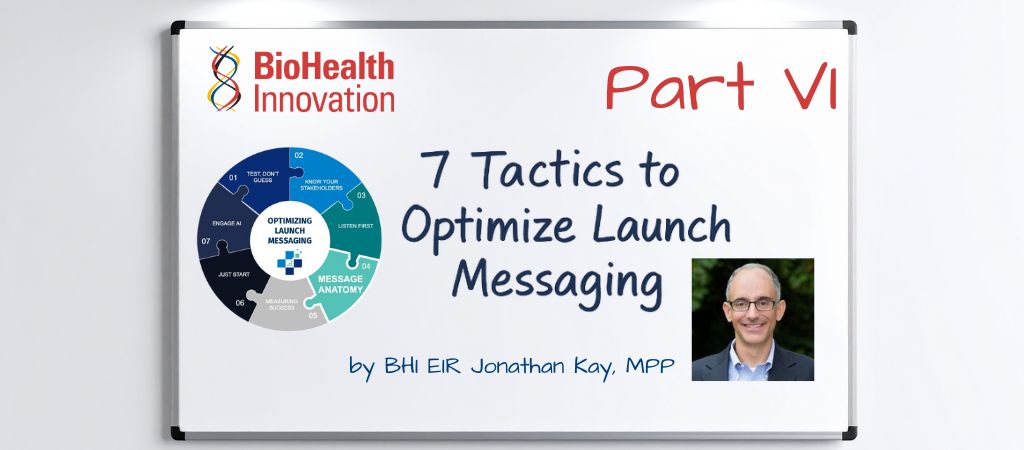
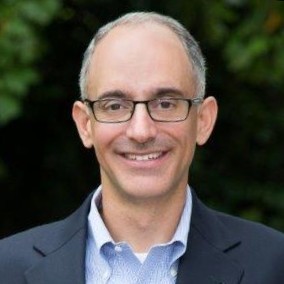
by Jonathan Kay, MPP, Managing Partner, Health Market Experts & BioHealth Innovation, Inc. Entrepreneur-in-Residence
Healthcare is complicated. Communicating effectively doesn’t need to be.
For a new medical technology, biologic, pharmaceutical, or digital health solution, a critical element of go-to-market strategy (GTM) and initial commercial success is messaging.
But messaging often doesn’t get the attention it deserves.
GTM messaging could include messages to any: physicians, hospital administrators, policy makers, patients, caregivers, payers, and more.
This post kicks off our 7-part series on Optimizing Launch Messaging 🚀, where we will share 7 valuable tactics to help achieve your goals related to access, commercial success, and improved patient outcomes.
Tactic 1: Test, Don’t Guess
The first step to optimizing launch strategy is embracing a data-driven mindset:
Healthcare markets are complex in so many ways. Think of the scientific, clinical, regulatory, reimbursement, and competitive landscape. Testing in a complex and changing environment helps minimize risk and maximize potential.
Companies run clinical trials to test the impact of a therapy. Similarly, commercial teams should test their launch communications to ensure they are effective and safe. That is, are the messages clear, credible, and persuasive? Do the messages avoid unintended consequences?
Why test messages? We test messages to:
- Understand unmet needs
- Assess competitive differentiators
- Understand which messages resonate and why
- Learn how to motivate appropriate behavior
Do you have a positive example from when you tested messages in advance of using them? Share your thoughts below!
At Health Market Experts, we make corporate and brand messaging more efficient and effective. If your organization is preparing to launch a product or a campaign, connect with us to learn more about how we can help you develop and execute your launch plan and maximize success. Ask us about message awareness and attribution, too.
This post was written with NI not AI (written by a human using natural intelligence).
This post expands on content I previously wrote as a blog at Catalant and delivered in guest lectures at Rutgers Business School.
Visit https://www.linkedin.com/in/jonathan-kay-healthcare/ to connect with Jon on LinkedIn.
Secretary Juan Pablo Segura joins BioTalk for a conversation about Virginia’s growing position in the biohealth economy and the statewide strategy behind it. He outlines the significance of the new partnership with AstraZeneca, Lilly, and Merck, including up to $120 million in private investment to create a workforce development center and expand the Commonwealth’s life sciences capacity. Segura talks through how Virginia approaches company recruitment, what investors are responding to, and why the state is seeing increased interest from biomanufacturing and advanced R&D companies. He also discusses Virginia’s use of public-private partnerships to accelerate industry growth, strengthen the talent pipeline, and support emerging hubs across the Commonwealth. The conversation closes with a look at Virginia’s role in the BioHealth Capital Region and how the regional identity helps amplify the state’s message as it continues building a competitive biohealth ecosystem.
Listen now on your favorite podcast platform:
Apple: https://apple.co/3M2UNbB
Spotify: https://bit.ly/4izRPYa
iHeart Podcasts: https://ihr.fm/3Ktc0u5
Amazon Podcasts: https://amzn.to/3K5kkjN
YouTube Music Podcasts: https://bit.ly/4owIZfc
TuneIn: https://bit.ly/4ptw26O
Editing and post-production work for this episode was provided by The Podcast Consultant (https://thepodcastconsultant.com).
Juan Pablo Segura is the Secretary of Commerce and Trade for the Commonwealth of Virginia. He leads 13 agencies focused on economic growth, business development, and industry expansion across the state. Before entering public service, Segura spent his career building companies in the digital health sector, most notably as a founder of Babyscripts, a widely adopted maternity care platform. His work has been recognized by Startup Health, CTIA, EY, and the White House. He is a CPA and a graduate of the University of Notre Dame, and he lives in Henrico, Virginia with his family.