Tag

life sciences commercialization Archives - BioHealth Innovation

From Science to Patient-First Investing: Sai Nandi on Immune Boost Capital and Autoimmune Innovation on BioTalk

By BioTalk with Rich Bendis Podcast, News

In this episode of BioTalk with Rich Bendis, Sai Nandi, D.Phil., Founding Principal of Immune Boost Capital (IBC), joins the conversation to discuss how mission-driven investing can help bridge the gap between scientific discovery, company formation, and new treatments for patients with autoimmune diseases.

Sai shares his journey from a small mining town in rural India to Oxford University, Cold Spring Harbor Laboratory, and senior investment roles managing large healthcare portfolios. He discusses how his experience as both a scientist and investor shaped his approach to evaluating early-stage technologies, supporting founders, and moving promising research toward commercialization.

Listen now via your favorite podcast platforms:
Apple: https://apple.co/4eF44Ss
Spotify: https://bit.ly/4zmWnZo
iHeart: https://ihr.fm/3W8MVub
YouTube: https://bit.ly/4eMHhEj
Amazon: https://amzn.to/3W8N2WD
TuneIn: https://bit.ly/4ihgDFT

The conversation explores Immune Boost Capital, the philanthropic venture investment arm of the Arthritis National Research Foundation, and its evergreen investment model. Sai explains how IBC combines early-stage capital, scientific expertise, and company-building support to advance autoimmune innovation, including its first investment in Orthrus Therapeutics and the growing opportunities for more precise, patient-focused treatments.

Rich and Sai also discuss lessons from New York’s life sciences ecosystem, the challenges of attracting early-stage investment, and opportunities to strengthen the BioHealth Capital Region. Having recently relocated to Montgomery County, Maryland, Sai shares his perspective on connecting regional research institutions, entrepreneurs, investors, and organizations like BHI and TEDCO to help more promising technologies reach the market.

The episode closes with a look at the future of autoimmune innovation, the importance of mission-driven capital, and how stronger connections between science, investment, and talent can support the next generation of life sciences companies.

Editing and post-production work for this episode was provided by The Podcast Consultant.

About Sai Nandi, D.Phil.

Sai Nandi, D.Phil., is Founding Principal of Immune Boost Capital, where he leads the firm’s strategic vision and oversees its venture investment portfolio. He is an experienced life sciences investor and operator with more than two decades of leadership spanning venture capital, institutional investing, and company building. Previously, he served as a Portfolio Manager at AIG Investments and held senior investment roles at global asset management firms, managing public and private healthcare portfolios exceeding $1 billion. He has held executive leadership positions, including Chief Business Officer at Oryzon, and served on the boards of more than 10 biotechnology and healthcare technology companies, advising on financing, mergers and acquisitions, business development, and clinical operations. His experience includes work with Roivant Sciences, BridgeBio Pharma, ElevateBio, Cullinan Therapeutics, Fractyl Health, AlloVir, SQZ Biotech, and Atomwise. Sai earned his D.Phil. in Biochemistry from the University of Oxford as an SKP Clarendon Scholar and served as a Visiting Scientist at Cold Spring Harbor Laboratory, where he received the NCI NYSTAR Fellowship. His scientific research has been published in Science, Nature, and Molecular Cell.

From Crab Trap Winner to Neurotechnology Platform: Maureen Mulvihill on Actuated Medical’s Next Chapter

By BioTalk with Rich Bendis Podcast, News

In this episode of BioTalk with Rich Bendis, Maureen L. Mulvihill, Ph.D., Founder, President, and CEO of Actuated Medical, discusses the company’s 2026 BioHealth Capital Region Crab Trap Competition win and its work advancing medical device innovation from central Pennsylvania.

Maureen shares how Actuated Medical grew from a focus on improving patient outcomes through innovative motion into a company with more than $50 million in non-dilutive funding, 43 patents, 9 FDA 510(k) clearances, and FDA-registered, ISO 13485-certified manufacturing infrastructure.

Rich and Maureen also discuss the TubeClear system, Actuated Medical’s first FDA-cleared device, including the story of the first patient it helped at Walter Reed, and how that experience shaped the company’s mission.

Listen now via your favorite podcast platform:
Apple: https://apple.co/4zreBZp
Spotify: https://bit.ly/4B1u0RK
iHeart Podcasts: https://ihr.fm/47JO4e2
Amazon Podcasts: https://amzn.to/47MQngi
YouTube Music Podcasts: https://bit.ly/4s0mWRd
TuneIn: https://bit.ly/4dzY0Ky

The episode also explores NeuralGlider® Precision Brain Access and Deep Brain Therapy Delivery Platform, including how earlier work in tissue penetration led to brain implant technology, DARPA-supported commercialization, global research use, and the company’s next steps toward clinical applications.

Maureen also shares what comes next for Actuated Medical, including its focus on NeuroGlider, upcoming visibility at the MedTech Conference in Boston, and her advice to entrepreneurs building medical device companies: persistence matters.

Editing and post-production work for this episode was provided by The Podcast Consultant.

Maureen L. Mulvihill, Ph.D., is Founder, President, and CEO of Actuated Medical, a medical device company advancing the NeuralGlider® Precision Brain Access and Deep Brain Therapy Delivery Platform for neurotechnology, brain therapeutics, and longevity-related medicine. Under her leadership, Actuated Medical has secured more than $50 million in non-dilutive funding, developed a portfolio of 43 patents, achieved 9 FDA 510(k) clearances, and earned two SBA Tibbetts Awards recognizing excellence in commercialization. Dr. Mulvihill serves on the Board of Directors of AdvaMed, the AdvaMed Accel Board, the Life Sciences Pennsylvania Board of Directors, chairs the Industrial Advisory Board for the Penn State Center for Biodevices, and serves on the Kish Bank Regional Advisory Board. She has received more than 35 entrepreneurship and leadership awards, including being named 2020 Life Sciences Pennsylvania CEO of the Year and leading Actuated Medical to First Place in the 2026 BioHealth Capital Region Crab Trap Competition. She earned her Ph.D. from The Pennsylvania State University.

Maryland’s Quantum Moment: Turning Research Leadership into Life Science Commercialization

By News

From September 23–25, more than 2,000 leaders from industry, government, academia, investment, and research gathered in College Park, Maryland, for the 2026 Quantum World Congress. Held at The Hotel at the University of Maryland, the three-day event brought the global quantum community directly into one of the country’s most concentrated quantum ecosystems.


The University of Maryland served as the Congress’s Lead Academic Partner, while platinum sponsors included Atom Computing, Classiq, D-Wave, IBM, Infleqtion, IonQ, Microsoft, and Quantinuum. For Maryland, the location was meaningful. College Park and the surrounding BioHealth Capital Region are home to major quantum research programs, federal assets, emerging companies, and industry leaders including IonQ, creating a foundation few regions can match.

For BioHealth Innovation, Inc. (BHI), the Congress also reinforced an opportunity that extends beyond quantum computing itself: bringing Maryland’s strengths in quantum together with one of the region’s other major competitive advantages, life sciences.

BHI President and CEO Rich Bendis participated in a Maryland-Canada roundtable that included Maryland Secretary of Commerce Harry Coker, Canadian Deputy Ambassador to the United States Nadia Theodore, IonQ leaders, researchers, commercialization leaders, and other participants from the U.S. and Canada. The Congress also featured IonQ Chairman and CEO Niccolo de Masi, underscoring IonQ’s central role in College Park’s quantum ecosystem. Bendis also serves on Maryland’s Life Sciences Advisory Board and is involved in the LSAB Ad-Hoc Quantum Commercialization Committee, which is examining how Maryland can translate its quantum assets into commercial life science opportunities.

“We have a goal to make Maryland the BioHealth Quantum Commercialization Capital of the World,” said Bendis.

That goal is closely aligned with BHI’s broader work to help define how the BioHealth Capital Region can move from research strength to companies, products, capital, jobs, and impact. BHI has been working with partners to frame the region’s quantum-biohealth opportunity around areas such as quantum sensing, diagnostics and early detection, imaging, drug discovery, computational biology, AI-enabled life sciences, federal health missions, and commercialization pathways.

The discussions at Quantum World Congress highlighted both the scale of Maryland’s opportunity and the growing competition surrounding it. States including Tennessee, Ohio, and Florida are developing quantum strategies and pursuing partnerships with major industry participants. Countries and international regions are doing the same. Companies such as IonQ are increasingly working across multiple states and markets as governments compete for investment, talent, research partnerships, and future commercial activity.

Maryland and the BioHealth Capital Region already possess many of the pieces needed to compete. UMD has decades of quantum research experience and more than 350 researchers working across quantum-related disciplines. College Park is home to IonQ and Quantum Catalyzer, or Q-Cat, which was created to help translate promising quantum technologies into new companies. The region also benefits from proximity to NIH, FDA, NIST, federal laboratories, defense and national security assets, major research universities, investors, and one of the nation’s strongest life science clusters.

Capital of Quantum adds another important layer. The five-year, $1 billion public-private initiative is helping organize the region’s quantum ecosystem around research, commercialization, workforce development, federal collaboration, infrastructure, and industry growth. For the BioHealth Capital Region, the question is how to connect that quantum momentum to biohealth use cases where the region can lead.

That is where commercialization becomes essential. Research strength alone will not determine which regions win. The winners will be the places that can connect science, intellectual property, experienced entrepreneurs, early-stage capital, industry demand, federal funding, and market strategy.

Quantum Catalyzer provides one early example of what this can look like. Based in College Park’s Discovery District, Q-Cat demonstrates how quantum sensing technologies can be productized, how IP can be created, how companies can be formed, and how industry and government demand can be connected to emerging quantum capabilities.

Discussions during the Congress pointed to opportunities in quantum sensing, regenerative medicine, computational biology, drug development, imaging, diagnostics, and other life science applications. They also underscored the need for commercialization expertise, early-stage capital, industry partnerships, and experienced talent capable of translating quantum research into products and companies.

International collaboration could play an important role as well. The Maryland-Canada roundtable identified potential areas where complementary life science and quantum capabilities could be brought together. Existing relationships between IonQ and Canadian organizations such as CCRM provide one model for exploring how quantum technologies could support new approaches in regenerative medicine and other areas.

The message coming out of Quantum World Congress was encouraging, but it also carried urgency.

Maryland and the BioHealth Capital Region have the research, companies, talent, federal connections, and life science infrastructure to establish a differentiated global position at the intersection of quantum and biohealth. Other regions are moving quickly, however, and leadership will depend on turning those assets into a coordinated commercialization strategy.

The opportunity is no longer theoretical. The next step is building the strategy, partnerships, funding mechanisms, and commercialization infrastructure needed to make this region the place where quantum-enabled life science discoveries move from research to market.

BioHealth Innovation Welcomes Caroline Popper and Julie Wilkinson as Entrepreneurs-in-Residence

By News

BioHealth Innovation, Inc. (BHI) is pleased to announce the addition of Caroline Popper and Julie Wilkinson as Entrepreneurs-in-Residence (EIRs). Together, they bring decades of experience across medical technology, diagnostics, digital health, commercialization strategy, FDA pathways, manufacturing, corporate development, and venture-building.

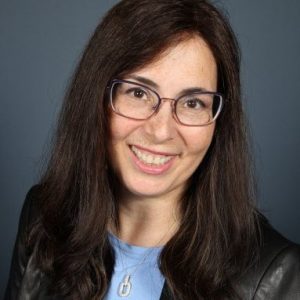
Popper is a business leader, physician, and lawyer with more than 30 years of experience in medical technology, diagnostics, and the life sciences. Her work has focused on technologies and services that improve healthcare efficiency, with a growing emphasis on the intersection of healthcare, biology, technology, and artificial intelligence.

She has held operational and strategic roles at BD and bioMérieux, served as Chief Business Officer of MDS Proteomics, founded Popper and Company, and co-founded The Sherpanis with Julie Wilkinson. She also served as Chief Commercial Officer of Johns Hopkins Precision Medicine and led commercialization activities for the Johns Hopkins Applied Physics Lab Healthcare Mission Area. She currently serves as co-chair of the American Bar Association Healthcare Section AI Task Force.

Wilkinson is a scientist, C-level executive, and entrepreneur with more than 30 years of experience advancing MedTech innovations through FDA clearance and GMP manufacturing across medical devices, digital health, and in vitro diagnostics. She has led R&D efforts at major health technology companies, including Abbott, Beckman Coulter, and Agilent, and founded and grew a life science service company from zero to $10 million before a successful exit.

Her expertise spans FDA product development pathways, MedTech technology readiness, investor diligence, product-market fit, value proposition development, business model design, and commercialization strategy. She was also part of the $2 billion RADx Tech NIBIB initiative, which helped create U.S. manufacturing capacity for COVID-19 tests, and has led company teams through FDA authorization and manufacturing scale-up for new diagnostics.

“Caroline and Julie bring the kind of hands-on operating experience that is invaluable to entrepreneurs and early-stage companies,” said BHI President and CEO, Rich Bendis. “Their combined expertise in diagnostics, MedTech, FDA strategy, commercialization, manufacturing, AI, and venture-building will strengthen BHI’s ability to support innovators as they move from promising technologies to market-ready solutions.”

“Caroline and I are very excited to join the BHI Entrepreneur-in-Residence team and support our capital region entrepreneurs as they accelerate the transformation of innovative ideas into market-ready products. Turning an idea into a successful commercial product takes far more than funding and determination, it requires the collaboration of experienced experts working together as an active team. The Entrepreneur-in-Residence program led by Rich Bendis exemplifies that collaborative approach and provides entrepreneurs with the strategic support needed to move innovation forward,” said Julie Wilkinson, New Entrepreneur-in-Residence, BioHealth Innovation.

As Entrepreneurs-in-Residence, Popper and Wilkinson will work with BHI and its partners to help emerging companies evaluate technology readiness, refine commercialization strategies, navigate regulatory and development milestones, assess market opportunities, and build stronger pathways toward investment, partnership, and growth.

Their addition reflects BHI’s continued commitment to expanding its EIR network with leaders who have deep technical expertise, operating experience, and a strong understanding of what it takes to move biohealth innovations from concept to commercialization.

Organizations and Institutions interested in EIR support through BHI are encouraged to contact Rich Bendis, President and CEO of BioHealth Innovation, at rbendis@biohealthinnovation.org.

About BioHealth Innovation, Inc.

BioHealth Innovation, Inc. (BHI) is a nonprofit innovation intermediary that accelerates the commercialization of promising biohealth technologies. BHI works with entrepreneurs, startups, research institutions, federal laboratories, universities, investors, and industry partners to help move science from discovery to market.

Through its Entrepreneurs-in-Residence program, non-dilutive funding support, international soft-landing services, and commercialization expertise, BHI helps companies and innovators strengthen business strategies, pursue funding, connect with partners, and navigate the path toward growth. BHI is also a founding member and manager of the BioHealth Capital Region brand, supporting the continued development of Maryland, Washington, D.C., and Virginia as one of the nation’s leading life sciences clusters.

From Can to Should: Reassessing Viability in 2026

By EIR Insights, News

Last year, I wrote a LinkedIn Article titled “To be or not to be: Just because you CAN, doesn’t mean you SHOULD.” The point was straightforward. Passion and good science are not enough. They never really were. That post was a reaction to what I was seeing across early-stage biotech and MedTech at the time. The environment has not eased since then. If anything, the bar has moved higher.

The requirements for viability are more stringent today than they were even a year ago. Early-stage capital remains difficult to access, particularly at the seed and Series A stages, unless a company has human proof of concept. Angel investors want de-risking. Most venture funds will not underwrite the earliest technical risk. Government funding used to fill that gap. The uncertainty around the reauthorization of innovation investment programs has made it harder to hit commercially meaningful milestones at exactly the stage when companies need that support most. Until policy catches up, founders are forced to seek private capital that is increasingly selective and unforgiving.

This shifts the question founders need to ask themselves. It is no longer whether an idea is interesting or even whether it addresses an unmet need. The question is whether the idea can survive the current validation threshold. That threshold is no longer defined by enthusiasm or momentum. It is defined by evidence, timing, and a clear path to value creation that stands up to scrutiny.

Commercial realism remains the most common failure point. Founders and CEOs are almost always optimistic about their opportunity, and they should be. If the CEO is not the champion, no one else will be. The problem arises when optimism replaces rigor. Market size is often overstated. Competitive dynamics are underestimated. Pricing and reimbursement assumptions are built on hope rather than data. Real market assessments require primary customer discovery paired with precedent sales data, both top-down and bottom-up. They also require discipline about who the customer is and where adoption will realistically occur.

Differentiation has also changed. Incremental improvements used to matter. Slight changes in dosing or convenience could be enough in some cases, but that still holds only if the market signals that it values those changes. In many therapeutic and digital health categories, that bar has risen. The existence of a standard of care, even an imperfect one, changes everything. Workarounds that are cheaper and good enough are formidable competitors. A fourth- or fifth-line product rarely succeeds just because the total addressable market is significant. Investors are not persuaded by big numbers without a sophisticated explanation of what portion of that market is reachable and why.

Health economics can no longer be an afterthought. Payers are not focused on novelty. They are focused on sustainability. Cost effectiveness, total cost of care, and system-level impact matter early, not late. Clinical development strategies that ignore this reality tend to produce assets that struggle to gain traction even if they reach approval.

Manufacturing and supply chain considerations are now decisive factors in viability. Fully burdened cost modeling should be mandatory, not optional. Many promising concepts fail when exposed to the realities of sourcing, scale-up, tech transfer, and CDMO capacity. Lead times for specialized reagents, limited suppliers, geopolitical pressures, and competition from larger customers all introduce risks that can derail timelines and margins. Profitability estimates that are not grounded in real quotes and realistic assumptions are unreliable. A product that cannot be manufactured profitably at scale is not a product. It is an experiment.

Intellectual property expectations have also hardened. Venture investors continue to favor novel chemical entities with enforceable composition-of-matter claims. Method-of-use claims and simple repurposing strategies remain difficult to defend commercially. Off-label use, generic substitution, and payer resistance erode value quickly. Repurposing can be both capital and clinically efficient, but unless there is a credible way to lock the market through delivery technology, owned chemistry, or a pricing model that holds, it is rarely attractive to institutional capital. The irony is that some of the most efficient paths to patient benefit struggle the most under current investment models.

Clinical adoption risk extends far beyond efficacy. I look at alternatives already in use and ask who they fail and why. I look at early predictors of response and whether patient selection is feasible. I look at whose pain point is being addressed and whether that aligns across providers, patients, payers, and regulators. Evidence requirements vary by stakeholder, and the costs and time required to satisfy them must be modeled honestly. I also look closely at who makes the buying decision and how the product would be sold. Adoption fails as often for psychological and behavioral reasons as it does for scientific ones.

Deciding whether to move forward, pause, or walk away requires discipline. Founders need to evaluate unmet need, solution fit, market opportunity, IP defensibility, validation requirements, development and manufacturing plans, regulatory and reimbursement pathways, financial models, and exit logic together. Weaknesses in any one area can undermine the entire effort. The willingness to stop is not a sign of failure. It is a sign of judgment. In this environment, the threshold for validation is higher across the board, even in areas that remain attractive to pharma and investors.

This is where an experienced, external perspective matters. A short, focused conversation can surface gaps that would otherwise take years and significant capital to discover. Stress-testing assumptions early saves time, money, and energy. Not every idea should become a company. Not every asset belongs in a pipeline. The goal is not to build something at all costs. The goal is to build something that has a real chance of reaching patients and creating value along the way.

Being in the business of innovation means living with uncertainty and learning constantly. It also means making hard calls sooner rather than later. Just because you can still does not mean you should. The difference between the two has never mattered more.

Search

You have successfully subscribed to the newsletter

There was an error while trying to send your request. Please try again.

BioHealth Innovation will use the information you provide on this form to be in touch with you and to provide updates and marketing.