
 The article below was originally developed by the State Science & Technology Institute (SSTI), a national nonprofit organization that works with states, regions, and practitioners to strengthen science, technology, innovation, and entrepreneurship as drivers of economic prosperity.
Founded in 1996, SSTI serves as the most comprehensive resource for technology-based economic development, offering research, advisory services, and convenings that support the growth of competitive innovation ecosystems. Through its nationwide network of policymakers and practitioners, SSTI provides unique insight into best practices and emerging trends, helping communities design and implement strategies that translate research and innovation into sustained economic impact.
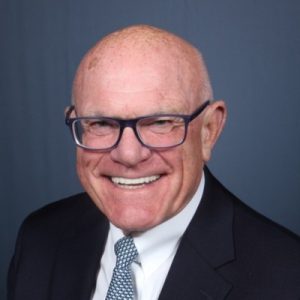
This profile of Rich Bendis reflects SSTI’s long-standing focus on how regional leadership, public-private collaboration, and innovation intermediaries can shape durable, globally competitive biohealth and technology clusters. Rich Bendis was one of the original Board members of SSTI.
How to transform from “flyover” to biotech cluster
Richard Bendis has significant experience building biotech clusters in formerly “flyover” regions (e.g., places that lack the infrastructure to support tech-based entrepreneurs and companies). Around 2009-2010, he was giving a presentation at the National Academy of Sciences in Washington, D.C., on how to build these regions around an industry-driven private-public partnership. After the talk, someone from Johns Hopkins approached him and said they had been trying—with little success—to build a biotech cluster in Maryland. They asked him to come to Montgomery County, Maryland, the epicenter of the region’s life sciences industry.
Bendis accepted the challenge and began working as a consultant for Montgomery County. He created an advisory board that considered forming an organization to foster greater interaction among academia, government, and industry in the region. The group asked Bendis to serve as the interim CEO of a new organization that would serve as an innovation intermediary in the region. Bendis founded BioHealth Innovation, Inc. (BHI) in 2011; Bendis created the term “BioHealth” for BioHealth Innovation as a more relevant term than biotechnology or biosciences due to the convergence of technology and the life science industry. BHI held its first board meeting in January 2012. The board continues to be industry- led, and market-driven.
Bendis presented recommendations on how to get everyone engaged and told them they would need three years of funding to keep going and meet their goals. He also told the group, “Everybody has to step up to the table.” At first, there was dead silence. Bendis pressed, saying, “Who is going to be engaged first?” The first person to commit was Montgomery County’s County Executive, who offered $500,000 per year for three years.
“Once he made the commitment, industry and academia followed,” said Bendis. “But it took government to take the initiative. So, you never know where the champion is going to come from. But it is necessary to identify a respected regional leader that can help mobilize all of the other partners.”
The organization’s geographic scope quickly expanded from Montgomery County to the surrounding area. “Medimmune (now AstraZeneca) said, ‘we don’t care where anybody is from,” Bendis recalled. “(They weren’t worried) about state borders, county borders, city borders, rivers or bridges,” said Bendis. “(They just wanted) to see the whole ecosystem working together.” Then, the president of Johns Hopkins said that if they included Baltimore—located in Baltimore County—in a regional initiative, the university would join and become active on the board. The Montgomery County Executive did not hesitate to accept Johns Hopkins’ proposal, saying, “If that’s what it’s going to take to get this going, then let’s do it.”
“That’s the kind of support you need,” said Bendis.
The next step was to create a brand for the region. People were calling the region the DMV for D.C., Maryland, and Virginia, which suggested “Division of Motor Vehicles” more than “biotech cluster.” Medimmune/AstraZeneca pushed for a brand comparable to Route 128 in Boston, the Research Triangle, Austin, Texas, and Silicon Valley.
One negative outcome of having no brand was that they were missing out on higher ratings in Genetic Engineering & Biotechnology News’ (GEN) annual Top 10 U.S. Biopharma Clusters list. When the publication started ranking the Maryland area, it ranked only a five-mile stretch on Interstate 270. Thus, the area struggled to achieve a top- 10 ranking. Other clusters, such as Boston/Cambridge, the San Francisco Bay Area, and New York/New Jersey, get credit for activity beyond specific city or state borders.
They decided to call their newly conceived geographic area the “BioHealth Capital Region.” “I came up with the term ‘BioHealth’ to merge the technology and life science industries in our name,” said Bendis. “And Capital, because we need money and capital, but we’re also in the Nation’s Capital, so you can go either with an ‘A’ or an ‘O,’ and then ‘Region,’ because there was not a history of the region working together across the Potomac.”
Medimmune/AstraZeneca spearheaded the branding effort. They paid their public relations firm to host a series of meetings over six months to determine whether the regional effort would benefit from having a brand. They concluded that it would.
The first order of business after deciding to create a brand was to gain a better understanding of the region’s challenges. Bendis led a gap analysis, speaking with nearly 100 people across 55 organizations. The most significant gap they identified was a lack of support for commercialization. “A lot of these people were researchers at academia, or they had spun out of NIH, or they were creating their own company, but they didn’t have a lot of business experience,” said Bendis. “So, one of the major gaps was how to get commercialization of business expertise to these people when they need it.” To fill this gap, BHI created the Entrepreneur-in-Residence program.
The gap analysis had revealed that at NIH, there was a 60-person technology transfer office that was not proactive about engaging with investors or industry. Bendis suggested they bring in an entrepreneur-in-residence (EIR). This person would be someone who understands the industry, marketing, investment, and the needs of strategic partners. NIH agreed to the concept but did not have the funds to support such a person. Bendis said BHI would fund the first one. The program, said Bendis, “took off from there.” NIH has 27 individual institutes, and several asked whether they could have an EIR as well. As a nonprofit, BHI couldn’t fund multiple EIRs, but it offered to help recruit EIRs if the institutes could find the funding The National Heart, Lung, and Blood Institute (NHLBI) contracted for the second EIR. “They were very proactive about wanting to have commercialization for their … small business innovation research programs…. They were making investments in these companies, and these companies didn’t have a lot of business or commercialization expertise.” The institute provided funding, and BHI did the recruiting, kept the EIRs on its payroll, and helped manage their work.
Now, BHI has 33 EIRs located nationally in addition to servicing NIH. It is the exclusive provider of EIRs to ARPA-H-funded companies. Additionally, they have a contract with Montgomery County for the Montgomery County Executives-in-Residence program, which provides life-sciences-specific services to selected local companies. And they have recently contracted BioHealth-managed EIRs to support commercialization for companies located at BARDA’s SPARK Accelerator in
Washington, D.C.
The BHI gap analysis also found that many early-stage entrepreneurs in Maryland and the BioHealth Capital Region (BHCR) were applying for SBIR grants but had a below-average success rate. Moreover, no one in the region was providing support for these companies. In response, BHI developed an internal team of analysts to support early-stage entrepreneurs who wanted to submit proposals. So far, BHI has helped more than 200 companies, with a 46% success rate and over $100 million of SBIR awards for their clients. BHI provides these services at minimal cost to companies; if the company is successful, BHI gets a success fee. BHI uses this money to help support other companies.
BHI also works directly with the region’s university technology transfer offices. BHI has worked with several universities and currently has a contract with Georgetown University to provide EIRs and analysts to the recently launched Georgetown Tech Ventures (GTV). They are helping to evaluate GTV’s technology pipeline, determine which innovations have commercial potential, and
develop strategies for what to do with those technologies.
To unite the region, BHI offers events that bring biohealth leaders together to learn about emerging trends within their industry. The BioHealth Capital Region Forum, offered in partnership with Medimmune/AstraZeneca in Gaithersburg, MD. They held the first forum 12 years ago in an amphitheater provided by the company. The event grew larger every year until the COVID pandemic, when they went hybrid. Now, US Pharmacopeia in Rockville, MD, provides space for the event. They
charge no registration fee, and in 2025, they had 46 sponsors who provided $230,000 to support the forum. Seven hundred fifty people attended, from throughout the U.S. and from Estonia, Finland, and Sweden, and other international locations.
Another event during the Forum is the Crab Trap Competition. “It’s like a shark tank but with crabs, crabs being Maryland-centric,” said Bendis. They also offer an investment conference. About 33 companies give quick pitches to showcase their companies. On the third day, they have one-on-one company-investor meetings.
“Another thing we do to get people engaged is a podcast I created called BioTalk,” said Bendis. “It could be about entrepreneurs, industry, government, academia, NGOs, venture capitalists, or those engaged in the biohealth industry. And that helps spread the word for the region. And also helps spread the word for some of the companies that we showcase on the podcast.” They’ve been producing the podcast for about eight years.
One indicator of success, to Bendis, would be that people understand the region’s vibrancy. That they are perceived in this way is illustrated by their rise in GEN’s Top 10 ratings.
One of the goals for the BioHealth Capital Region was to improve its ranking to number three. They have accomplished that goal. From 2016 through 2021, they ranked as low as sixth. By 2022, one year ahead of their goal, BioHealth Capital Region ranked number three, and they have maintained that ranking through 2025.
“BioHealth Innovation has been successful due to the public-private partnership of its mission and governance, as well as being blind to artificial geographic boundaries,” said Bendis. “The goal now is to maintain our number three ranking,”
GEN’s criteria for the rankings are NIH funding, number of patents, lab space, value of venture capital deals, and number of industry jobs in the region. In 2018, their second year after GEN ranked them as BioHealth Capital Region, they had:
- $1.456 billion in NIH funding
- 4,943 patents
- $22.5 million sq ft. of lab space (According to Rockville, MD-based Scheer Partners, which measures the entire region, vs. JLL’s 9.5 million for “suburban Maryland”)
- $944.07 million for VC deals
- 41,322 jobs (according to JL63L)/63,287 (according to Battelle)
This year, 2025, the GEN metrics for the region are:
- $3.639 billion in NIH funding (a 16% drop from last year)
- 9,141 patents (highest number in the nation)
- 35.8 million sq. ft. of lab space (according to JLL)
- $1.387 billion for VC deals (53% drop from 2024)
- 133,743 jobs (Government cuts helped shrink employment 1.8% this year, according to JLL data)
The growth since 2018 is clear, despite some drops in numbers since last year, which, according to GEN, were mainly due to the government’s funding cuts and the elimination of government jobs heavily concentrated in this region. But GEN suggests these are temporary setbacks, citing some significant growth for the region’s bio industry in the past year, including:
- A recently opened $300 million AstraZeneca cell therapy manufacturing facility in Rockville, MD
- A $286 million biosafety testing facility opened in October by MilliporeSigma
- 4MLK, a 250,000-square-foot multitenant lab-office building completed in Januaryby the University of Maryland, Baltimore, and developer Wexford Science + Technology
BHI recently posted a “Top 10 BioHealth Capital Region Stories of 2025” article on their website which also included AstraZeneca Expands Virginia Investment to $4.5 Billion, and Samsung Biologics Establishes U.S. Manufacturing Footprint in Maryland.
BHI’s Top 10 BioHealth Capital Region Stories of 2025
The BioHealth Capital Region closed out 2025 with clear evidence of strength and momentum. While life sciences companies across the country navigated capital constraints, policy uncertainty, and global market shifts, the BHCR region continued to grow. Major manufacturers expanded their U.S. footprints, new facilities came online, research institutions deepened their role in advanced technologies, and investment flowed across companies at every stage. Taken together, these stories show a region that did more than hold its ground. It advanced, adapted, and continued to lead.
The BioHealth Capital Region Maintains a Top 3 National Ranking
For the third consecutive year, the BioHealth Capital Region earned a Top 3 position in GEN’s U.S. Biopharma Cluster Rankings. The region led the nation in biotechnology-related patents and ranked third in both NIH funding and lab space, maintaining strong performance despite economic pressure across the sector. Continued infrastructure investment and new facilities across Maryland and Virginia underscore long-term stability and competitiveness.
https://biohealthinnovation.org/the-biohealth-capital-region-maintains-top-3-spot-in-gens-2025-u-s-biopharma-cluster-rankings/
Lilly Commits $5 Billion to New Manufacturing in Virginia
Eli Lilly announced plans to build a $5 billion manufacturing facility in Goochland County, Virginia, marking its first fully integrated U.S. site dedicated to the manufacture of active pharmaceutical ingredients and drug products for bioconjugates and monoclonal antibodies. The project will create more than 650 permanent jobs and support advanced manufacturing using AI, automation, and digital systems.
https://biohealthinnovation.org/lilly-announces-plans-to-build-5-billion-manufacturing-facility-in-virginia/
AstraZeneca Expands Virginia Investment to $4.5 Billion
AstraZeneca increased its planned investment in a new Albemarle County manufacturing facility to $4.5 billion, expanding the site’s scope to include antibody drug conjugates alongside metabolic and oncology products. The project is expected to create approximately 3,600 direct and indirect jobs and will anchor a broader $50 billion U.S. manufacturing and R&D commitment.
https://biohealthinnovation.org/astrazeneca-plans-to-increase-investment-and-scope-of-its-virginia-manufacturing-facility-to-4-5-billion-creating-3600-new-jobs/
Nearly $3 Billion Invested in Montgomery County Companies
Montgomery County companies attracted $2.9 billion in investment during 2024 across mergers, acquisitions, venture capital, and private funding. Life sciences accounted for more than half a billion dollars, reinforcing the county’s role as a regional anchor for biohealth innovation. Over 100 deals reflected strength across companies of all sizes.
https://biohealthinnovation.org/mcedc-nearly-3-billion-invested-in-montgomery-county-maryland-companies-in-2024/
Merck Breaks Ground on $3 Billion Manufacturing Center in Virginia
Merck began construction on a $3 billion pharmaceutical manufacturing Center of Excellence in Elkton, Virginia. The project will expand small molecule manufacturing and testing capabilities while supporting more than 500 permanent roles and thousands of construction jobs. The investment builds on Merck’s long-standing presence in the region and its broader U.S. manufacturing strategy.
https://biohealthinnovation.org/merck-breaks-ground-on-3-billion-center-of-excellence-for-pharmaceutical-manufacturing-in-elkton-virginia/
AstraZeneca Opens $300 Million Rockville Manufacturing Hub
AstraZeneca unveiled its new $300 million Rockville Manufacturing Center, focused on cell and gene therapies for oncology clinical trials. Built using advanced digital tools, the facility reflects continued confidence in Montgomery County at a time of broader federal funding uncertainty. The site is expected to begin delivering therapies to patients in the near term.
https://biohealthinnovation.org/wbj-astrazeneca-unveils-300m-rockville-investment-a-boost-for-moco-amid-federal-cuts/
Samsung Biologics Establishes U.S. Manufacturing Footprint
Samsung Biologics announced the acquisition of the former Human Genome Sciences facility in Rockville, Maryland, securing its first U.S.-based manufacturing site. The transaction adds 60,000 liters of biologics capacity to Samsung’s global network, retains more than 500 skilled jobs, and strengthens domestic supply chain resilience.
https://biohealthinnovation.org/samsung-biologics-expands-u-s-manufacturing-capabilities-with-strategic-acquisition-of-human-genome-sciences-from-gsk/
USP Opens Advanced Technologies Laboratory in Maryland
The U.S. Pharmacopeia launched a new Advanced Technologies Laboratory in Rockville to support the adoption of advanced manufacturing, real-time quality monitoring, and alternative API production methods. The lab is designed to accelerate scalable solutions that strengthen medicine supply chains and support domestic manufacturing efforts.
https://biohealthinnovation.org/usp-announces-new-advanced-technologies-laboratory-in-maryland-to-accelerate-and-scale-pharmaceutical-manufacturing-innovations/
Northern Virginia Launches Its First Innovation District
With support from GO Virginia, Northern Virginia launched its first Innovation District focused on life sciences, aerospace, defense, and semiconductor industries. Led by George Mason University in partnership with Prince William County and the City of Manassas, the district aims to accelerate research translation, company formation, and workforce development.
https://biohealthinnovation.org/george-mason-is-part-of-northern-virginias-first-innovation-district-launched-with-transformational-grant-from-go-virginia/
Where Human and Artificial Intelligence Converge
The 2025 BioHealth Capital Region Forum brought together more than 750 attendees for two days of programming focused on AI, quantum technologies, advanced manufacturing, and investment. The week highlighted the region’s leadership across research, commercialization, and capital formation, while reinforcing its position as a Top 3 U.S. biopharma cluster.
https://biohealthinnovation.org/where-human-and-artificial-intelligence-converge-a-recap-of-the-2025-biohealth-capital-region-forum/
Looking ahead to 2026, the BioHealth Capital Region enters this year with depth across research, manufacturing, talent, and capital. Projects announced over 2025 are moving into execution, partnerships are strengthening, and the region’s role in national health security and innovation continues to expand. The trajectory is clear, and the foundation is strong. What comes next will build on a year that demonstrated both toughness and ambition.
Looking to partner with Rich and BHI? Email Rich at rbendis@biohealthinnovation.org today!