
The “next generation of science” is at risk unless major changes are made to increase opportunities for young researchers, Johns Hopkins University President Ronald Daniels wrote in a scientific journal article published Tuesday.
The “next generation of science” is at risk unless major changes are made to increase opportunities for young researchers, Johns Hopkins University President Ronald Daniels wrote in a scientific journal article published Tuesday.
Bioentrepreneurship is the process of creating customer defined value by creating, developing, deploying and harvesting biomedical and/or sick care or health and wellness innovation. The definition includes three key elements: process, value creation and innovation.
The hollow Cola tree growing in a remote area of southeastern Guinea was once home to thousands of bats routinely hunted and killed by the neighborhood children. It was also a popular spot to play. A year ago, one child in particular lived within fifty meters of the tree: a two-year-old boy who died in December 2013 and later was identified as the first person in west Africa known to have developed Ebola. The tree was one of the few that loomed over his home village of Meliandou, a hamlet of 31 houses. The question that now haunts researchers: were the tree’s occupants behind how that small boy contracted the virus in the first place?
Montgomery County Executive, Ike Leggett, has named Sally Sternbach Acting Director for the Department of Economic Development effective January 3, 2015.
Funding and Research Opportunities
The following funding opportunity announcements from the NHLBI or other components of the National Institutes of Health, might be of interest:
Notices:
Please note that most links to RFAs, PAs, and Guide Notices will take you to the NIH Web site. RFPs will take you to FedBizOpps. Links to RFPs will not work past their proposal receipt date. Archived versions of RFPs posted on FedBizOpps can be found on the FedBizOpps site using the FedBizOpps search function. Under “Document to Search,” select Archived Documents.
The National Council of Entrepreneurial Tech Transfer (NCET2) is holding a Combined University Startups and Global 1000 Meet | Partner | Deal Conference in Washington, D.C., March 10-12. The event will bring together two dynamic conferences:
GLOBAL 1000 TRANSACTION NETWORK COMPANY SHOWCASE
SUBMISSION DEADLINE: JANUARY 21
Submit your high-growth and innovative companies to individually meet with and showcase to an exclusive Global 1000 Transaction Network of Corporate Investors, Venture Capitalists, and Angel Investors at the Combined University Startups and Global 1000 Meet | Partner | Deal Conference in Washington, DC, on March 11 and 12, 2015. Know more about this powerful showcase program

Startups face huge challenges. But we can help.
We’ve helped scores of them grow by putting their CEOs in front of a live audience of investors, tech executives and media at our annual Emerging Companies Summits.

With 41 novel drug approvals under the regulators’ belts last year, 2014 represented an 18-year high for the Food and Drug Administration – including a record number of okayed meds for orphan diseases, the Associated Press says…

Finding funds for early stage companies has always been a great challenge. In past venture financing cycles, it’s been the gap between the first venture financing (Series A) and the growth capital or mezzanine financing that many emerging companies were unable to bridge. This gap, called the “valley of death,” was attributed to a number of factors, but that valley of death has shifted in important ways in the recent past.
Curator: Stephen J. Williams, Ph.D
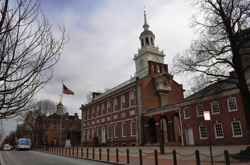
I am intending to do a series of posts highlighting interviews with Philadelphia area biotech startup CEO’s and show how a vibrant biotech startup scene is evolving in the city as well as the Delaware Valley area. Philadelphia has been home to some of the nation’s oldest biotechs including Cephalon, Centocor, hundreds of spinouts from a multitude of universities as well as home of the first cloned animal (a frog), the first transgenic mouse, and Nobel laureates in the field of molecular biology and genetics. Although some recent disheartening news about the fall in rankings of Philadelphia as a biotech hub and recent remarks by CEO’s of former area companies has dominated the news, biotech incubators like the University City Science Center and Bucks County Biotechnology Center as well as a reinvigorated investment community (like PCCI and MABA) are bringing Philadelphia back.