

Emergent Biosolutions produces cures in Downtown Baltimore for cancer patients, troops and stockpiles in case of a chemical attack.
Emergent Biosolutions produces cures in Downtown Baltimore for cancer patients, troops and stockpiles in case of a chemical attack.

Fractal Technology, a startup founded at Johns Hopkins, was recently acquired by Annapolis Junction–based Sunayu, according to the cofounders.

Threats come in all sizes, some so small you can’t see. The damage, however can be catastrophic.
Emergent BioSolutions creates remedies for diseases like cancer and ebola, chemical attacks like anthrax, as well as those against our troops, like mustard gas.

The Johns Hopkins University and the University of Maryland, College Park were ranked among the top tier in the U.S. News and World Report annual rankings of colleges and universities released Tuesday.

UK-based liquid biopsy firm Angle said today that it has inked a comarketing agreement with Qiagen for circulating tumor cell (CTC) technology.

What does it really cost to bring a drug to market?
The question is central to the debate over rising health care costs and appropriate drug pricing. President Trump campaigned on promises to lower the costs of drugs.

Pharmaceutical firm Gilead Sciences has just put up a cool $11.9 billion to acquire Kite Pharma, which has developed a genetic engineering approach for treating cancers.

Every year, as part of their strategic planning, executives’ minds turn to setting performance targets—and then achieving them. In so doing, those at medical-device companies should bear in mind the high hopes shareholders have for future growth. Can these hopes be met?

On Monday, the California gene-hunting company Human Longevity published a paper making the bold claim that it can identify individuals using their genomes to predict what their faces looks like.
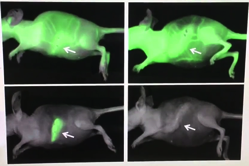
Scientists at the Sanford Burnham Prebys Medical Discovery Institute (SBP) in San Diego, California have devised a way to optically image tumors with unprecedented clarity using quantum dots. These nano structures are tiny particles, only a few nanometers wide, that generate light of a specific wavelength when they’re themselves stimulated by a light beam. On their own quantum dots are quite bright, but their signal gets washed out by other nearby quantum dots. To clean the signal and be able to see tumors better, the SBP team used a so-called “etchant”.