

The National Oceanic and Atmospheric Administration (NOAA) has awarded a five-year $175 million cooperative funding agreement to the University of Maryland for collaborative research in Earth system science.
The National Oceanic and Atmospheric Administration (NOAA) has awarded a five-year $175 million cooperative funding agreement to the University of Maryland for collaborative research in Earth system science.

Emergent BioSolutions Inc. (EBS) today announced approval by the U.S. Food and Drug Administration (FDA) of the Prior Approval Supplement (PAS) submitted by the company for its oral cholera vaccine, Vaxchora® (Cholera Vaccine, Live, Oral). The PAS supports the change in storage conditions of the vaccine from frozen to refrigerated at 2-8°C and the transfer of bulk drug substance manufacturing from Emergent’s product development facility in San Diego to its manufacturing facility in Bern, Switzerland. The PAS also covers changes in labeling regarding these developments. The company’s oral cholera vaccine is the only FDA-licensed vaccine for the prevention of cholera caused by Vibrio cholerae serogroup O1, a potentially serious intestinal disease.
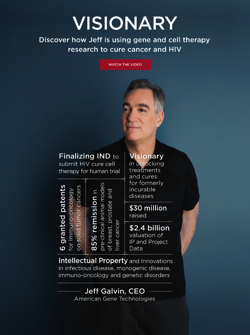
MCEDC discovers how Jeff is using the availability of raw talent and novel technology unique to Montgomery County, MD to help cure HIV and cancers with gene and cell therapy research.
The great American political divide shows no sign of ending as the United States lurches toward the 2020 presidential election. However, one of the few areas where the parties have joined together in recent years has been where NIH funding is concerned.
Emergent BioSolutions Inc. (NYSE: EBS) today announced a contract award by the Office of the Assistant Secretary for Preparedness and Response (ASPR) in the U.S. Department of Health and Human Services (HHS) valued at approximately $535 million over 10 years for the continued supply of Vaccinia Immune Globulin Intravenous (VIGIV) into the U.S. Strategic National Stockpile (SNS) in support of smallpox preparedness.

REGENXBIO Inc. (Nasdaq: RGNX), a leading clinical-stage biotechnology company seeking to improve lives through the curative potential of gene therapy based on its proprietary NAV® Technology Platform, today announced the first U.S. Food and Drug Administration (FDA) approval of a gene therapy that leverages REGENXBIO’s proprietary NAV Technology Platform, Novartis AG’s ZOLGENSMA® (onasemnogene abeparvovec-xioi; AVXS-101). ZOLGENSMA was approved by the FDA as a one-time infusion for pediatric patients with spinal muscular atrophy (SMA) who are less than two years of age.

A newborn. A fatal diagnosis. And soon, a one-time gene replacement cure in the first weeks of life.
The cost? You don’t want to know.
Today, the Biotechnology Innovation Organization (BIO) released the 2019 Emerging Therapeutic Company Trend Report, highlighting ten years (2009-2018) of biotechnology funding and deal making across five areas: venture capital, Initial Public Offerings (IPOs), follow-on public offerings, licensing, and acquisitions. The report also contains a 2019 snapshot of the industry’s clinical pipeline to highlight the significant contribution of emerging companies.

For aspiring entrepreneurs, the thought of building a company from scratch can be daunting. What if no one wants to buy what you’re selling? Where will the money come from to grow the business? And what will happen if you fail?
The BIO International Convention is being held in Philadelphia from June 3-6, with more than 16,000 attendees expected from around the world. The convention draws a list of who’s who in drug discovery, biomanufacturing, genomics, biofuels, nanotechnology and cell therapy, with more than 7,000 companies and 47,000 partnering meetings.