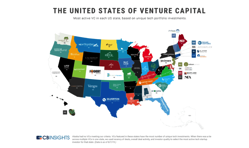
Our map shows the top VC investing in tech companies in each state, from 500 Startups in California to Lerer Hippeau in New York.
Our map shows the top VC investing in tech companies in each state, from 500 Startups in California to Lerer Hippeau in New York.

Researchers have been able to coax human breast cancer cells to turn into fat cells in a new proof-of-concept study in mice.
To achieve this feat, the team exploited a weird pathway that metastasising cancer cells have; their results are just a first step, but it’s a truly promising approach.
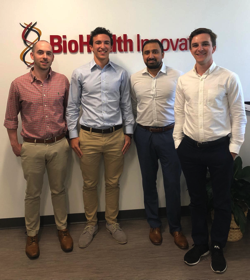
Thank you to BioHealth Innovation, Inc. for this incredible experience. I learned so much from these brilliant minds, and look forward to an ongoing relationship.

Applications Due September 5
The Commercialization Readiness Pilot (CRP) Program is now open and accepting applications for the September 5th NIH SBIR/STTR receipt date. NHLBI will accept applications via PAR-19-333, PAR-19-334, and PAR-19-335 from small businesses that have had an active NHLBI SBIR or STTR Phase II or Phase IIB award within the last 36 months.
This opportunity provides up to $300,000 (PAR-19-334) or $500,000 (PAR-19-333, PAR-19-335) to support technical assistance and later stage research and development (R&D) not typically supported through Phase II or Phase IIB grants or contracts including:
Contact NHLBI Small Business Program Coordinator Mike Pieck (NHLBI_SBIR@mail.nih.gov) with questions.
Bayer said today it has agreed to acquire BlueRock Therapeutics for up to $600 million in a deal designed to catapult the buyer into leadership in cell therapies, nearly three years after joining with healthcare investment firm Versant Ventures to launch the company.

This just in: Maryland’s internet is the least likely to cut out right at the juicy scene in ‘The Bachelor’. According to web service provider assessment group Highspeedinternet.com, Maryland has the fastest internet speed in the country.

While medical device innovation is quite active—at the university level, within incubators, and even in the R&D labs of established firms—there is a substantial lack of products being developed for younger patients. Since pediatric devices have a limited patient base due to most children being relatively healthy (of course, a positive factor), it’s not a focus for a great number of companies as it does not offer the promise of a substantial financial return.

The amount of deals and dollars invested in healthcare is hitting near record highs for the first half of 2019 with $26.9 billion poured into healthcare companies over 2,258 deals around the world, according to CB Insights’ Global Healthcare Report.
That represents a slight uptick from the first half of 2018 where $26.5 billion was invested over 2,223 deals.

Everyone knows how important funding is for starting a venture, whether you are building a small business or high-growth tech startup. The capital needs of a venture change along with the venture’s stage — early-stage ventures might need help with product development costs, while established companies may need funding to expand to a new location or market segment.
RoosterBio, Inc., a Frederick, MD-based human mesenchymal stem/stromal cell (hMSC) biomanufacturing company, raised in excess of $15m in an initial Series B financing.
The round was led by Dynamk Capital, with participation from existing and new investors. The Series B final round is expected to close with additional investors by the end of August, totaling approximately $22m raised.