

The rare autoimmune disease compromises the central nervous system.
The rare autoimmune disease compromises the central nervous system.
For the third consecutive year, Children’s National Health System is co-locating its annual Symposium with The MedTech Conference, powered by AdvaMed. If you are interested in advancing innovation in pediatrics and exploring solutions to the challenges associated with device trials, we hope that you will join key industry stakeholders at the 7th Annual Pediatric Device Innovation Symposium on Sept. 22 in Boston, one day before The MedTech Conference.

Kenton Lee was traveling through Nairobi when he had, as he says jokingly, “the only idea I’ve ever had.” He saw an orphan girl’s shoes that were way too small; someone had cut off the front so her toes could stick through. “Right there, I thought, Wouldn’t it be nice if there were shoes that could grow?” Then he went home to Boise, Idaho, developed a shoe that expands five sizes, and founded the nonprofit Because International — which today, 12 years later, has distributed more than 250,000 pairs worldwide.

Atlas Research released its “Impact Through Innovation” report highlighting how it has helped government improve health care and address urgent health challenges through new technology, agile innovation and evidence-based solutions.

AstraZeneca Plc said on Tuesday that the U.S. Food and Drug Administration has granted fast track status for the development of its diabetes drug Farxiga to prevent heart and kidney failure in patients with chronic kidney disease (CKD).
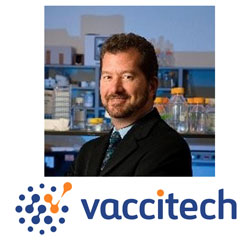
Vaccitech, a clinical-stage T cell immunotherapy company developing products to treat and prevent cancer and infectious diseases (ID), announced today that it has appointed Bill Enright as its new Chief Executive Officer (CEO). Mr. Enright succeeds Tom Evans, MD who will make a planned transition to the role of Vaccitech’s Chief Scientific Officer.

Oct 29: The Art of the #SBIR/ #STTR Deal: Best Practices in Improving Your Proposal with Olessia Smotrova, CF.APMP Fellow, Richard Bendis, Brittany Sickler, and Brandon Mason (https://expo.tedco.md)

America’s Seed Fund (the Small Business Innovation Research (SBIR) and Small Business Technology Transfer (STTR) programs) annually provides approximately over $3 billion in non-dilutive early-stage technology funding. The SBIR Road Tour is an opportunity for tech innovators, entrepreneurs, and researchers to learn how to access this funding, meet one-on-one with decision makers, and connect with local state innovation ecosystem members. This one-day event will provide attendees, including women and minority entrepreneurs, the opportunity to engage with representatives from various SBIR/STTR agencies.
If you’re an innovator, entrepreneur, researcher, or small technology firm, don’t miss this opportunity!

This year’s QS World University Ranking results have been released, and Johns Hopkins University earned spots as the 12th best in the United States and 24th overall in the world.
Access to capital is often considered primary challenge preventing Maryland from being the top-ranked state for biotech.