
Category

News Archive

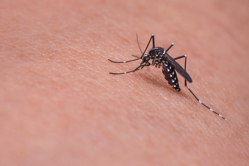
mosquito-pixa

Oxitec, a subsidiary of Germantown, MD based Intrexon, is working to fight mosquito born illnesses

By News Archive

mosquito-pixa

Most people consider mosquitoes to be a summertime pest – the unwelcome guest at the backyard barbecue. More concerning are the threats from disease-carrying mosquitoes, those that can potentially result in Dengue, West Nile, Yellow fever and Zika. And now media are reporting alarming cases of Eastern equine encephalitis (EEE) in the United States that have already killed at least three people and infected others.


Read More
perman-umb-president-image

City Business Leaders Hail Perman’s Leadership – University of Maryland, Baltimore

By News Archive

perman-umb-president-image

“I think most of you know how deeply I care for this city and its people, how much I love being part of a place with so much grit, and grace, and potential,” University of Maryland, Baltimore (UMB) President Jay A. Perman, MD, told several hundred members of the Downtown Partnership of Baltimore (DPOB) at the group’s annual meeting Sept. 12. “I can’t imagine a higher honor than being in a position to help Baltimore reach that potential, to help it become what we know it can be.”

Read More
clearside-biomedical-logo.png

RegenxBio reaches licensing deal with Clearside Biomedical – Washington Business Journal

By News Archive

clearside-biomedical-logo.png

RegenxBio Inc. just locked in another deal — this one with a company working to treat eye diseases.

The Rockville biotech has reached a licensing agreement with Alpharetta, Georgia-based Clearside Biomedical Inc. (NASDAQ: CLSD) for rights to its platform to treat several eye diseases including wet age-related macular degeneration and diabetic retinopathy. RegenxBio (NASDAQ: RGNX) plans to evaluate one of its own gene therapy programs, called RGX-314, using Clearside’s in-office injection as an alternative to surgery.

Read More
exercise-walk-0205-pixa

First hint that body’s ‘biological age’ can be reversed

By News Archive

exercise-walk-0205-pixa

A small clinical study in California has suggested for the first time that it might be possible to reverse the body’s epigenetic clock, which measures a person’s biological age.

For one year, nine healthy volunteers took a cocktail of three common drugs — growth hormone and two diabetes medications — and on average shed 2.5 years of their biological ages, measured by analysing marks on a person’s genomes. The participants’ immune systems also showed signs of rejuvenation.

Read More

Search

You have successfully subscribed to the newsletter

There was an error while trying to send your request. Please try again.

BioHealth Innovation will use the information you provide on this form to be in touch with you and to provide updates and marketing.