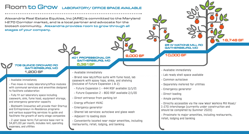
Alexandria Real Estate Equities, Inc (ARE) is committed to the Maryland I-270 Corridor market, and is a local partner and advocate for the biotech community. Alexandria provides room to grow through all stages of your company

Alexandria Real Estate Equities, Inc (ARE) is committed to the Maryland I-270 Corridor market, and is a local partner and advocate for the biotech community. Alexandria provides room to grow through all stages of your company

Our vision at Johnson & Johnson is for every person to use their unique experiences and backgrounds together – to spark solutions that create a better, healthier world.
By seeking out and encouraging diverse ideas and promoting collaborative thinking among inclusive teams, we believe the world can bring innovative healthcare solutions to patients and consumers that will improve health for humanity.

Thank you BioHealth Innovation, Inc. and AstraZeneca for another successful hashtag#BioHealth Capital Region BioBowl last night. The Children’s National Hospital team had a blast. And, we loved the slogan on our T-Shirts “Advancing Science. Accelerating Innovation.”
Richard Bendis Judy Costello @Albine Martin, Ph.D. Luis Gutierrez Jeff Walpole Sara Alyamani Whitney Black, MHA Justin Opfermann Lisa Romano BioBuzz Gayatri Varma Jarrod Borkat TEDCO Arti Santhanam Anthony Ho
hashtag#innovate4kids hashtag#bhcr hashtag#jlabs hashtag#pediatrics hashtag#healthcareinnovation hashtag#innovators
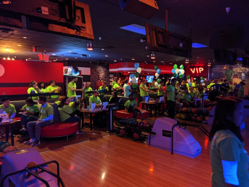
Very cool seeing so many people from the different BioHealth Capital Region. 30+ lanes of companies. BioHealth Innovation, Inc. BioBuzz

It’s getting competitive over here at the amazing hashtag#biobowl19 we are cohosting with AstraZeneca for the BioHealth Capital Region


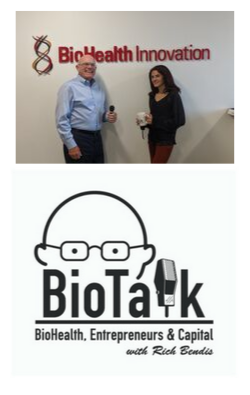
New Enterprise Associates Partner, Sara Nayeem, M.D., Joins Host Rich Bendis to Discuss Her Career, Venture Capital, and BioPharma
Sara Nayeem, M.D., is a Partner at New Enterprise Associates (NEA). Sara joined NEA’s healthcare team in 2009 and focuses on investments in biopharmaceutical companies. She serves on the boards of Centrexion, Complexa, Cydan, Imara, and Tiburio. She previously served on the boards of Vtesse (acquired by Sucampo), Mersana (MRSN) and Therachon and as a board observer for Loxo Oncology (LOXO, acquired by Lilly), Tesaro (TSRO, acquired by GlaxoSmithKline), Clementia (CMTA, acquired by Ipsen), Nightstar (NITE, acquired by Biogen), Ziarco (acquired by Novartis), Omthera (OMTH, acquired by AstraZeneca), Epizyme (EPZM), Millendo (MLND) and Zyngenia. She has also been involved in other NEA investments such as Prosensa (RNA, acquired by BioMarin), Metacrine, and 3-V Biosciences. She also serves on the board of BioHealth Innovation Management. Prior to joining NEA, Sara was an Associate with Merrill Lynch’s Global Healthcare Group, where she advised biotechnology, pharmaceutical and medical device companies on numerous mergers, acquisitions and financing transactions. Previously, she worked as an Investment Banking Analyst at Morgan Stanley. She has conducted basic science research in mammalian cardiac development and clinical research in age-related macular degeneration. Sara concurrently earned her MD (cum laude) and MBA from Yale University, where she was a Yale MBA Scholar. She received her AB (magna cum laude) in Biology from Harvard University.
Listen now on iTunes (https://apple.co/2o1V6Il), Google Podcasts (http://bit.ly/2oGqQ6h), and TuneIn (http://bit.ly/2ndZGmO).

GAITHERSBURG, Md.–(BUSINESS WIRE)–Adaptive Phage Therapeutics (APT), a clinical-stage biotechnology company founded to provide an effective therapeutic response to the global rise of multi-drug resistant (MDR) pathogenic bacteria, today announced that it has closed an oversubscribed, non-brokered financing, raising approximately $7 million in proceeds. Investors include Alexandria Venture Investments as well as a large integrated healthcare delivery network currently exploring the option to implement PhageBank™ therapy within its network of more than 17 hospitals and a NYSE-listed specialty life sciences company. Proceeds will be deployed to support multi-center phase 2 clinical studies for its PhageBank® therapy for antibiotic resistant bacterial infections.
Image: https://biobuzz.io

Happening now at the #BioInnovationConference, Henry Ahn of National Science Foundation (NSF), Joseph Naft of #MIPS, Judy Costello of BioHealth Innovation, Inc. , Paul Silber of Blu Ventures #Investors, & Jeff Galvin of American Gene Technologies International Inc. discuss “Alternative Funding Options for Launching Your Company.”
AGT will do our best to share resources mentioned during this talk after the conference for startups and early-stage companies.

Gregg L. Semenza, whose discoveries on how cells respond to low oxygen levels have the potential to result in treatments for a variety of illnesses, today was awarded the 2019 Nobel Prize in Physiology or Medicine by the Nobel Assembly at the Karolinska Institutet in Stockholm.
The academy recognized Semenza, the C. Michael Armstrong Professor of Medicine at the Johns Hopkins University School of Medicine, for his groundbreaking discovery of hypoxia-inducible factor 1, or HIF-1, the protein that switches genes on and off in cells in response to low oxygen levels.
Image: https://hub.jhu.edu

CAMBRIDGE, Mass. and GAITHERSBURG, Md., Oct. 07, 2019 (GLOBE NEWSWIRE) — Editas Medicine, Inc. (Nasdaq: EDIT), a leading genome editing company, and MaxCyte, Inc., the global cell-based therapies and life sciences company, today announced a new clinical and commercial license agreement. Editas Medicine will use MaxCyte’s Flow Electroporation® technology and ExPERT™ instruments for the advancement of engineered cell medicines, including EDIT-301, an experimental CRISPR medicine designed to durably treat sickle cell disease and beta-thalassemia.
The prize was awarded to William G. Kaelin Jr., Peter J. Ratcliffe and Gregg L. Semenza for their work in discovering how cells sense and adapt to oxygen availability.
The Nobel Prize in Physiology or Medicine was jointly awarded to three scientists — William G. Kaelin Jr., Peter J. Ratcliffe and Gregg L. Semenza — for their work on how cells sense and adapt to oxygen availability.
Image: Gina Kolata and Megan Specia – https://www.nytimes.com

Research and startups are each important ingredients as the University of Maryland, Baltimore works to build a biotech community. In the case of recent news from KaloCyte, a mix involving both came with one move. As announced last week, the team that is commercializing a synthetic blood product relocated from St. Louis to downtown Baltimore, with the company taking up residence at UMB and joining the University of Maryland BioPark as an affiliate.
Image: The University of Maryland BioPark. (Courtesy photo)