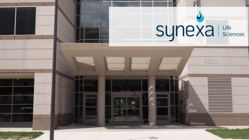
Synexa Life Sciences (Synexa), a global leader in clinical biomarker and bioanalytics research services, recently secured 5,000 square feet of lab space in Rockville, Maryland. The new lab will be located within Inotiv, Inc.’s (Inotiv) Rockville site and is part of a new partnership between Synexa and Inotiv, a leading contract research organization.
For more than 20 years, Synexa has been delivering expert clinical development insights to life sciences organizations via biomarker and bioanalytics solutions, novel modality analytics, innovative technology platforms and custom assay development and validation. The new Rockville lab adds to the company’s global footprint that, up until very recently, included locations in Leiden, The Netherlands, Dublin, Ireland, Berlin, Germany, London, England and Cape Town, South Africa.
Image: https://biobuzz.io/



 The Seoul National University Bundang Hospital (SNUBH) set up a “K-Bio Health Regional Center” in a ceremony Tuesday in line with a government project supporting the commercialization of biohealth technology.