

Innovation is a hot topic in organizations today. And no wonder. Customers want new and different. Costs can’t be reduced any further. Business pressures abound. The economic picture is spotty. Competition is fierce.
Innovation to the rescue!
Innovation is a hot topic in organizations today. And no wonder. Customers want new and different. Costs can’t be reduced any further. Business pressures abound. The economic picture is spotty. Competition is fierce.
Innovation to the rescue!
Slices from thousands of brains fill nearly a dozen freezers set to 112 degrees below zero on the top floor of a research building at the Johns Hopkins Science + Technology Park.
Inside those slices might be the secrets to schizophrenia and other mental illnesses. On a recent morning, researchers with the Lieber Institute for Brain Development performed dissections of the amygdala, an almond-shaped mass of neurons thought to play a key role in such diseases.

Rhode Island’s capital city should forget about becoming another Silicon Valley, venture capitalist Josh Kopelman said during a talk Tuesday at Betaspring, the business incubator in the Knowledge District.
It’s an unrealistic goal for Providence and the many other cities that aspire to become the nation’s next technology hub. But, said Kopelman, the founder and managing partner of First Round Capital, that doesn’t mean those communities can’t carve out their own niche in an industry that’s growing at a feverish pace.

The National Institutes of Health will fund up to $24 million per year for four years to establish six to eight investigator-initiated Big Data to Knowledge Centers of Excellence. The centers will improve the ability of the research community to use increasingly large and complex datasets through the development and distribution of innovative approaches, methods, software, and tools for data sharing, integration, analysis and management. The centers will also provide training for students and researchers to use and develop data science methods.
Biomedical research is increasingly data-intensive, with researchers routinely generating and using large, diverse datasets. Yet the ability to manage, integrate and analyze such data, and to locate and use data generated by others, is often limited due to a lack of tools, accessibility, and training. In response, NIH launched the Big Data to Knowledge (BD2K) initiative in December. This initiative supports research, implementation, and training in data science that will enable biomedical scientists to capitalize on the transformative opportunities that large datasets provide. The investigator-initiated BD2K Center of Excellence funding opportunity is the first of several BD2K funding opportunities to be announced in coming months.

When Qiagen scooped up Ingenuity Systems this year, the acquisition of the Redwood City, California-based firm marked the first time the biotechnology giant had purchased a firm that exclusively makes software.
The purchase allows Qiagen to analyze information it derives from the genetic maps of organisms, which can be used to detect variations and mutations that point to the cause of certain diseases or new ways to treat them.

There’s a “No Vacancy” sign hanging out front University of Maryland, Baltimore County’s research and development park, and leaders say they have the state’s cyber security industry to thank.
University officials say the popularity of cyber security and growth in the number of young companies launching in that industry contributed to bwtech@UMBC’s popularity in recent years. The research and technology park is at capacity for the first time since it was established in 1989.
Funding and Research Opportunities
The following funding opportunity announcements from the NHLBI or other components of the National Institutes of Health, might be of interest:
NIH Guide Notices:
NOT-OD-13-083: Extramural Loan Repayment Program for Pediatric Research (LRP-PR)
NOT-OD-13-081: Extramural Loan Repayment Program for Clinical Researchers (LRP-CR)
Request for Applications (RFA):
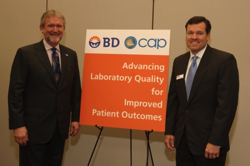
BD Diagnostics, a segment of BD (Becton, Dickinson and Company) (NYSE: BDX), a leading global medical technology company, and the College of American Pathologists (CAP), the world leader in laboratory quality assurance and improvement, today announced the launch of a new strategic alliance that will provide solutions to advance laboratory quality for improved patient outcomes in China and India. BD and CAP announced the collaboration during the American Association for Clinical Chemistry (AACC) Annual Meeting in Houston, Texas.
Laboratories play a critical role in the diagnosis and treatment of disease for the more than 2.5 billion people who live in China and India. The BD/CAP Strategic Alliance will improve access to external quality assurance/proficiency testing (PT) that can have a direct and positive impact on laboratory quality, and therefore, patient outcomes. Together BD and CAP will provide education to improve awareness of global practice standards and training that will help laboratories achieve their quality improvement goals. Additionally, BD will manage PT distribution, including sales, shipping, and first-line client service.
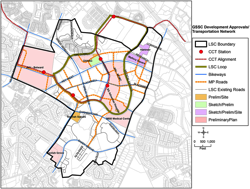
Research organizations in the Great Seneca Life Sciences Corridor are considering the creation of a common cyberinfrastructure that would facilitate sharing and spur innovative ideas.
Anil Srivastava, president of Open Health Systems Laboratory on Johns Hopkins University’s Montgomery County campus, proposed the idea and held a meeting Monday with physicians, university faculty and representatives from Cisco Systems, Montgomery County government, the National Institute of Standards and Technology, MedImmune and other organizations.

Kolltan Pharmaceuticals, a privately held biopharmaceutical company, today announced an agreement with MedImmune, the global biologics research and development arm of AstraZeneca, under which Kolltan will in-license a monoclonal antibody targeting the Her3 receptor tyrosine kinase from MedImmune. Based on the current program status, Kolltan anticipates initiating Phase 1 clinical testing of this product in the first quarter of 2014.
“This in-licensing opportunity exemplifies our leadership in and focus on receptor tyrosine kinases and their key role in oncology and other serious diseases,” commented Dr. Jerry McMahon, Kolltan’s President and Chief Executive Officer. “Kolltan will apply its extensive scientific expertise and R&D drug development experience to prepare for entry into the clinic, including a focus on patient selection strategies. Kolltan is excited to advance this innovative product candidate into clinical testing for the broad potential treatment of cancer patients where this target plays a role.”