

NYC Economic Development Corporation president Kyle Kimball on New York City working with large pharmaceutical companies and venture capital firms to create $100M fund.
NYC Economic Development Corporation president Kyle Kimball on New York City working with large pharmaceutical companies and venture capital firms to create $100M fund.
This FOA encourages applications to develop microfluidic devices to analyze blood for factors related to the thrombotic, transfusion, and/or hemostatic status of pediatric/neonatal patients. Platforms should support clinical and/or research applications. Microfluidic designs that are multifunctional, with the capacity to perform multiple assays on a single blood sample, are of interest. Use of these devices could significantly reduce levels of phlebotomy-induced blood loss in pediatric/neonatal patients.
This FOA encourages applications to develop microfluidic devices to analyze blood for factors related to the thrombotic, transfusion, and/or hemostatic status of pediatric/neonatal patients. Platforms should support clinical and/or research applications. Microfluidic designs that are multifunctional, with the capacity to perform multiple assays on a single blood sample, are of interest. Use of these devices could significantly reduce levels of phlebotomy-induced blood loss in pediatric/neonatal patients.

Aging baby boomers, Obamacare and a greater push toward electronic medical records.
Three Baltimore-area investment heavyweights — Paul Silber, Rick Kohr Jr. and Harrison Perry — are hoping that’s the winning combination for an investment fund they have launched to pump money into health care companies in the mid-Atlantic region.

Against a backdrop of slowing healthcare expenditures and ongoing implementation of the Affordable Care Act (ACA), the dynamics of the U.S. medical device industry have become increasingly fluid. In this article, Elliot Hyun, a medical device analyst at GE Capital Healthcare Financial Services, discusses the current status of the industry – and what lies ahead for investors.
Q. What is the state of the medical device industry?
A. Broadly speaking, we have seen growth slow in recent years, as the industry has grappled with both persistent utilization softness following the end of the most recent economic downturn as well as the increasingly real headwind of pricing pressure from customers. As such, we believe industry growth has slowed from the mid-high single-digit range prior to the recession to the low single-digit area today.

It is customary in higher education to dismiss rankings as misleading and arbitrary, quantifying things that don’t much matter about colleges and universities.
But one list of undisputed significance is compiled each year by the National Science Foundation: the top institutions ranked by total research spending. Such money supports laboratories, attracts top faculty and graduate students and gives many undergraduates a chance to learn through experimentation.

Many start-up medical device and diagnostic companies offer some of the most promising technologies in the industry. As a result, most large medical device companies have created significant business development and venture funding units to tap into this innovation. However, some promising technologies will never see the light of day – not due to the validity of technology, but because of significant commercial missteps.
Here are three common mistakes on the road to commercialization and how to navigate them successfully:

Alan Auerbach is the brains and leadership behind Puma Biotechnology PBYI -2.29%, a biopharma acquirer and developer of innovative cancer treatments that has had a great stock run this past week. The Los Angeles-based company’s shares surged 88 percent from Wednesday to Friday, closing the week at $86.75 per share. Today they’re up more than 1%, trading at close to $88 per share. The founder, chairman and CEO’s shares in the company have appreciated by $167 million on the good news, nearly doubling his stake from $185 million to $352 million.

Today, Sanofi US launched its second Partners in Patient Health (PiPH) Innovation Challenge: Collaborate | Innovate, which will award $100,000 to the winning team. This year’s theme is “Co-Creating for Breakthroughs: Moving toward a collaborative research and development ecosystem.” The Challenge calls on non-profit patient, provider and professional associations to partner with other associations and/or academic institutions to propose new approaches which translate patient insights into improvements in the drug development process.
A treatment breakthrough can cost billions of dollars and decades of time to research. Patient organizations are in the position of helping patients and their constituents to play an important role in research and development (R&D). Patient involvement in the entire process can lead to improvements in efficiency and effectiveness of industry efforts in developing new therapies.
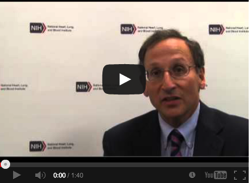
When you speak with Dr. Joseph Loscalzo about the new Boston Biomedical Innovation Center, you can’t help but get excited about the prospects of enhancing the health of the nation by promoting greater commercialization of NIH-funded discovery science.
“We have all the people we need to make it work. We have all the resources now in hand that we need to make it work. So I think that we are in a very unique situation to prove that this concept is a valid one for the future development of technologies that spring from what the NIH supported over the years as basic investigation that can now be applied to patient care.”

Flu or influenza (caused by influenza virus) is a miserable experience as it daunts the victim with countless sneezes, head aches and fever.
Flu develops when tiny droplets coughed or sneezed into the air by an infected person are inhaled by an uninfected person. Flu is often confused with common cold. But, they are different, though certain flu symptoms are the same. According to the University of Maryland Medical Center, fever and muscle pain associated with flu goes away with prevention and treatment in a day or two, however, fatigue may last for a week.