Category

News

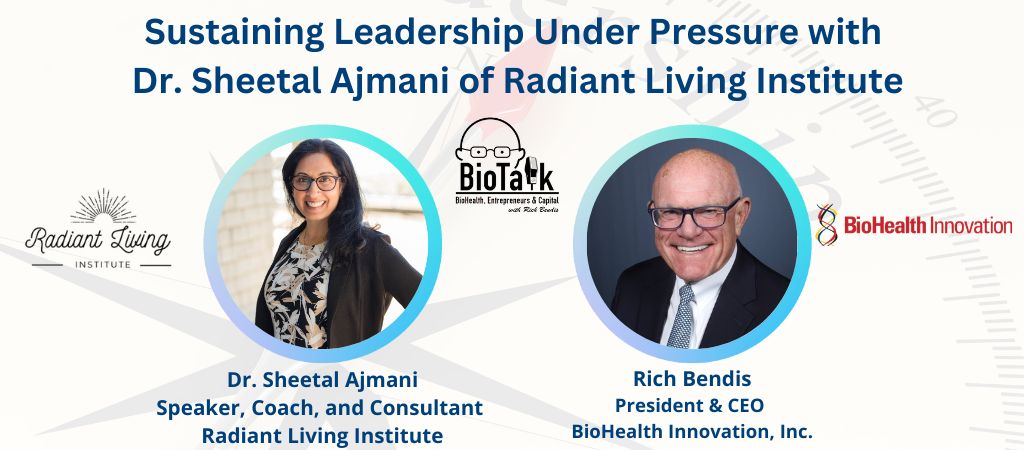
Sustaining Leadership Under Pressure with Dr. Sheetal Ajmani of Radiant Living Institute on BioTalk

By BioTalk with Rich Bendis Podcast, News

Dr. Sheetal Ajmani joins BioTalk to discuss a topic rarely addressed in the life sciences startup world. The personal and leadership toll that accompanies building and scaling a company. A physician turned executive coach and founder of Radiant Living Institute, Dr. Ajmani works closely with founders and senior leaders navigating intense professional pressure while trying to maintain clarity in decision making.
In this conversation, she explains how exhaustion and sustained stress can quietly affect leadership judgment during critical moments such as fundraising, board interactions, regulatory setbacks, and periods of rapid growth. The discussion explores the signals that investors and advisors may overlook when a founder is struggling behind the scenes, and how the culture of “pushing through” can begin to create risk not only for individuals but for the companies they lead. Dr. Ajmani also shares practical ways founders can stabilize their leadership presence and maintain momentum while protecting their own well-being.

Listen now on your favorite platform:
Apple: https://apple.co/4swmqJR
Spotify: https://bit.ly/47vWndC
YouTube Podcasts (audio): https://bit.ly/46OmeNO
Amazon Music Podcasts: https://amzn.to/4cwQbFN
iHeartRadio Podcasts: https://ihr.fm/3PqJfAg
TuneIn: https://bit.ly/4lioh2r

Editing and post-production work for this episode was provided by The Podcast Consultant (https://thepodcastconsultant.com).

Dr. Sheetal Ajmani is a physician, keynote speaker, and executive coach who helps leaders and founders reclaim their well-being and lead with authenticity. After nearly two decades in clinical medicine, she founded Radiant Living Institute, where she integrates science, psychology, and the mind-body connection to help individuals make meaningful and sustainable changes in their lives and leadership. Dr. Ajmani is also the host of the Essential Self-Care podcast and co-author of the Amazon bestselling book Doctoring, Better. For more information, visit https://www.radiantlivinginstitute.com/.


BioHealth Innovation Welcomes Dr. Nilay Shah to Board of Directors

By News

BioHealth Innovation, Inc. (BHI) is pleased to announce the appointment of Dr. Nilay Shah to its Board of Directors. A physician–executive with more than 20 years of experience in global clinical development and commercial strategy, Dr. Shah brings deep expertise in advancing innovative therapies from early development through regulatory approval and market entry.

Dr. Shah currently serves as Senior Vice President and Global Head of Ophthalmology at Emmes, where he leads the company’s fastest-growing therapeutic division and serves on the Executive Management Committee. Over the course of his tenure, he has helped scale the organization into a global CRO serving biotech innovators across North America, Europe, Latin America, and Asia. His experience spans Phase I through Phase III trials, FDA and EMA engagement, pharmacovigilance, and strategic alliances with emerging and growth-stage life sciences companies.

Throughout his career, Dr. Shah has served as a Medical Monitor for various studies and also has directed complex, multi-national clinical programs, including global trials supporting market authorization of novel biologics and the first autonomous AI-based diagnostic system approved by the FDA for the detection of diabetic retinopathy. He has also built and led high-performing cross-functional teams, strengthened commercial strategy, and partnered closely with venture-backed companies navigating regulatory and operational milestones.

Beyond his executive leadership, Dr. Shah has played an active role in Maryland’s innovation ecosystem. He serves as an advisor and reviewer for multiple TEDCO venture programs and is a Board Member of the Baltimore Innovation Initiative, where he supports early-stage founders in clinical strategy, regulatory planning, and commercialization.

“Nilay brings a rare combination of physician insight, global clinical operations leadership, and commercial acumen,” said BHI President and CEO, Rich Bendis. “He understands what it takes to move a therapy from concept to approval, and he has done it at scale. As we continue to support entrepreneurs and growing companies across the BioHealth Capital Region and beyond, his experience will strengthen our ability to guide companies through critical development and regulatory inflection points.”

“I am honored to join the Board of BioHealth Innovation at a pivotal time for the BioHealth Capital Region,” said Nilay C. Shah, MBBS (MD), Senior Vice President and Global Head of Ophthalmology at Emmes. “We are witnessing a powerful convergence of breakthrough science, artificial intelligence, and precision medicine, but innovation only matters if it translates into approved and accessible therapies. Throughout my career in global clinical development, I have seen how early strategic guidance and disciplined execution accelerate that journey. BioHealth Innovation uniquely bridges scientific innovation and commercialization, and I look forward to supporting entrepreneurs as they navigate critical regulatory and development milestones to bring transformative therapies to patients faster.”

Dr. Shah’s appointment reflects BHI’s continued focus on assembling a board with hands-on experience in therapeutic development, regulatory strategy, venture engagement, and global operations. His perspective will support the organization’s mission to accelerate commercialization, mentor emerging companies, and expand the region’s leadership in biohealth innovation.

Saving the Date for the 12th Annual BioHealth Capital Region Week

By News

The BioHealth Capital Region continues to grow as one of the nation’s leading biohealth clusters, driven by research excellence, capital access, federal partnerships, and a deep bench of experienced operators. Each year, BioHealth Capital Region Week brings that momentum together under one roof.

The 12th Annual BioHealth Capital Region Week will take place September 15th through 17th, 2026, once again hosted at the US Pharmacopeia in Rockville, Maryland. Over three days, leaders from industry, government, academia, and the investment community will convene to address the opportunities and challenges shaping the future of biohealth.

The BioHealth Capital Region Forum will anchor the first two days, September 15th and 16th, featuring national and regional voices addressing policy, capital markets, innovation strategy, workforce, and the technologies shaping the next phase of growth. The Forum remains the central gathering point for strategic discussion across the ecosystem.

Planning Committees are coming together to develop a forward-looking program of keynotes and panels that reflect where the market is headed. From capital strategy and commercialization pathways to emerging technologies and public-private collaboration, the 2026 agenda will focus on practical insight and real connections that move companies forward.

The Crab Trap Competition will return on September 16th, spotlighting emerging companies across therapeutics, diagnostics, medical devices, and digital health. Applications will open this spring, and qualifying companies will have the opportunity to present live before investors and industry leaders. Additional applicants may also be invited to participate in quick-pitch sessions during the week.

The Investment Conference will close out the week on September 17th, bringing together active investors and growth-stage companies seeking capital. The conference is designed to foster direct engagement between founders and funding sources, with curated company presentations, investor panels, and structured networking. It remains one of the most targeted opportunities in the region for companies to connect with venture capital, strategic investors, and other capital partners focused on life sciences.

BioHealth Capital Region Week is designed for entrepreneurs, investors, executives, policymakers, economic development leaders, and service providers who are actively engaged in advancing life sciences companies. Whether you are raising capital, scaling operations, building partnerships, or evaluating new technologies, this week is built to deliver meaningful engagement.

We are grateful to the sponsors who have already committed to supporting 2026, including George Mason University, the Maryland Department of Commerce, Montgomery County Economic Development Corporation, NIHFCU, the NIH Office of Technology Transfer, and others who continue to invest in the region’s continued growth.

Organizations interested in sponsorship opportunities or deeper engagement are encouraged to reach out:

Rich Bendis – rbendis@biohealthinnovation.org
Andy Eckert – aeckert@biohealthinnovation.org

Please save the dates of September 15th through 17th, 2026, and plan to join us in Rockville as we continue to strengthen the BioHealth Capital Region’s position among the nation’s top biohealth hubs.

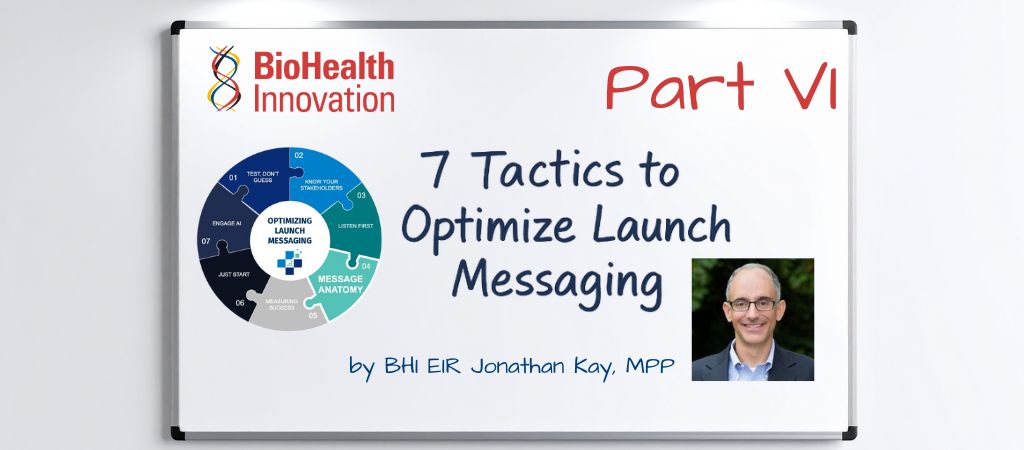
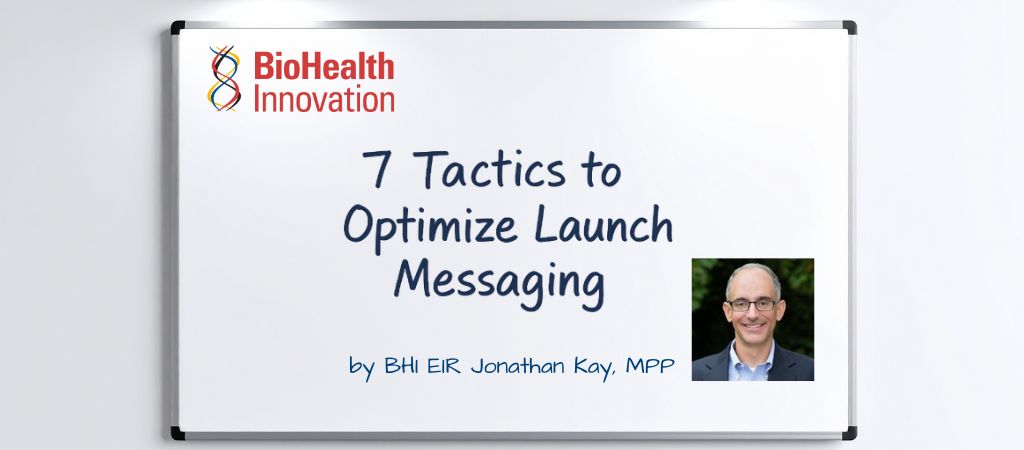
BHI EIR Insights: 7 Tactics to Optimize Launch Messaging – Part VI

By EIR Insights, News

by Jonathan Kay, MPP, Managing Partner, Health Market Experts & BioHealth Innovation, Inc. Entrepreneur-in-Residence

As we conclude our Optimizing Launch Messaging series, we’ve explored how to create clear, targeted, and evidence-based messages. For our final insight, we’re focusing on a tool that’s rapidly changing the communication landscape: artificial intelligence. We’ll focus on generative AI here, and similar lessons can apply to agentic AI down the road.

Insight 7: Engage the power of AI in message optimization

When preparing for launch (or really any high-stakes communication) the strongest messages come from a partnership between humans and AI. Here’s the workflow we recommend:

A. Workshop the message development 🧠

Bring your teams together early to outline goals, target audiences, and the strategic backbone of your message.

B. Invite AI to that workshop 🤖

Use AI to generate message concepts, explore angles you may have neglected, and broaden strategic and creative possibilities. Three years ago, I wrote an article about inviting AI to the clinical care team. That’s happening more and more. Similarly, we should invite AI to our consulting workflows.

C. Refine the messages with humans 👥

Review AI-generated ideas with expert oversight to ensure accuracy, nuance, and alignment with your strategic intent.

D. Test the messages with real stakeholders 🔍

Interview stakeholders to find out how the test messages land. Focus on audiences that will make or break your launch. That could be physicians, payer decision makers, patients and their advocates, hospital executives and more.

E. Refine again before deployment 🎯

Integrate testing feedback to sharpen language, strengthen relevance, and remove confusing or misaligned elements.

F. Build in a post-launch feedback loop 🔁

See our earlier post Tactic #5 about defining and measuring success to evaluate the impact of your message, and inform your future communications.

Recently, Health Market Experts, LLC teamed up with Oakton Communications Partners and Sequencr AI for a series of webinars showcasing our point of view on the power of human + AI collaboration in message optimization for issues and crisis management. Our methods for GTM message optimization were applicable in the context of issues and crisis management, too.

Have you used AI in your messaging work? 💬 What worked well for you?

DM me if you’re interested in learning more about our point of view or engaging in one of our workshops.

If your organization is preparing to launch a new business or brand, connect with us (message me on LinkedIn) or visit https://www.healthmarketexperts.com/ to learn more about how we can help you with messaging and commercial strategy to set your business and brand on a path of success.

Written by a human. This post expands on content I previously wrote as a blog at Catalant and delivered in guest lectures at Rutgers Business School.

Visit https://www.linkedin.com/in/jonathan-kay-healthcare/ to connect with Jon on LinkedIn.

Strengthening Concussion Diagnosis and Prognosis with Emergency Medicine Researchers Dr. Frank Peacock and Dr. Damon R. Kuehl of BrainBox Solutions, Inc. on BioTalk

By BioTalk with Rich Bendis Podcast, News

Dr. Frank Peacock and Dr. Damon R. Kuehl join BioTalk for a focused discussion on one of emergency medicine’s most persistent challenges: accurately diagnosing and predicting outcomes in mild traumatic brain injury. As Scientific Advisory Board members for BrainBox Solutions, Inc., they walk through what happens when a patient presents to the emergency department after a fall or sports injury and why current tools, including CT scans, often leave clinicians without clear answers. The conversation explores the gap between a “normal” scan and ongoing symptoms, and what missed or uncertain diagnoses can mean for patients weeks later.

Dr. Peacock outlines the HeadSMART II study and explains why combining blood biomarkers with neurocognitive testing provides a more complete assessment than biology alone. Dr. Kuehl discusses how multi-modal data, integrated through artificial intelligence, can generate an objective score to support real-time clinical decision-making and help identify patients at risk for persistent symptoms. The episode also highlights BrainBox’s leadership, including CEO Donna Edmonds, a member of the BioHealth Innovation Board of Directors, and the company’s role in advancing objective mTBI testing.

Listen now via your favorite podcast platform:
Apple: https://apple.co/4aiigz6
Spotify: https://bit.ly/4rZQWf7
iHeart: https://ihr.fm/3ZAGiPL
Amazon Podcasts: https://amzn.to/4bY0Fha
YouTube Music: https://bit.ly/4aF6SMB
TuneIn: https://bit.ly/4rXcx7V


Editing and post-production work for this episode was provided by The Podcast Consultant (https://thepodcastconsultant.com).

Dr. W. Frank Peacock IV is Professor of Emergency Medicine at Baylor College of Medicine. Chief Medical Officer at AseptiScope, and the founder of both a contract research organization called Comprehensive Research Associates, LLC and a medical education company named Emergencies in Medicine, LLC. Dr. Peacock received his medical degree from Wayne State University Medical School and completed his Emergency Medicine training at William Beaumont Hospital. He has >900 peer reviewed publications and is also the co-editor of multiple medical textbooks on heart failure, acute coronary syndromes, and traumatic brain injury.

Dr. Damon R. Kuehl is the Vice Chair of Research and Academic Affairs and Professor in the Department of Emergency Medicine at Virginia Tech, School of Medicine. He completed Medical School at University of Minnesota Medical School and his Emergency Medicine Residency at Stanford University. He has also completed residencies in Preventive Medicine and a Research Fellowship in the Center for Policy and Research in Emergency Medicine, at Oregon Health and Science University. Dr. Kuehl’s research primarily focuses on diagnostic and prognostic uncertainty in brain injury. He is a lead investigator for HeadSMART II and for HeadSMART Geriatrics, a NINDS funded 3 year study to develop a diagnostic tool for head trauma in older adults.  He is the founder of the Carilion Brain Injury Center and also an investigator with the Virginia Tech Center for Biomechanics studying the boundary conditions associated with injuries in older adult falls.

BHI EIR Insights: 7 Tactics to Optimize Launch Messaging – Part VI

By EIR Insights, News

by Jonathan Kay, MPP, Managing Partner, Health Market Experts & BioHealth Innovation, Inc. Entrepreneur-in-Residence

To recap, the first 5 posts of our series covered:

  1. Test, Don’t Guess: Adopt a data-driven mindset about messaging impact
  2. Know Your Stakeholders: Avoid a one-size-fits-all approach
  3. Listen First: What are  your stakeholders saying and how?
  4. Message Anatomy: Ensure messages get the job done
  5. Measuring Success: Define metrics of success upfront

Insight 6: Just Start

It’s true we want to pursue all 5 tactics above. But that doesn’t mean we always can.  Sometimes clients or would-be clients insist:

  • Time is too limited, so they can’t test
  • The target audience is rare or ultra rare, so they can’t test

🛑 Hold on! Don’t skip testing even in these situations. As the saying goes, Don’t let perfect be the enemy of the good.(That’s typically attributed to surgeons!🥼)

Real-world problems require real-world problem-solving. To know in advance how well your messages will perform, ask real-world stakeholders. Even if time is extremely limited. Even if audiences seem too hard-to-reach. (We can help you in both cases. While we encourage clients to have a launch runway and notify us in advance, typically we can line up test audiences in a day or two, or faster!)

Testing messages BEFORE launch can improve early uptake 📈, increase commercial success, and save time and budget later. It can help you avoid unnecessary stress.

✅ Rather than skip testing, “just start” testing by modifying the ideal and going with what is realistic. Here are a few ideas:

  • Fewer interviews
  • Shorter survey
  • Leverage Gen AI (more to come in Tactic #7)
  • Plan ahead: put message testing in your launch plan

When a client was preparing to launch a genetic marker for a rare disease, they approached us to test physician ad concepts and messages. They faced two familiar constraints in biotech launches:

  1. Limited time
  2. A small, hard-to-reach physician population

One more traditional approach might have been to test messages → share feedback with client and creative agency → agency modifies concepts → ideally we test again to optimize. Instead, we compressed the process and reduced the timeline by days, possibly a week. (How great would it be to save a week when getting ready for launch?)

How did we do that?

  • We reduced the number of stakeholder interviews.
  • We prioritized metrics like stopping power, visceral response, clinical credibility
  • Importantly, we invited the agency into the testing process.

Bringing the agency in allowed for agile development. As the interviews progressed, the concepts evolved, and we moved closer and closer to optimal with each next test.

The results were telling, actionable, and valuable even with a small sample. We confirmed a key hypothesis, which added confidence to the commercial strategy. We also revealed confusing language about the biomarker that we easily fixed to avoid encountering post-launch confusion, questions, and delayed product adoption.

The key takeaway: When launching a business or a brand or a campaign, perfect conditions are rare. But even limited testing can uncover powerful insights, reduce risk, and strengthen confidence before your message reaches the market.

If your organization is preparing to launch a new business or brand, connect with us (message me on LinkedIn) or visit https://www.healthmarketexperts.com/ to learn more about how we can help you with messaging and commercial strategy to set your business and brand on a path of success.

Written by a human. This post expands on content I previously wrote as a blog at Catalant and delivered in guest lectures at Rutgers Business School.

Visit https://www.linkedin.com/in/jonathan-kay-healthcare/ to connect with Jon on LinkedIn.

Thanking Jarrod Borkat and Rachel Rath for Their Service on the BioHealth Innovation Board

By News

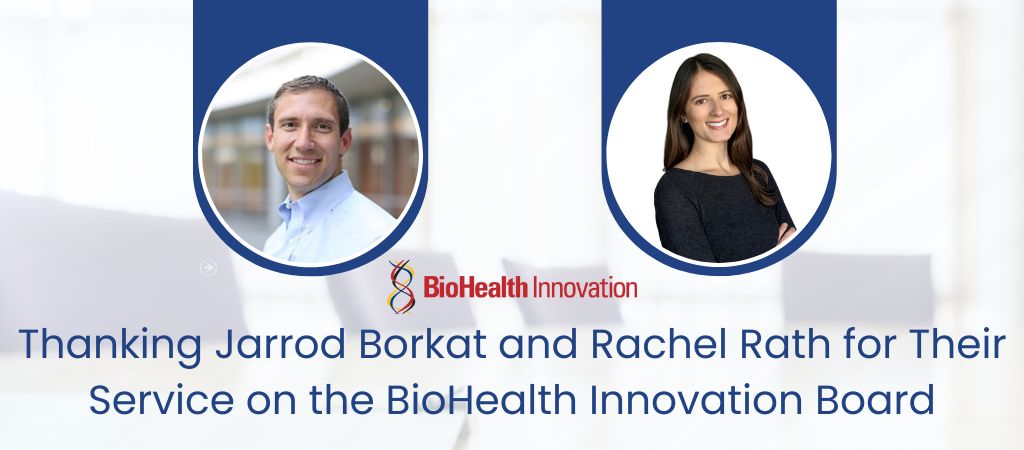
BioHealth Innovation extends its sincere thanks to Jarrod Borkat, Chief Commercial and Strategy Officer at On Demand Pharmaceuticals, and Rachel Rath, Head of JLABS @ Washington DC, for their dedicated service on the Board of Directors.
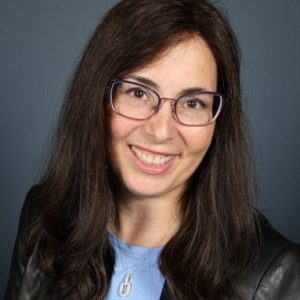
Throughout their tenure, both leaders brought a steady, thoughtful presence to the board and helped strengthen the organization’s role within the BioHealth Capital Region. Their perspectives, grounded in deep industry experience and regional engagement, supported informed decision-making and reinforced a shared commitment to advancing innovation across the ecosystem.

Jarrod Borkat’s career spans senior commercial, strategy, and partnership roles across the biopharmaceutical sector. His experience building large-scale collaborations among industry, academia, and government brought practical insight to board discussions, particularly around commercialization pathways and cross-sector engagement. His long-standing involvement in the region reflects a consistent belief in collaboration as a foundation for sustainable growth.

During his time with MedImmune and AstraZeneca, Jarrod played a key role in advancing the BioHealth Capital Region (BHCR) brand and strengthening its national profile. He was also a strong advocate for BioHealth Innovation expanding its footprint into Washington, DC, and Virginia, helping foster a more integrated regional ecosystem. In addition, he served on the Board’s Executive Committee, where his strategic perspective supported organizational growth and transition.

Rachel Rath provided a complementary lens shaped by her leadership at one of the region’s most active innovation platforms. Her work evaluating and accelerating early-stage companies, along with prior experience supporting national health security and clinical research initiatives, informed the board’s understanding of emerging technologies and the needs of founders navigating complex development environments.

“Jarrod and Rachel have been exceptional board members and trusted partners,” said Rich Bendis, Founder, President, and CEO of BioHealth Innovation. “Their leadership, insight, and commitment to the BioHealth Capital Region have made a lasting impact. We are grateful for their service and for the time and expertise they so generously shared.”

BioHealth Innovation wishes both leaders continued success and looks forward to their ongoing contributions to the region’s innovation community.

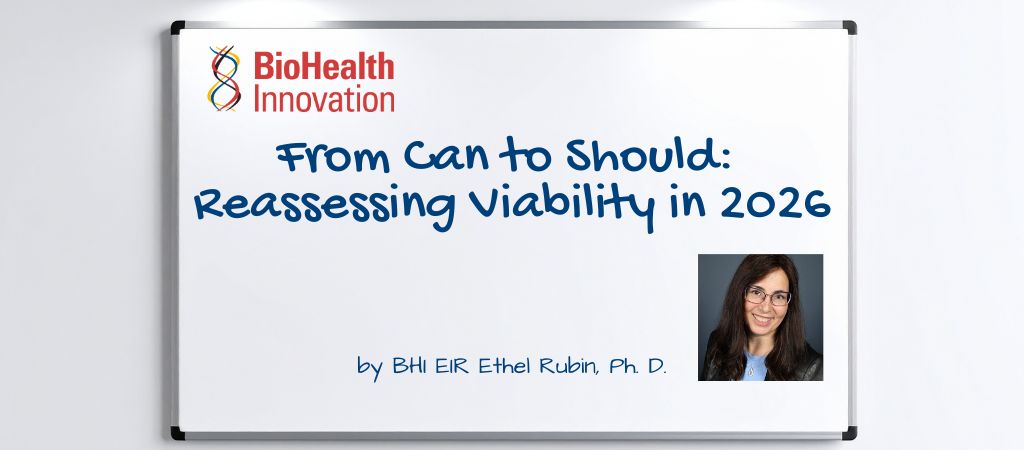
From Can to Should: Reassessing Viability in 2026

By EIR Insights, News

Last year, I wrote a LinkedIn Article titled To be or not to be: Just because you CAN, doesn’t mean you SHOULD.” The point was straightforward. Passion and good science are not enough. They never really were. That post was a reaction to what I was seeing across early-stage biotech and MedTech at the time. The environment has not eased since then. If anything, the bar has moved higher.

The requirements for viability are more stringent today than they were even a year ago. Early-stage capital remains difficult to access, particularly at the seed and Series A stages, unless a company has human proof of concept. Angel investors want de-risking. Most venture funds will not underwrite the earliest technical risk. Government funding used to fill that gap. The uncertainty around the reauthorization of innovation investment programs has made it harder to hit commercially meaningful milestones at exactly the stage when companies need that support most. Until policy catches up, founders are forced to seek private capital that is increasingly selective and unforgiving.

This shifts the question founders need to ask themselves. It is no longer whether an idea is interesting or even whether it addresses an unmet need. The question is whether the idea can survive the current validation threshold. That threshold is no longer defined by enthusiasm or momentum. It is defined by evidence, timing, and a clear path to value creation that stands up to scrutiny.

Commercial realism remains the most common failure point. Founders and CEOs are almost always optimistic about their opportunity, and they should be. If the CEO is not the champion, no one else will be. The problem arises when optimism replaces rigor. Market size is often overstated. Competitive dynamics are underestimated. Pricing and reimbursement assumptions are built on hope rather than data. Real market assessments require primary customer discovery paired with precedent sales data, both top-down and bottom-up. They also require discipline about who the customer is and where adoption will realistically occur.

Differentiation has also changed. Incremental improvements used to matter. Slight changes in dosing or convenience could be enough in some cases, but that still holds only if the market signals that it values those changes. In many therapeutic and digital health categories, that bar has risen. The existence of a standard of care, even an imperfect one, changes everything. Workarounds that are cheaper and good enough are formidable competitors. A fourth- or fifth-line product rarely succeeds just because the total addressable market is significant. Investors are not persuaded by big numbers without a sophisticated explanation of what portion of that market is reachable and why.

Health economics can no longer be an afterthought. Payers are not focused on novelty. They are focused on sustainability. Cost effectiveness, total cost of care, and system-level impact matter early, not late. Clinical development strategies that ignore this reality tend to produce assets that struggle to gain traction even if they reach approval.

Manufacturing and supply chain considerations are now decisive factors in viability. Fully burdened cost modeling should be mandatory, not optional. Many promising concepts fail when exposed to the realities of sourcing, scale-up, tech transfer, and CDMO capacity. Lead times for specialized reagents, limited suppliers, geopolitical pressures, and competition from larger customers all introduce risks that can derail timelines and margins. Profitability estimates that are not grounded in real quotes and realistic assumptions are unreliable. A product that cannot be manufactured profitably at scale is not a product. It is an experiment.

Intellectual property expectations have also hardened. Venture investors continue to favor novel chemical entities with enforceable composition-of-matter claims. Method-of-use claims and simple repurposing strategies remain difficult to defend commercially. Off-label use, generic substitution, and payer resistance erode value quickly. Repurposing can be both capital and clinically efficient, but unless there is a credible way to lock the market through delivery technology, owned chemistry, or a pricing model that holds, it is rarely attractive to institutional capital. The irony is that some of the most efficient paths to patient benefit struggle the most under current investment models.

Clinical adoption risk extends far beyond efficacy. I look at alternatives already in use and ask who they fail and why. I look at early predictors of response and whether patient selection is feasible. I look at whose pain point is being addressed and whether that aligns across providers, patients, payers, and regulators. Evidence requirements vary by stakeholder, and the costs and time required to satisfy them must be modeled honestly. I also look closely at who makes the buying decision and how the product would be sold. Adoption fails as often for psychological and behavioral reasons as it does for scientific ones.

Deciding whether to move forward, pause, or walk away requires discipline. Founders need to evaluate unmet need, solution fit, market opportunity, IP defensibility, validation requirements, development and manufacturing plans, regulatory and reimbursement pathways, financial models, and exit logic together. Weaknesses in any one area can undermine the entire effort. The willingness to stop is not a sign of failure. It is a sign of judgment. In this environment, the threshold for validation is higher across the board, even in areas that remain attractive to pharma and investors.

This is where an experienced, external perspective matters. A short, focused conversation can surface gaps that would otherwise take years and significant capital to discover. Stress-testing assumptions early saves time, money, and energy. Not every idea should become a company. Not every asset belongs in a pipeline. The goal is not to build something at all costs. The goal is to build something that has a real chance of reaching patients and creating value along the way.

Being in the business of innovation means living with uncertainty and learning constantly. It also means making hard calls sooner rather than later. Just because you can still does not mean you should. The difference between the two has never mattered more.

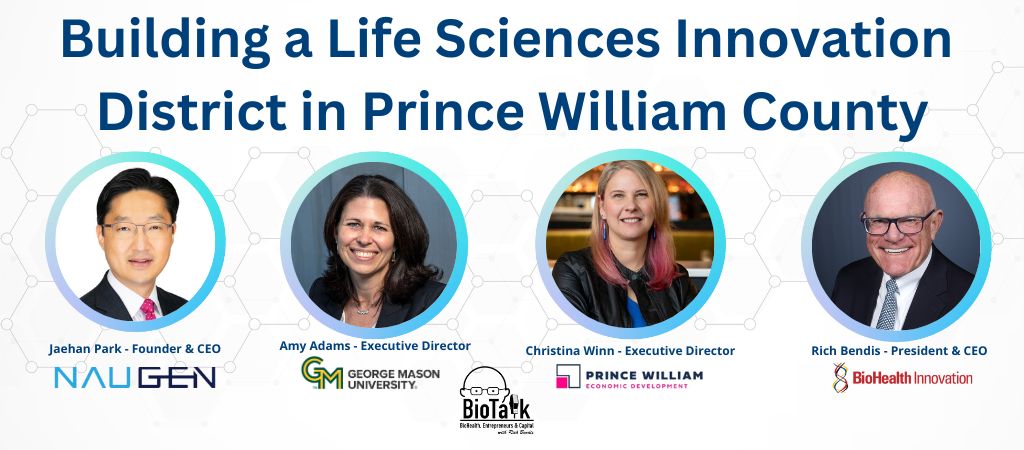
Building a Life Sciences Innovation District in Prince William County on BioTalk

By BioTalk with Rich Bendis Podcast, News

This episode of the BioTalk with Rich Bendis Podcast brings together leaders from industry, academia, and economic development to unpack the vision behind a new life sciences Innovation District anchored in Prince William County. With introductions to NAUGEN, George Mason University’s Institute for Biohealth Innovation, and the Prince William County Department of Economic Development, setting the stage for how each organization contributes to the district’s foundation. The guests discuss the life science assets, research strengths, and translational capabilities that define the district and explain why it is well-positioned to support biotechnology and advanced R&D companies.

The podcast explores how the partnership between Prince William County, George Mason University, and the City of Manassas came together, outlining the distinct roles each plays in advancing a shared strategy. The episode also introduces the NISA program, detailing how it supports companies seeking a soft-landing pathway into the district, the types of organizations best suited for the program, and the facilities, talent, and collaborative resources participants can access both immediately and over time.

Listen now via your favorite podcast platform:
Apple: https://apple.co/4p94Dqe
Spotify: https://bit.ly/3Y7dJZw
iHeart Podcasts: https://ihr.fm/3KLV7v4
Amazon Music Podcasts: https://amzn.to/4pajS1P
YouTube Music Podcasts: https://bit.ly/4phRV8I
TuneIn: https://bit.ly/44GoG7Y

Editing and post-production work for this episode was provided by The Podcast Consultant (https://thepodcastconsultant.com).

Jaehan Park is Founder and CEO of NAUGEN, a global innovation accelerator advancing novel technologies across life sciences and deep tech. With more than 25 years of experience in strategy and business development, he has led collaborations spanning cancer immunotherapy, vaccines, and biologics with global pharmaceutical companies and academic institutions. He leads the NISA Program in partnership with George Mason University and serves as a Mentor-in-Residence at KIC DC, supporting international startups entering U.S. markets.

Amy Adams is Executive Director of George Mason University’s Institute for Biohealth Innovation, where she advances biohealth research and innovation across more than 300 faculty and thousands of students. Her work focuses on partnerships, shared research infrastructure, and building hubs that connect academia with industry. She is co-leading the development of the Innovation District anchored at Mason’s SciTech campus and serves on the boards of BioHealth Innovation and the Association of University Research Parks.

Christina Winn leads the Prince William County Department of Economic Development, guiding investment, business growth, and redevelopment efforts across one of Virginia’s largest counties. She is overseeing the development of a research-driven Innovation District in partnership with George Mason University and the City of Manassas, supported by a GO Virginia grant. Her career includes leading large-scale economic development initiatives that have driven significant capital investment, job creation, and national visibility for the region.

Entrepreneurs in Residence Call: Biohealth Commercialization Leaders with AI and Quantum Experience

By News

BioHealth Innovation is expanding its Entrepreneurs in Residence (EIR) network and is seeking experienced leaders at the intersection of biohealth and advanced technologies, including artificial intelligence and quantum computing.
This call is for seasoned operators with a strong commercialization background. Ideal candidates have taken innovations from concept through market entry, licensing, spinout, or acquisition, and understand the realities of regulatory pathways, customer discovery, fundraising, and scale. Experience working with startups, academic technologies, government labs, or early-stage venture-backed companies is essential. EIRs serve in a part time advisory role with BHI, working flexibly alongside other professional commitments while contributing hands on commercialization expertise.

We are particularly interested in EIRs who can translate AI and quantum capabilities into practical biohealth applications, including drug discovery, diagnostics, clinical research, manufacturing, data analytics, and health system innovation. The role requires comfort working across technical, business, and stakeholder environments.

EIRs work closely with entrepreneurs, researchers, and partners across the BioHealth Capital Region and nationally. Engagements may include advising project teams, supporting partner initiatives, guiding commercialization strategy, and mentoring founders navigating early growth decisions.

This is an opportunity to contribute deep expertise to high-potential biohealth innovations while remaining connected to a collaborative, mission-driven ecosystem.

Interested candidates should contact BHI Founder, President, and CEO, Rich Bendis at rbendis@biohealthinnovation.org, with a summary of their background, commercialization experience, and areas of technical focus.


Search

You have successfully subscribed to the newsletter

There was an error while trying to send your request. Please try again.

BioHealth Innovation will use the information you provide on this form to be in touch with you and to provide updates and marketing.