Category

News

AI as a First-Pass Analyst: What It Can (and Can’t) Do for Your Pitch Deck

By News

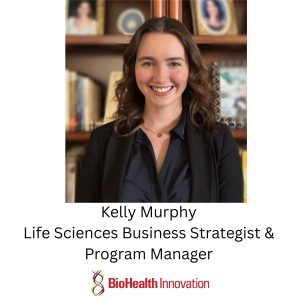
By Kelly Murphy, BHI Life Sciences Business Strategist and Program Manager

At BioHealth Innovation, we have worked with hundreds of early-stage biohealth founders preparing for investor meetings, and increasingly, we are seeing AI tools enter the preparation process. When used well, AI can function like a “first-pass analyst” to quickly stress-test your narrative, identify gaps, and to help translate complex science into investor-friendly language. But while AI can accelerate early feedback cycles, it is not a substitute for deep domain expertise, investor insight, or strategic judgement that can be provided by experienced entrepreneurs and analysts. Knowing where it adds value and where it falls short is what separates founders who use it effectively from those who are lulled into a false sense of readiness.

What AI Can Do Well

AI excels at structure, clarity, and pattern recognition. For early-stage companies, this can be a major advantage.

First, AI can help ensure your pitch deck tells a coherent story. Many technical founders struggle to translate highly specialized science into a compelling narrative for an investor audience. AI can quickly flag when your problem statement is unclear, your value proposition is buried, or your slides don’t logically flow from unmet need to solution to market opportunity.

Second, AI is effective at benchmarking against common expectations and best practices. While it doesn’t “know” your company, it has been trained on patterns of successful communication. It can suggest whether you’re missing standard components that investors expect to see.

Third, AI can improve readability and tone. It can simplify jargon-heavy language, tighten messaging, and help tailor your pitch for different audiences (e.g., scientific vs. financial stakeholders). For teams preparing multiple versions of a deck with several authors, this can also significantly reduce iteration time and maintain consistency of tone.

Finally, AI can serve as a rapid feedback loop. Founders can get immediate reactions and refine their materials in real time, making subsequent expert feedback more focused and productive.

Where AI Falls Short

Despite these strengths, AI has meaningful limitations, especially in a field as nuanced as biohealth.

Most importantly, AI lacks true domain judgment and cannot assess the credibility of the claims being made. For example, AI may identify that a “clinical plan” slide is missing, but it cannot validate whether the plan itself is viable. For investors who understand the industry, a well-formatted but strategically flawed slide is worse than nothing at all.

AI also struggles with context. It does not understand your specific market dynamics, competitive positioning, or investor landscape. For example, it may suggest adding more market-sizing details without recognizing that your niche indication requires a more nuanced reimbursement or adoption strategy.

Another limitation is overgeneralization. AI often defaults to broadly applicable best practices that are not always strategically appropriate. In some cases, what makes a company compelling is precisely what deviates from the norm and AI may inadvertently steer founders toward a more generic narrative.

Finally, there is a risk of false confidence. A well-written output can give the impression of rigor, even when underlying assumptions haven’t been critically evaluated. AI also tends to compliment the user and encourage any prompt it is given, even if it is not well thought out. This is particularly dangerous when preparing for sophisticated investors who will probe deeply beyond surface-level messaging. A fun way to test this for yourself is to ask AI its thoughts on the worst business idea you can come up with and see how it responds.

Best Practices for Using AI Effectively: A Recommended Workflow

To get the most value from AI as a first-pass analyst, founders should treat it as a starting point and not as a decision-maker.

Step 1: AI-Assisted Drafting: Use AI early in the process to organize your thinking, pressure-test your story, and identify obvious gaps. Be specific in your prompts, for example, ask it to evaluate your deck from the perspective of a life sciences investor or to critique your value proposition based on clinical and commercial criteria. The more targeted the prompt, the more useful the output.

Step 2: Expert Gap Analysis: Layer in human expertise from advisors, mentors and/or consultants to bring the contextual understanding and strategic insight that AI cannot replicate. The goal is to use AI to elevate the quality of your materials so that expert feedback can focus on higher-value issues. These stakeholders can review positioning and help anticipate the questions investors will ask. A deck that has been reviewed by people who have sat on both sides of the table is stronger. At BHI, our role at this stage is to validate the substance beneath the narrative, not just the presentation.

Step 4: Investor mock session. Before your first real meeting, run a mock with someone who can simulate investor questions by probing your assumptions, challenging your data, and  identifying non-obvious areas of improvement. AI cannot do this, but experienced specialists such as BHI’s entrepreneurs-in-residence and analysts can.

Throughout this process, remain critical of the output. Not all suggestions by AI will be relevant, and some may even dilute your differentiation or flatten nuance on complicated topics. Use AI as a tool to expand your perspective but rely on your team’s judgment to make final decisions.

The Bottom Line

AI is a powerful tool for improving the efficiency and clarity of early-stage pitch development. As a first-pass analyst, it can help founders move faster, communicate more effectively, and prepare more polished materials. But in biohealth, where scientific validity, clinical strategy, and market nuance are paramount, AI is only one piece of the puzzle. The strongest pitch decks we’ve seen at BHI combine innovative technologies with deep scientific expertise and strategic storytelling. AI can help you get there faster but it can’t get you there alone.

Work with BHI on Your Pitch Strategy

BioHealth Innovation supports early-stage biotech and medtech companies through go-to-market strategy, market analysis, and investor readiness. If you’re preparing for a fundraising round and want expert eyes on your pitch, beyond what AI can offer, we’d welcome the conversation.

Contact us at kmurphy@biohealthinnovation.org and jnelson@biohealthinnovation.org
AI in Grant Writing: Where it Helps and Where it Hurts

By EIR Insights, News

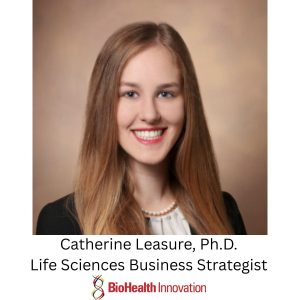
By Catherine Leasure, Ph.D., BHI Life Sciences Business Strategist – If you’ve written a grant recently, you’ve probably wondered whether AI could make the process easier. Maybe you’ve already tried it. The honest answer is that AI can help, but how much depends entirely on what you bring to it. When you know what you’re doing, it gets you to a solid draft faster. However, without a strong grasp of the process behind it, it can produce polished-sounding text that misses the mark in ways that aren’t always obvious until a reviewer or experienced grant writer points them out.
Where AI Earns Its Keep

The tasks where AI performs best are the ones that are time-consuming but relatively mechanical. Generating a document outline that accounts for both grant requirements and your specific project content is a good example. What might take an hour of cross-referencing a funding opportunity announcement can be done in minutes with the right prompt. From there, AI can help turn that outline into a working first draft and translate dense technical language into plain descriptions for non-specialist reviewers, which is particularly useful when generating ancillary documents like abstracts or project summaries that need to be accessible to a broad audience.

AI also shines in the later stages of drafting. Grant applications are long documents, and inconsistencies are easy to overlook when you’ve been working on the proposal for weeks or months. Terminology that shifts between sections that were written by different people, early claims that aren’t fully supported later in the document, and overly wordy sentences are all the kinds of issues that AI excels at catching and fixing. It can also serve as a compliance checker, making sure required sections are present and that the structure of your application matches what the solicitation requires.

None of this replaces the thinking that goes into a competitive application. But it does free up time and mental energy for the parts that require it.

Where AI Falls Short

The same confidence that makes AI useful in the drafting process can work against you when the content and strategy require nuance. AI can misrepresent novel technologies, fabricate citations, or produce technically plausible descriptions that are subtly wrong (this is called hallucinating). For early-stage companies with innovative science, this is a real risk. AI can only work with what you give it. If you’re not providing detailed, accurate information about your technology and approach, it will fill in the gaps on its own, and not always correctly. You need someone who actually understands the technology both guiding the prompts and reviewing anything AI generates before it goes into your final draft.

Beyond accuracy, there’s a layer of strategic knowledge that AI doesn’t have access to. It can’t tell you how a program officer has been framing their priorities in recent conversations, what a review panel tends to weigh most heavily, or whether your project is actually a good fit for a particular solicitation before you invest time writing your proposal. That kind of information comes from reaching out to and meeting with program officers before you submit. These conversations can reshape an application in ways that no AI tool can replicate.

Then there’s the writing itself. Even the best prompts can produce text that experienced reviewers recognize immediately: sentence structures like “it’s not X, it’s Y,” excessive adjectives, and the overuse of certain punctuation are all patterns that show up repeatedly in AI-generated text. Beyond the stylistic tells, AI tends toward a kind of confident vagueness that sounds thorough but doesn’t actually say much. In competitive grant programs, that kind of generic writing loses. If AI contributes to any part of your draft, it’s the grant writer’s job to make sure the final product sounds like it was written by a real person. Reviewers who are engaged with your writing are more likely to be engaged with your science.

Finally, using AI to write your grant poses a potential confidentiality risk that often goes overlooked. When you paste proprietary information about your technology into a public AI tool, that content may be used to train the model, and there is no guarantee it will stay private. Details about your innovation could potentially surface in someone else’s results! Treat any public AI tool the way you would any other unsecured channel: don’t put anything in that you wouldn’t be comfortable sharing publicly.

Agency Guidance on AI Use

Some funding agencies have begun addressing AI use in applications directly. NIH, for example, recently issued guidance stating that applications that are substantially developed by AI will not be considered original ideas of the applicant, and that the NIH employs AI detection tools to identify AI-generated content (NOT-OD-25-132). Applications found to be in violation post-award can face serious consequences, including cost disallowance, grant suspension, or termination. The NSF has taken a slightly more lenient approach, requesting that proposers disclose whether AI tools were used when preparing an application. The NIH and the NSF are not alone in scrutinizing AI use, and it is reasonable to expect other agencies to follow suit as AI use becomes more widespread.

The Bottom Line

AI is a useful tool in the grant writing process, but it works best as a starting point, not a final product. The applications that score well aren’t necessarily the ones with the smoothest prose, they’re the ones that demonstrate a clear understanding of the funding landscape, make a compelling scientific case, and show reviewers that the team behind the project knows what they’re doing. That requires expertise that no prompt can substitute for.

Used effectively, AI can get you to a better draft faster. But knowing how to use it thoughtfully, and knowing when not to rely on it, is itself a skill.

Work with Us

At BHI, we work with clients from the earliest stages of identifying the right funding opportunity through grant submission, including helping determine where AI can speed up the process and where it needs to be set aside in favor of human expertise. Our grant writers have supported over 200 applications, helping clients secure $66M in non-dilutive funding. If you’re working on a grant application and want to make sure you’re using every tool available without sacrificing the quality of your submission, we’d love to talk.

Prolight reports positive Traumatic Brain Injury (TBI) biomarker results with BRAINBox Solutions, confirming broad assay potential of the Psyros™ POC platform

By News

Prolight Diagnostics, a leader in point-of-care (POC) technology, today announces positive results from a collaboration with BRAINBox Solutions, a leader in multi-modality diagnostic and prognostic tests for traumatic brain injury (TBI). The analytic evaluation shows strong performance across a unique combination of three traumatic brain injury biomarkers, demonstrating the ease with which multiple novel markers can be transferred onto the Psyros unique

single-molecule-counting platform and reinforcing its potential to improve patient care for broad clinical use. 

The findings align with earlier pre‑clinical data demonstrating Psyros’ ability to deliver laboratory‑grade performance, detecting biomarkers at extremely low concentrations within minutes using only a small sample. The study was fully funded by BRAINBox, headquartered in Richmond, Virginia.

Building on these results, Prolight and BRAINBox will now advance to the next phase of the BRAINBox‑funded programme, evaluating all three assays using a 260-patient sample bank. The samples are a subset of the more than 2000 available from BRAINBox’s ongoing, HeadSMART II pivotal clinical study of its diagnostic and prognostic test for mild TBI, BRAINBox TBI, to support submission to the US Food and Drug Administration for marketing clearance. The assay format uses Psyros’ multiplex‑enabled, dried‑reagent cartridge, supporting scalable, low‑cost manufacturing – an important advantage in TBI and other conditions requiring high-precision, multi‑analyte testing.

“We are very encouraged by the outcomes of this first assay evaluation with BRAINBox. The data reinforce the versatility of the Psyros platform and its ability to support multiple assay formats. With BRAINBox now fully funding the next 260‑patient assay study, we see strong validation of Psyros’ unique market potential,” said Ulf Bladin, CEO of Prolight Diagnostics. “In parallel, Prolight remains fully focussed on delivering our high-sensitivity troponin test, as we gear up for the clinical performance study.”

”We have been actively seeking a point-of-care platform capable of delivering the ultra-sensitive performance required for our multimodality TBI test suite of products which can support our broad strategy for diagnosis, prognosis and monitoring in all care environments across our patent protected full neurology test pipeline. These early results from this recently established collaboration suggest that the Psyros system meets – and may even exceed – our performance expectations and potentially accelerate the development and commercialization of our tests. The ability to measure multiple TBI biomarkers within minutes at the point-of-care has the potential to meaningfully enhance real-world assessment and clinical decision-making in
brain-injury care. We look forward to progressing to the next phase of our collaboration,” said Donna Edmonds, CEO of BRAINBox.

Prolight continues to attract growing interest from global diagnostics companies, supported by Psyros’ competitive advantages: unprecedented detection limits, whole‑blood capability, rapid turnaround time, multiplex functionality and low-cost manufacturing.

About Traumatic Brain Injury (TBI) 
TBI is increasingly recognized as a major global health challenge and a rapidly emerging market for diagnostic innovation, particularly for rapid point-of-care (POC) testing. The clinical challenge with TBI is that even mild brain injury can have serious long term clinical consequences, mild TBI diagnostics require high sensitivity to reliably detect injury and safely identify patients who may require further imaging or intervention.

With an estimated 69 million people worldwide experiencing a TBI each year, driven by road traffic accidents, falls, sports injuries, and military trauma, there is growing demand for highly sensitive tests that can deliver rapid results in emergency departments, ambulances, urgent care centers, sports settings, and other frontline care environments, which include a growing number of concussion clinics.

The global TBI diagnostics market is currently valued at approximately USD 3–3.4 billion, with forecasts projecting growth to around USD 6 billion or more by 2032–2033 as awareness, clinical guidelines, and biomarker technologies advance. As awareness has increased, so has the demand for rapid and portable testing solutions, with increasing adoption of blood-based biomarker tests an opportunity is emerging for POC diagnostics to enable faster triage, helping to reduce reliance on costly CT scans.

As healthcare systems seek faster and more cost-effective ways to triage patients with suspected head injury, POC TBI testing represents a significant emerging segment within this multibillion-dollar market, with strong potential for adoption across emergency medicine, sports medicine, military medicine, and pre-hospital care worldwide.

About BRAINBox Solutions
BRAINBox Solutions is developing the first AI‐enabled, multi‐modality approach for the diagnosis and prognosis of Mild Traumatic Brain Injury, commonly referred to as a concussion. The company seeks to establish a clinical best‐practice standard for the diagnosis and prognosis of concussion.

The product incorporates a panel of proprietary, patented blood biomarkers that can be read in a few moments on a point‐of‐care instrument or using standard laboratory systems, as well as neurocognitive testing, to provide a single‐system score that measures the severity of the injury and post-concussive symptoms. BrainBox is currently completing a pivotal clinical study, the HeadSMART II clinical trial, which is evaluating the diagnostic and prognostic potential of BrainBox TBI in more than 2000 patients. The company is led by key physician and scientific thought leaders in the field and an experienced, clinically focused management team. For more information please see: https://brainboxinc.com/

BHI EIR Insights: We’ve Seen Something Like This Before: Agentic AI and the Early Days of Online Research

By EIR Insights, News

This thought-provoking piece in The Wall Street Journal (“Can AI Replace Humans for Market Research?”) by Belle L. (Lin) highlights the use of AI agents for ✅ opinion polling and ✏️ market research. The article made me think of another time when new technology offered the potential to create value through digital transformation in this sector.

At the height of the dot com era, c. 1999, I was asked by Jeremy Brody to co-found one of the first-ever online research firms. The idea that technology makes work “faster, cheaper, AND easier” was appealing, especially coming from consulting early in our careers.

Along with our small, all-star team, stellar board, and a few partners, our leverage for growth was a web-based survey app and an opt-in doctor database. At the time, these assets were disruptive.

Our work helped move research from fax (yes, fax! 📠), mail, and phone to a Web-based digital platform 🤖.

The surveys focused on topics like:

➡️ Unmet medical needs,
➡️ New product features and functionality,
➡️ Evidence generation, and
➡️ Launch strategy.

These topics remain a big portion of the $150 billion insights industry today (for market size, see article link below).

When we built that early dot com research agency, the American Medical Association’s latest data (1997) said only 20% of physicians were using the Internet. By 2000, it nearly doubled to 37%. So we had to help build the market as adoption caught up to the technology’s capabilities.

Adoption of AI is much faster.

Whether in research or other domains, the discussion and the decisions (in my opinion) need to focus on appropriate use cases, governance, and ethical use. What’s your take?

💡 For what specific business need would you use agentic market research?

💡 In what situations would you be reluctant or avoid it?

Thanks to Belle Lin for the excellent article 💯 . Here is the link: https://lnkd.in/eKUNx-W9

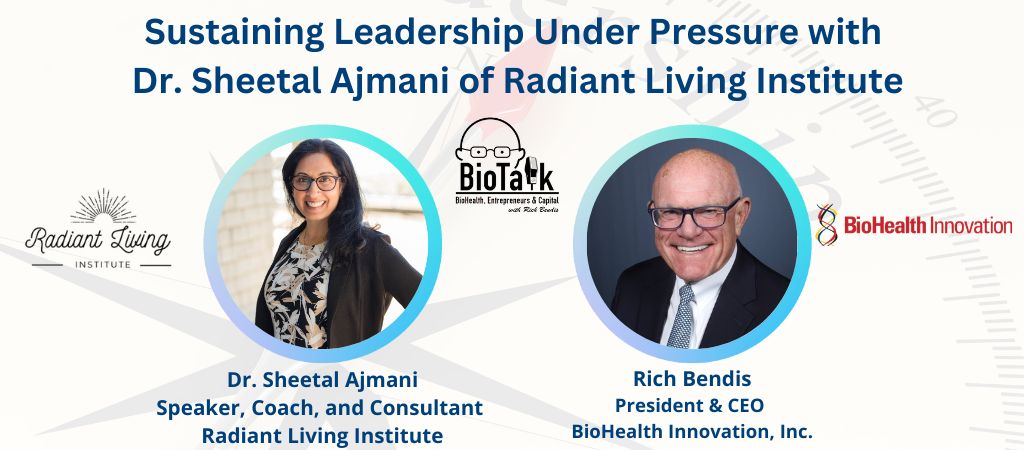
Sustaining Leadership Under Pressure with Dr. Sheetal Ajmani of Radiant Living Institute on BioTalk

By BioTalk with Rich Bendis Podcast, News

Dr. Sheetal Ajmani joins BioTalk to discuss a topic rarely addressed in the life sciences startup world. The personal and leadership toll that accompanies building and scaling a company. A physician turned executive coach and founder of Radiant Living Institute, Dr. Ajmani works closely with founders and senior leaders navigating intense professional pressure while trying to maintain clarity in decision making.
In this conversation, she explains how exhaustion and sustained stress can quietly affect leadership judgment during critical moments such as fundraising, board interactions, regulatory setbacks, and periods of rapid growth. The discussion explores the signals that investors and advisors may overlook when a founder is struggling behind the scenes, and how the culture of “pushing through” can begin to create risk not only for individuals but for the companies they lead. Dr. Ajmani also shares practical ways founders can stabilize their leadership presence and maintain momentum while protecting their own well-being.

Listen now on your favorite platform:
Apple: https://apple.co/4swmqJR
Spotify: https://bit.ly/47vWndC
YouTube Podcasts (audio): https://bit.ly/46OmeNO
Amazon Music Podcasts: https://amzn.to/4cwQbFN
iHeartRadio Podcasts: https://ihr.fm/3PqJfAg
TuneIn: https://bit.ly/4lioh2r

Editing and post-production work for this episode was provided by The Podcast Consultant (https://thepodcastconsultant.com).

Dr. Sheetal Ajmani is a physician, keynote speaker, and executive coach who helps leaders and founders reclaim their well-being and lead with authenticity. After nearly two decades in clinical medicine, she founded Radiant Living Institute, where she integrates science, psychology, and the mind-body connection to help individuals make meaningful and sustainable changes in their lives and leadership. Dr. Ajmani is also the host of the Essential Self-Care podcast and co-author of the Amazon bestselling book Doctoring, Better. For more information, visit https://www.radiantlivinginstitute.com/.


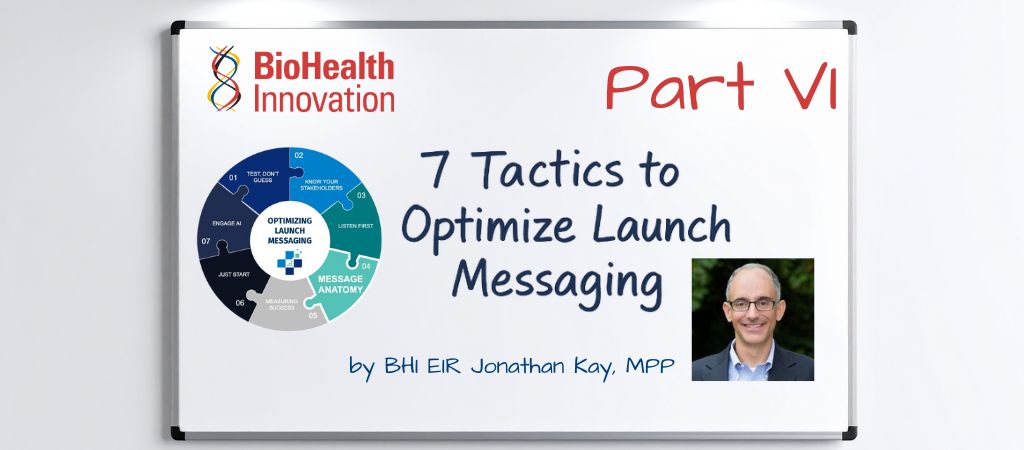
BHI EIR Insights: 7 Tactics to Optimize Launch Messaging – Part VI

By EIR Insights, News

by Jonathan Kay, MPP, Managing Partner, Health Market Experts & BioHealth Innovation, Inc. Entrepreneur-in-Residence

To recap, the first 5 posts of our series covered:

  1. Test, Don’t Guess: Adopt a data-driven mindset about messaging impact
  2. Know Your Stakeholders: Avoid a one-size-fits-all approach
  3. Listen First: What are  your stakeholders saying and how?
  4. Message Anatomy: Ensure messages get the job done
  5. Measuring Success: Define metrics of success upfront

Insight 6: Just Start

It’s true we want to pursue all 5 tactics above. But that doesn’t mean we always can.  Sometimes clients or would-be clients insist:

  • Time is too limited, so they can’t test
  • The target audience is rare or ultra rare, so they can’t test

🛑 Hold on! Don’t skip testing even in these situations. As the saying goes, Don’t let perfect be the enemy of the good.(That’s typically attributed to surgeons!🥼)

Real-world problems require real-world problem-solving. To know in advance how well your messages will perform, ask real-world stakeholders. Even if time is extremely limited. Even if audiences seem too hard-to-reach. (We can help you in both cases. While we encourage clients to have a launch runway and notify us in advance, typically we can line up test audiences in a day or two, or faster!)

Testing messages BEFORE launch can improve early uptake 📈, increase commercial success, and save time and budget later. It can help you avoid unnecessary stress.

✅ Rather than skip testing, “just start” testing by modifying the ideal and going with what is realistic. Here are a few ideas:

  • Fewer interviews
  • Shorter survey
  • Leverage Gen AI (more to come in Tactic #7)
  • Plan ahead: put message testing in your launch plan

When a client was preparing to launch a genetic marker for a rare disease, they approached us to test physician ad concepts and messages. They faced two familiar constraints in biotech launches:

  1. Limited time
  2. A small, hard-to-reach physician population

One more traditional approach might have been to test messages → share feedback with client and creative agency → agency modifies concepts → ideally we test again to optimize. Instead, we compressed the process and reduced the timeline by days, possibly a week. (How great would it be to save a week when getting ready for launch?)

How did we do that?

  • We reduced the number of stakeholder interviews.
  • We prioritized metrics like stopping power, visceral response, clinical credibility
  • Importantly, we invited the agency into the testing process.

Bringing the agency in allowed for agile development. As the interviews progressed, the concepts evolved, and we moved closer and closer to optimal with each next test.

The results were telling, actionable, and valuable even with a small sample. We confirmed a key hypothesis, which added confidence to the commercial strategy. We also revealed confusing language about the biomarker that we easily fixed to avoid encountering post-launch confusion, questions, and delayed product adoption.

The key takeaway: When launching a business or a brand or a campaign, perfect conditions are rare. But even limited testing can uncover powerful insights, reduce risk, and strengthen confidence before your message reaches the market.

If your organization is preparing to launch a new business or brand, connect with us (message me on LinkedIn) or visit https://www.healthmarketexperts.com/ to learn more about how we can help you with messaging and commercial strategy to set your business and brand on a path of success.

Written by a human. This post expands on content I previously wrote as a blog at Catalant and delivered in guest lectures at Rutgers Business School.

Visit https://www.linkedin.com/in/jonathan-kay-healthcare/ to connect with Jon on LinkedIn.

Thanking Jarrod Borkat and Rachel Rath for Their Service on the BioHealth Innovation Board

By News

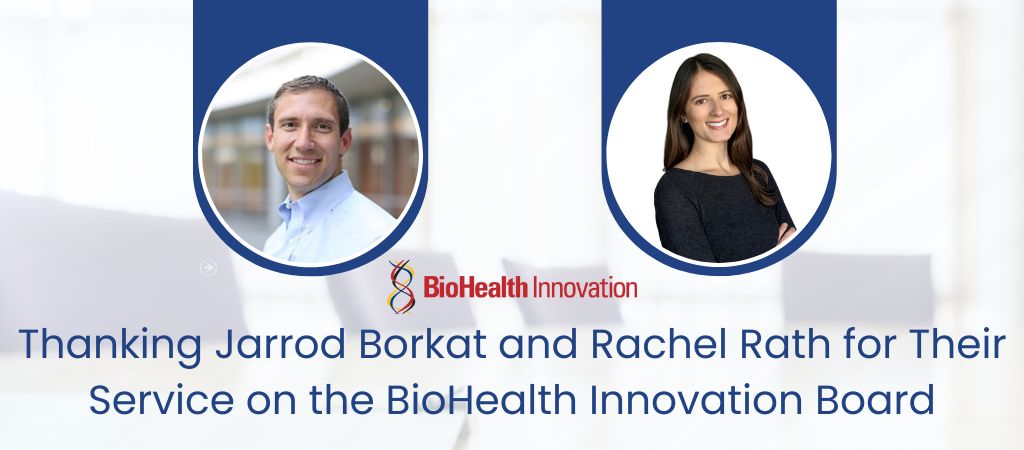
BioHealth Innovation extends its sincere thanks to Jarrod Borkat, Chief Commercial and Strategy Officer at On Demand Pharmaceuticals, and Rachel Rath, Head of JLABS @ Washington DC, for their dedicated service on the Board of Directors.

Throughout their tenure, both leaders brought a steady, thoughtful presence to the board and helped strengthen the organization’s role within the BioHealth Capital Region. Their perspectives, grounded in deep industry experience and regional engagement, supported informed decision-making and reinforced a shared commitment to advancing innovation across the ecosystem.

Jarrod Borkat’s career spans senior commercial, strategy, and partnership roles across the biopharmaceutical sector. His experience building large-scale collaborations among industry, academia, and government brought practical insight to board discussions, particularly around commercialization pathways and cross-sector engagement. His long-standing involvement in the region reflects a consistent belief in collaboration as a foundation for sustainable growth.

During his time with MedImmune and AstraZeneca, Jarrod played a key role in advancing the BioHealth Capital Region (BHCR) brand and strengthening its national profile. He was also a strong advocate for BioHealth Innovation expanding its footprint into Washington, DC, and Virginia, helping foster a more integrated regional ecosystem. In addition, he served on the Board’s Executive Committee, where his strategic perspective supported organizational growth and transition.

Rachel Rath provided a complementary lens shaped by her leadership at one of the region’s most active innovation platforms. Her work evaluating and accelerating early-stage companies, along with prior experience supporting national health security and clinical research initiatives, informed the board’s understanding of emerging technologies and the needs of founders navigating complex development environments.

“Jarrod and Rachel have been exceptional board members and trusted partners,” said Rich Bendis, Founder, President, and CEO of BioHealth Innovation. “Their leadership, insight, and commitment to the BioHealth Capital Region have made a lasting impact. We are grateful for their service and for the time and expertise they so generously shared.”

BioHealth Innovation wishes both leaders continued success and looks forward to their ongoing contributions to the region’s innovation community.

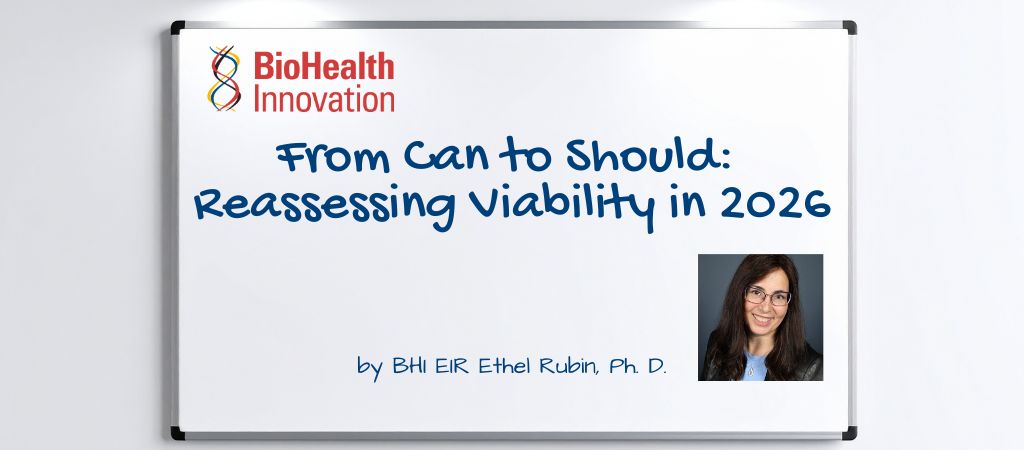
From Can to Should: Reassessing Viability in 2026

By EIR Insights, News

Last year, I wrote a LinkedIn Article titled To be or not to be: Just because you CAN, doesn’t mean you SHOULD.” The point was straightforward. Passion and good science are not enough. They never really were. That post was a reaction to what I was seeing across early-stage biotech and MedTech at the time. The environment has not eased since then. If anything, the bar has moved higher.

The requirements for viability are more stringent today than they were even a year ago. Early-stage capital remains difficult to access, particularly at the seed and Series A stages, unless a company has human proof of concept. Angel investors want de-risking. Most venture funds will not underwrite the earliest technical risk. Government funding used to fill that gap. The uncertainty around the reauthorization of innovation investment programs has made it harder to hit commercially meaningful milestones at exactly the stage when companies need that support most. Until policy catches up, founders are forced to seek private capital that is increasingly selective and unforgiving.

This shifts the question founders need to ask themselves. It is no longer whether an idea is interesting or even whether it addresses an unmet need. The question is whether the idea can survive the current validation threshold. That threshold is no longer defined by enthusiasm or momentum. It is defined by evidence, timing, and a clear path to value creation that stands up to scrutiny.

Commercial realism remains the most common failure point. Founders and CEOs are almost always optimistic about their opportunity, and they should be. If the CEO is not the champion, no one else will be. The problem arises when optimism replaces rigor. Market size is often overstated. Competitive dynamics are underestimated. Pricing and reimbursement assumptions are built on hope rather than data. Real market assessments require primary customer discovery paired with precedent sales data, both top-down and bottom-up. They also require discipline about who the customer is and where adoption will realistically occur.

Differentiation has also changed. Incremental improvements used to matter. Slight changes in dosing or convenience could be enough in some cases, but that still holds only if the market signals that it values those changes. In many therapeutic and digital health categories, that bar has risen. The existence of a standard of care, even an imperfect one, changes everything. Workarounds that are cheaper and good enough are formidable competitors. A fourth- or fifth-line product rarely succeeds just because the total addressable market is significant. Investors are not persuaded by big numbers without a sophisticated explanation of what portion of that market is reachable and why.

Health economics can no longer be an afterthought. Payers are not focused on novelty. They are focused on sustainability. Cost effectiveness, total cost of care, and system-level impact matter early, not late. Clinical development strategies that ignore this reality tend to produce assets that struggle to gain traction even if they reach approval.

Manufacturing and supply chain considerations are now decisive factors in viability. Fully burdened cost modeling should be mandatory, not optional. Many promising concepts fail when exposed to the realities of sourcing, scale-up, tech transfer, and CDMO capacity. Lead times for specialized reagents, limited suppliers, geopolitical pressures, and competition from larger customers all introduce risks that can derail timelines and margins. Profitability estimates that are not grounded in real quotes and realistic assumptions are unreliable. A product that cannot be manufactured profitably at scale is not a product. It is an experiment.

Intellectual property expectations have also hardened. Venture investors continue to favor novel chemical entities with enforceable composition-of-matter claims. Method-of-use claims and simple repurposing strategies remain difficult to defend commercially. Off-label use, generic substitution, and payer resistance erode value quickly. Repurposing can be both capital and clinically efficient, but unless there is a credible way to lock the market through delivery technology, owned chemistry, or a pricing model that holds, it is rarely attractive to institutional capital. The irony is that some of the most efficient paths to patient benefit struggle the most under current investment models.

Clinical adoption risk extends far beyond efficacy. I look at alternatives already in use and ask who they fail and why. I look at early predictors of response and whether patient selection is feasible. I look at whose pain point is being addressed and whether that aligns across providers, patients, payers, and regulators. Evidence requirements vary by stakeholder, and the costs and time required to satisfy them must be modeled honestly. I also look closely at who makes the buying decision and how the product would be sold. Adoption fails as often for psychological and behavioral reasons as it does for scientific ones.

Deciding whether to move forward, pause, or walk away requires discipline. Founders need to evaluate unmet need, solution fit, market opportunity, IP defensibility, validation requirements, development and manufacturing plans, regulatory and reimbursement pathways, financial models, and exit logic together. Weaknesses in any one area can undermine the entire effort. The willingness to stop is not a sign of failure. It is a sign of judgment. In this environment, the threshold for validation is higher across the board, even in areas that remain attractive to pharma and investors.

This is where an experienced, external perspective matters. A short, focused conversation can surface gaps that would otherwise take years and significant capital to discover. Stress-testing assumptions early saves time, money, and energy. Not every idea should become a company. Not every asset belongs in a pipeline. The goal is not to build something at all costs. The goal is to build something that has a real chance of reaching patients and creating value along the way.

Being in the business of innovation means living with uncertainty and learning constantly. It also means making hard calls sooner rather than later. Just because you can still does not mean you should. The difference between the two has never mattered more.

Building a Life Sciences Innovation District in Prince William County on BioTalk

By BioTalk with Rich Bendis Podcast, News

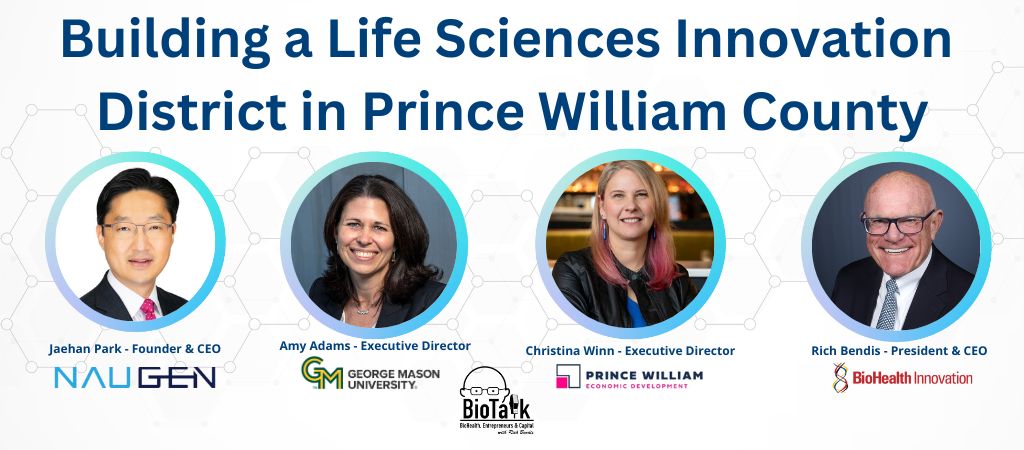
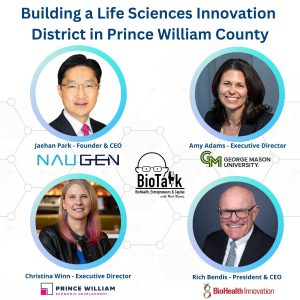
This episode of the BioTalk with Rich Bendis Podcast brings together leaders from industry, academia, and economic development to unpack the vision behind a new life sciences Innovation District anchored in Prince William County. With introductions to NAUGEN, George Mason University’s Institute for Biohealth Innovation, and the Prince William County Department of Economic Development, setting the stage for how each organization contributes to the district’s foundation. The guests discuss the life science assets, research strengths, and translational capabilities that define the district and explain why it is well-positioned to support biotechnology and advanced R&D companies.

The podcast explores how the partnership between Prince William County, George Mason University, and the City of Manassas came together, outlining the distinct roles each plays in advancing a shared strategy. The episode also introduces the NISA program, detailing how it supports companies seeking a soft-landing pathway into the district, the types of organizations best suited for the program, and the facilities, talent, and collaborative resources participants can access both immediately and over time.

Listen now via your favorite podcast platform:
Apple: https://apple.co/4p94Dqe
Spotify: https://bit.ly/3Y7dJZw
iHeart Podcasts: https://ihr.fm/3KLV7v4
Amazon Music Podcasts: https://amzn.to/4pajS1P
YouTube Music Podcasts: https://bit.ly/4phRV8I
TuneIn: https://bit.ly/44GoG7Y

Editing and post-production work for this episode was provided by The Podcast Consultant (https://thepodcastconsultant.com).

Jaehan Park is Founder and CEO of NAUGEN, a global innovation accelerator advancing novel technologies across life sciences and deep tech. With more than 25 years of experience in strategy and business development, he has led collaborations spanning cancer immunotherapy, vaccines, and biologics with global pharmaceutical companies and academic institutions. He leads the NISA Program in partnership with George Mason University and serves as a Mentor-in-Residence at KIC DC, supporting international startups entering U.S. markets.

Amy Adams is Executive Director of George Mason University’s Institute for Biohealth Innovation, where she advances biohealth research and innovation across more than 300 faculty and thousands of students. Her work focuses on partnerships, shared research infrastructure, and building hubs that connect academia with industry. She is co-leading the development of the Innovation District anchored at Mason’s SciTech campus and serves on the boards of BioHealth Innovation and the Association of University Research Parks.

Christina Winn leads the Prince William County Department of Economic Development, guiding investment, business growth, and redevelopment efforts across one of Virginia’s largest counties. She is overseeing the development of a research-driven Innovation District in partnership with George Mason University and the City of Manassas, supported by a GO Virginia grant. Her career includes leading large-scale economic development initiatives that have driven significant capital investment, job creation, and national visibility for the region.

Entrepreneurs in Residence Call: Biohealth Commercialization Leaders with AI and Quantum Experience

By News

BioHealth Innovation is expanding its Entrepreneurs in Residence (EIR) network and is seeking experienced leaders at the intersection of biohealth and advanced technologies, including artificial intelligence and quantum computing.

This call is for seasoned operators with a strong commercialization background. Ideal candidates have taken innovations from concept through market entry, licensing, spinout, or acquisition, and understand the realities of regulatory pathways, customer discovery, fundraising, and scale. Experience working with startups, academic technologies, government labs, or early-stage venture-backed companies is essential. EIRs serve in a part time advisory role with BHI, working flexibly alongside other professional commitments while contributing hands on commercialization expertise.

We are particularly interested in EIRs who can translate AI and quantum capabilities into practical biohealth applications, including drug discovery, diagnostics, clinical research, manufacturing, data analytics, and health system innovation. The role requires comfort working across technical, business, and stakeholder environments.

EIRs work closely with entrepreneurs, researchers, and partners across the BioHealth Capital Region and nationally. Engagements may include advising project teams, supporting partner initiatives, guiding commercialization strategy, and mentoring founders navigating early growth decisions.

This is an opportunity to contribute deep expertise to high-potential biohealth innovations while remaining connected to a collaborative, mission-driven ecosystem.

Interested candidates should contact BHI Founder, President, and CEO, Rich Bendis at rbendis@biohealthinnovation.org, with a summary of their background, commercialization experience, and areas of technical focus.


Search

You have successfully subscribed to the newsletter

There was an error while trying to send your request. Please try again.

BioHealth Innovation will use the information you provide on this form to be in touch with you and to provide updates and marketing.