
|























Rockville-based Sucampo Pharmaceuticals Inc. finalized its acquisition of the Japanese biotech R-Tech Ueno for $275 million, officials said Monday.
In August, Sucampo (NASDAQ: SCMP) made a $278 million all-cash offer to acquire R-Tech Ueno, a Japanese pharmaceutical company that manufactures Amitiza, Sucampo’s flagship drug that eases drug-related constipation using fatty acid-derived compounds known as prostones.

Care Progress, LLC announced today that it was awarded a Phase II Small Business Innovation Research (“SBIR”) grant from the National Science Foundation (“NSF”). The Phase II award will fund the further development of the company’s CarePrompter© software platform, which improves outcomes for cancer patients as well as workflow and profitability for oncology departments and practices.
“It provides support for further development of our critical technology. With this award, we will accelerate our plans to develop additional functionality for cancer providers and patients within a large and growing market.” Tweet this “This Phase II SBIR award is a significant milestone for us,” said Howard Isenstein, Founder of Care Progress. “It provides support for further development of our critical technology. With this award, we will accelerate our plans to develop additional functionality for cancer providers and patients within a large and growing market.”

PharmaCyte Biotech, Inc. (PMCB), a clinical stage biotechnology company focused on developing targeted treatments for cancer and diabetes using its signature live-cell encapsulation technology, Cell-in-a-Box®, announced today that, upon the recommendation of the European Medicines Agency (EMA), the European Commission has granted the Orphan Drug designation to PharmaCyte’s subsidiary, PharmaCyte Biotech Europe Limited, for PharmaCyte’s pancreatic cancer treatment. Receiving Orphan Drug designation for PharmaCyte’s pancreatic cancer treatment carries with it 10 years of marketing exclusivity in countries in the European Union. In addition, the EMA provides special assistance in the development of PharmaCyte’s treatment for pancreatic cancer.
The Orphan Drug designation in the European Union is given to drugs for life-threatening diseases with low prevalence, or that make it unlikely an investment in a drug to treat a life-threatening disease would be cost justified, and that demonstrate there is a significant benefit to patients being treated with the drug.

With payers increasingly rewarding value and expectations of the customer experience on the rise among all stakeholders, one of the key ways pharmas will differentiate their products is through understanding their customers’ pain points and providing tools and services that address them. For today’s physician, EHRs are a real pain, and prior authorizations are another. So we were interested to learn of a Avhana Health, a startup that is currently piloting a cloud-based clinical decision support system that sits on top of four of the big EHR systems – Epic, Allscripts, AthenaHealth and Greenway.
Is Google about to take a huge dive into the health industry?
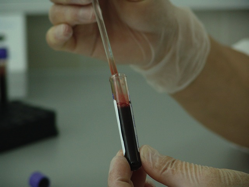
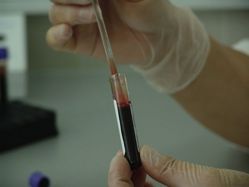
The search engine giant has just filed a patent for a “needle-free blood draw” system that could be worn on your wrist and help people who need regular draws to get blood quickly and painlessly, according to a The Verge report.
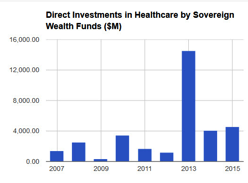
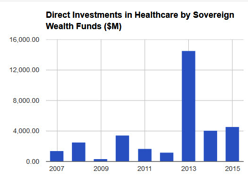
In the past couple of years there has been a rise in sovereign wealth funds’ investments in healthcare. These cover a wide range of areas from hospital chains to pharmaceutical companies, but it also includes direct investments in digital health startups. China Broadband Capital invested in smartphone diagnostic developer Scanadu and French Groupe Arnault includes Clue, a maker of female health apps, among its investments. Alaska Permanent Fund is one of the founding investors in Denali Therapeutics, a biotech business targeting neurodegenerative disorders.

Two years ago, life science startups were only six percent of the Google Ventures portfolio.
As 2015 draws to a close, that industry now is nearly one third of Google Ventures investments and is only going to grow larger, says the president and CEO of Google’s venture arm, Bill Maris.

Rockville-based Supernus Pharmaceuticals, Inc. was recently recognized as the #1 fastest growing Biotechnology/Pharmaceutical company in North America and the #4 overall fastest growing technology company in the latest Technology Fast 500 put out annually by Deloitte.
On November 13, 2015, Deloitte released the 2015 Technology Fast 500, an annual ranking of the fastest growing North American companies in the technology, media, telecommunications, life sciences and energy tech sectors. Supernus claimed the top spot in the Biotechnology/Pharmaceutical industry with a growth rate of over 15,000 percent from 2011 to 2014. Headquartered in Montgomery County, Maryland, Supernus is a specialty pharmaceutical company focused on developing and commercializing products for the treatment of central nervous system (CNS) disorders.

We’re another step closer to extending the life span of human beings.
Researchers in Switzerland have been studying the effect of genes on the aging process and have published their results in the journal Nature Communications. Of the 40,000 genes they studied, they found 30 that allow a variety of animals, including roundworms, zebrafish, and mice, to stay healthier and live longer. But these scientists focused specifically on genes that are also found in human beings, so the next step in their project is to see if these genes also have an impact on us as well.