|


















April 12-May 24
The Angel Venture Forum is changing the way we meet and screen companies!
Over the past few years, angel investors have been placing more capital into fewer companies. Only the top 5%-7% of companies that pitch investors actually receive the funds they’re looking for. Entrepreneurs educated in the capital formation process have the best chance of success. The Angel Venture Forum is one of the top educational series on the topic.

For the first time ever, the World Health Organization has drawn up a list of the highest priority needs for new antibiotics — marching orders, it hopes, for the pharmaceutical industry.
The list, which was released Monday, enumerates 12 bacterial threats, grouping them into three categories: critical, high, and medium.
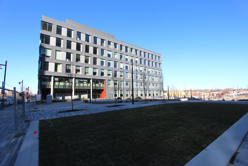
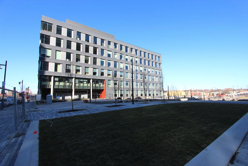
On March 1, FastForward 1812 will welcome its first lab tenants. The 15,000-square-foot space boasts BSL2 wet labs; cell culture microscopy and cold storage rooms; shared scientific instruments and more.

Innovative solutions to wound care, technologies to relieve a strained health care system, a pill that could reverse type 2 diabetes. The path to developing and bringing these and other discoveries and innovations to market runs through the FastForward 1812 innovation hub.
Johns Hopkins Technology Ventures opened the 23,000-square-foot flagship space shortly after New Year’s Day. The first tenants began occupying office and co-working spaces the third week of January, and lab tenants will move in March 1. Startups have leased much of the available space already, and what remains has been strategically left empty to accommodate growth among the 18 startup tenants and the arrival of new startups.

INNOVA-CON 4.0 is bringing its members another great opportunity to meet in person and connect with luminaries in the innovation profession. The meeting, at Booz Allen Hamilton’s awesome Innovation center in Washington D.C. is this years location. Content will focus on how to use strategies and methods of innovation to create value. In addition, for the first time this year, we will be live-streaming the event for those who do not have a budget to get to Washington.

The titans of the tech industry are known for their confidence that they can solve any problem–even, as it turns out, the one that’s defeated every other attempt so far. That’s why the most far-out strategies to cheat death are being tested in America’s playground for the young, deep-pocketed and brilliant: Silicon Valley.
SSTI submitted a letter to the National Heart, Lung and Blood Institute (NHLBI) in response to a request for information on the Institute’s investments in early translational research. The letter recommends partnerships and initiatives NHLBI could develop to improve identification of commercializable discoveries, strengthen business and technical development, and facilitate the scaling of innovations and spin-outs. These suggestions are grounded in examples of work by SSTI members. Read the full letter on ssti.org.
The Maryland Department of Commerce; the University of Maryland, Baltimore; Hood College; Washington College; and Stevenson University have endowed a total of $8.3 million in four new research professorships. The endowments were made through the Maryland E-Nnovation Initiative (MEI), a state program created to spur basic and applied research in scientific and technical fields at the colleges and universities. The schools raised $4.3 million in private funding for each chair and Maryland Commerce approved matching grants of $4 million to support the endowments.
“The groundbreaking research coming out of these colleges and universities is addressing key issues impacting our communities today, from cancer research to sustainable food systems and biofuels,” said Maryland Commerce Secretary Mike Gill. “We are proud to partner with these world-class institutions to keep our state on the cutting edge of technology and discovery.”
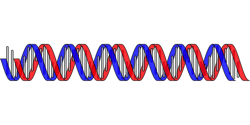
Some big ideas seem to appear out of nowhere, but in 2008 Chuan He deliberately went looking for one. The US National Institutes of Health had just launched grants to support high-risk, high-impact projects, and He, a chemist at the University of Chicago in Illinois, wanted to apply. But he needed a good pitch.
He had been studying a family of proteins that repair damaged DNA, and he began to suspect that these enzymes might also act on RNA. By a stroke of luck, he ran into molecular biologist Tao Pan, who had been investigating specific chemical marks, called methyl groups, that are present on RNAs. The pair worked in the same building at the University of Chicago, and began meeting regularly. From those conversations, their big idea took shape.